The Odyssey (2026) – BRILLIANT EPIC

4–6 minutes

Clickable links in red

Genre: Historical Epic

Platform:  Theatre

Time:  2 hours 53 minutes

Director:  Christopher Nolan

Cast:   Matt Damon (Odysseus). Tom Holland (Telemachus). Anne Hathaway (Penelope). Robert Pattinson (Antinous). Lupita Nyong’ (Helen of Troy and Clytemnestra). John Leguizamo (Eumaeus). Samantha Morton (Circe). Zendaya (Athena). Charlize Theron (Calypso).

Plot:   Queen Penelope of Ithaca waits for her husband Odysseus who is presumed lost and dead, after going to war and on a voyage. Many unruly suitors gather daily to ask her hand in marriage while her young son Telemachus, who is not of age and cannot assume the throne, watches with increasing revulsion and anger. The blind slave Eumaneus is convinced that Odysseus is alive as Argus, Odysseus’s very sick hunting dog, is unusually alive for twenty years, long past a dog’s usual life span. Odysseus is in an island with a beautiful woman Calypso with whose help he is trying to remember his past, who he was, what happened to him and what happened to ‘his men’ as he is sure he commanded a ship with many sailors…

Statutory Declarations:

  1. I haven’t read Homer’s Odyssey. So, I do not know the “original” story and cannot “compare” the film with the original story.
  2. I only have a vague idea that Odysseus went on a journey, had multiple adventures and finally came back to his kingdom.
  3. An entire industry has started about what was there in Homer’s Odyssey and how Nolan has messed it up.
  4. I approached it as a film comparable to our Indian epics.

Given this background, I saw a story of ancient civilizations, queens, kings, treachery, monsters, ghouls, spirits, witches and what not. And I ENJOYED IT IMMENSELY since I didn’t have material to compare with and pick holes in the story as to “nah – that’s not correct; this is not what happened; this is too filmy; etc “. While watching the film (twice), I was mentally comparing with other cinematic epics like Spartacus, The Ten Commandments, etc and our own two great epics Mahabharata and Ramayana, as the sensibilities are somewhat similar. Film critics, ancient historians, bloggers, and anyone with a keyboard, have said that the “soul” of the story had been destroyed by Nolan due to an over emphasis on Odysseus and his guilt of his dead soldiers, lending a “modern” politically correct sensibility and thus supposedly “destroying” the core of the original story. In my view, this “modern sensibility” is what probably appeals to many viewers. A commander cant send his troops into battle without feeling sorry about the deaths, especially when his decisions prove fatal to many of his troops . (WW2 nerdy data : many British generals of WW2 who fought as young men in WW1, generally were extremely cautious in offensive operations, lest it end up as a WW1 style mass massacre).

But thats digressing. Lets look at the core story.

A King in exile trying to piece together his past. A queen pining for her husband who may or may not be dead. A blind loyal slave (Leguizamo is brilliant as Eumaeus). Multiple journeys with many adventures of meeting evil monsters, giants, unusual ghouls, etc. Actions and its consequences – somewhat like the karmic sensibilities of the Mahabharata. War and its consequences. A blind belief in the “Laws of Zeus” which once broken, has all round negative consequences. In fact I feel the film is one large story about action and consequences.


As for the overall narration, it is done in the typical non linear choppy back and forth style for which Nolan is famous (or notorious as might be the viewpoint). Starting with Ithaca, the gift of the wooden horse to Troy, jumping to Odysseus and Calypso, then years before with a young Odysseus, Trojan war – this back and forth narration can leave one confused but his strong screenwriting doesn’t falter and the threads are absolutely intact so much that someone – and that includes most of the lay film lovers/ film goers – who don’t know anything about Homer’s Odyssey, and haven’t read a word about the story, can easily follow what is happening , all the way to the final conclusion when Odysseus returns from his involuntary exile , back to Ithaca, reclaim his throne and fend off the unruly turned evil suitors led by Antinous.

This is BRILLIANT film making, reducing a long poem into a manageable 3-hour film length, shooting it on Imax film, not using VFX or keeping them to an absolute minimum. Here’s a result from AI about how the complicated Scylla and Charybdis scenes were done using manual means and minimal CGI

The first time I saw it on Imax at Inorbit Mall, Malad and didn’t really feel anything different about the Imax factor ; googling produced the result that this was actually a “LieMax”. The second time I saw it at PVR Palladium, Lower Parel (with my wife) and this time the 70 mm sweep of the story was visible along with the crisp clarity of prints. The various locations serve brilliantly for the various scenes.

This is easily one of the most passionately done epics in recent if not all times.

Script – 5 out of 5

Story – 5 out of 5

Direction – 5 out of 5

Photography – 5 out of 5

Total – 5 out of 5

A special rating for Passion for Film – 6 out of 5 😊

PS: MY wife simply LOVED IT .

4 responses to “The Odyssey (2026) – BRILLIANT EPIC”

  1. Sauvik Basu avatar

    I loved this film

  2. Bulbul Biswas avatar
    Bulbul Biswas

    Brilliant film making, keeping the major factors of the story intact. The visuals of the sea and the city of Troy were lifelike.

    Please correct the word crip to crisp near the end.

    1. Rammesh avatar
      Rammesh

      Hi Bulbul

      Thanks for that; I am quite a spelling fiend and yet this escaped my attention :)

      KVR

  3. Robin Bhat avatar
    Robin Bhat

    Hi Rammesh,

    You are hereby encouraged to get additional input into all your reviews! For whether it is that of Mrs. KVR, or Penelope or Athena or Calypso or sometimes even the dangerous Circe, a woman’s instinct is usually infallible!

    Your review is spot on, as usual. Learned something new today – there is a format called ‘LieMax’; (what a name!)

    Not much to add to your review.. just a few random points.

    1
    My experience shared with a few friends: seeing it the first time (3 hour film) was difficult; for the second-time I did a brief bit of prep-homework: read a summary of the epic. So, enjoyed/understood the film much more and it did not feel as long.

    2
    As expected, the film has entered the ‘Billion Dollar Club’.

    3
    One small puzzle – unless I did not hear the words right, the use (two times) of the F-word and once the S-word seemed out of place.

    4
    Anne Hathaway and Robert Pattison are having quite the season this year.. a couple of films released and more coming.

    5
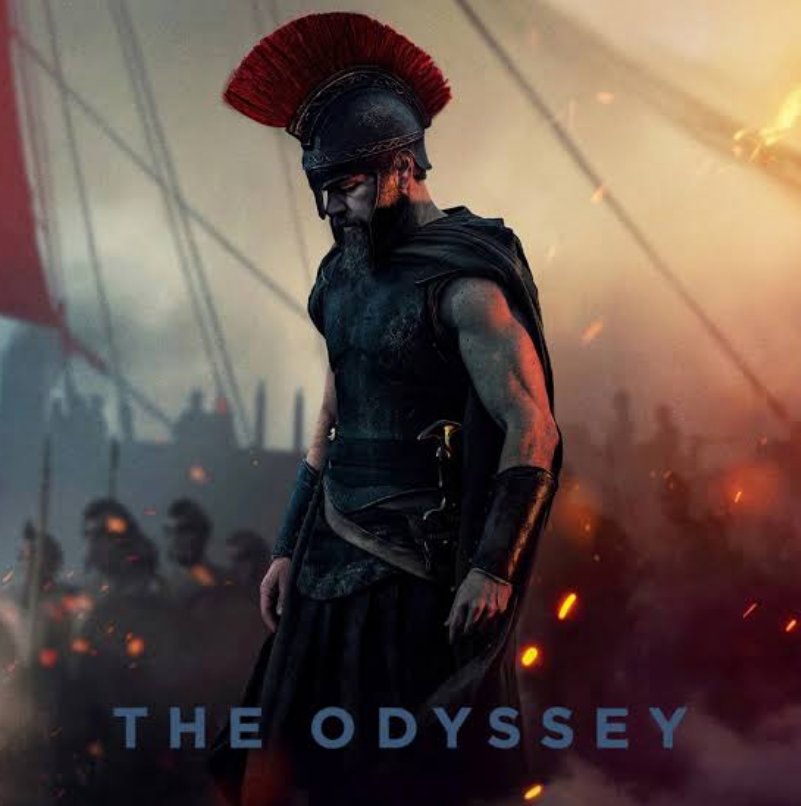
    As is now widely-known, the official poster of the film was not on Matt Damon, but a body-double, Canadian stuntwoman Devlyn Dalton.

    Forced Perspective: Standing at 4 feet 6 inches (137 cm), Dalton helped create the optical illusion of towering giants when paired with seven-foot tall stuntmen.

    The Famous Biceps: Matt Damon publicly praised Dalton’s physique, stating she had “the greatest arms I’ve ever seen”. Her muscular arms are prominently featured both on screen and in the movie’s official poster.

    6
    So much of the film is a reminder of our own Indian epics: the breaking of the bow…. Exile…. superhuman gods and monsters…. eventual victory of good over evil….

    7
    Lastly, a good occasion to revisit Tennyson famous poem:
    (the Latinized name of Odysseus)

    https://www.poetryfoundation.org/poems/45392/ulysses

    Thanks,

    Robin

Leave a Reply

Your email address will not be published. Required fields are marked *

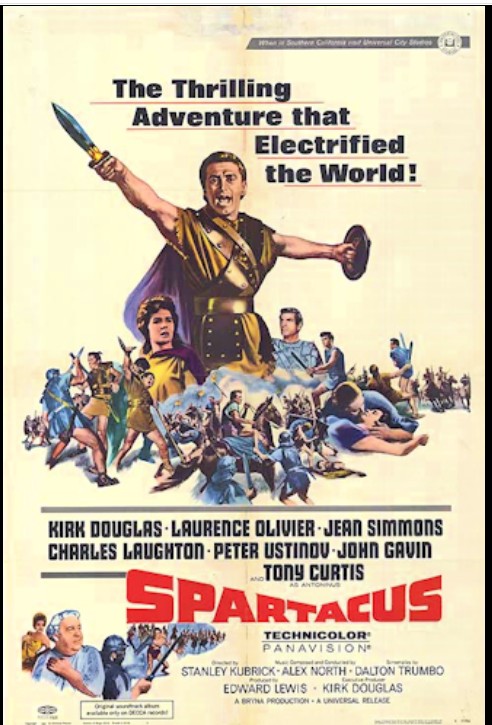
Spartacus (1960) – Eternal Classic

Embedded/ Clickable links in red

Time to read :

4–6 minutes

Genre: Historical Epic / a doomed Slave Rebellion/ based on true story.

Platform: Amazon (Rent)

Time: 3 hours 17 minutes (original time; Amazon 3 hours 1 minute)

Director: Stanley Kubrick

Cast:  Kirk Douglas (Spartacus). Laurence Olivier (Crassus). Jean Simmons (Varinia). Charles Laughton (Gracchus). Peter Ustinov (Batiatus). Tony Curtis (Antoninus). John Dall (Marcus Publius Glabrus)

Plot: Sold as a slave, the ever rebellious Spartacus is bought from a rural salt mine owner by trader Batitutus and sold for gladiator combat where one gladiator fights another to death. Varinia is offered to him for his pleasure but he refuses. Soon they get attracted to each other. Spartacus is called into the gladiator ring to amuse Crassus, Marcus and their female companions. Spartacus’s opponent refused to kill him and instead tries to  kill Gracchus and is instead killed. Soon all the slaves being trained as gladiators revolt and march on Rome. None of them are educated . Antonius, Crassus’s slave also escapes and acts as the translator of documents. Spartacus defeats the Roman Army of Marcus who is released back to face Roman senators led by Grachus who wants to promote a new leader Julius Caesar. The war against the slaves is on …

Wikipedia has a fairly decent link on the overall story of Spartacus and his role in The Third Servile War aka The Gladiator war, which was the third and the last of the rebellions that threatened the Roman Empire. His role in the revolt, and how it all ended was later written by Plutarch based on accounts. Given these accounts were not immediate, there is surely some possible embellishment. This is what provides wonderful cinematic material: a charismatic leader, the thirst and hunger to be free than be a slave and finally a rebellion that is surely doomed.  Thousands of years later, Napoleon Bonaparte proved this, with his statement “God is on the side of the big battalions”.

The film has also many back stories that can itself provide material for another film, say, Spartacus rising – the making of Spartacus (or an equally mundane title). In the 2015 film Trumbo (played brilliantly by Bryan Cranston), there is a section where Kirk Douglas meets Dalton Trumbo and says that Trumbo will be credited for the screenplay. This was a huge risk given that the Cold War was turning colder, and the depredations of the McCarthy/ HUAC hearings were still being felt with “Reds under Beds” attitudes still prevalent everywhere. (Cinephiles know that Dalton Trumbo wrote the Oscar winning screenplay of A Roman Holiday where he was uncredited). Trumbo alluded to his internal beliefs and inner strength of characters in the scene where Crassus asks the slaves to give up Spartacus, so that their lives can be spared. Every slave shouts “I am Spartacus“. This was Trumbo’s middle finger to all the McCarthyists , saying that every decent person who was branded as a “Communist” was still a decent human being and wouldn’t inform on his fellow citizens whether they were Communist or not.

And then finally Kubrick. Given his background in photography, he and the cinematographer were soon at odds . More details are available at the wiki link https://en.wikipedia.org/wiki/Spartacus_(film)#Development

However the final result is simply STUNNING. This is one of those films that deserves to be seen ONLY ON THE BIG SCREEN. The original version was 174 minutes long = 2 hours 54 minutes long. The restored version which I saw at Regal was 3 hours and 17 minutes long , longer by 23 minutes and includes a scene between Laurence Olivier and Tony Curtis which ends with Olivier remarking that he likes both oysters and snails, a clear reference to the then (1950s and 1960s) taboo topic of sexuality and in this case bisexuality.

Douglas is suitably heroic and tragic in equal measures. In the initial scenes, he only acts with his eyes as slaves are forbidden to talk and that calls for some great emoting only with his eyes. Jean Simmons is luminous as his love interest. Olivier is brilliant as the arrogant, no nonsense Crassus who wants to crush the rebellion. But it is Peter Ustinov as the trader and Charles Laughton as the Roman Senator who steal everyone’s thunder with two equally laconic performances , with each matching sleaziness with the other. The slave trader is sleazy and will do anything for money which at times is “for the good” while the Senator is only concerned with advancing himself and his protégé, Julius Caesar, through sleazy politics. The other characters may appear a bit two dimensional but that cannot be helped. What else do you expect former slaves to do except to yearn for freedom and hate their former captors.

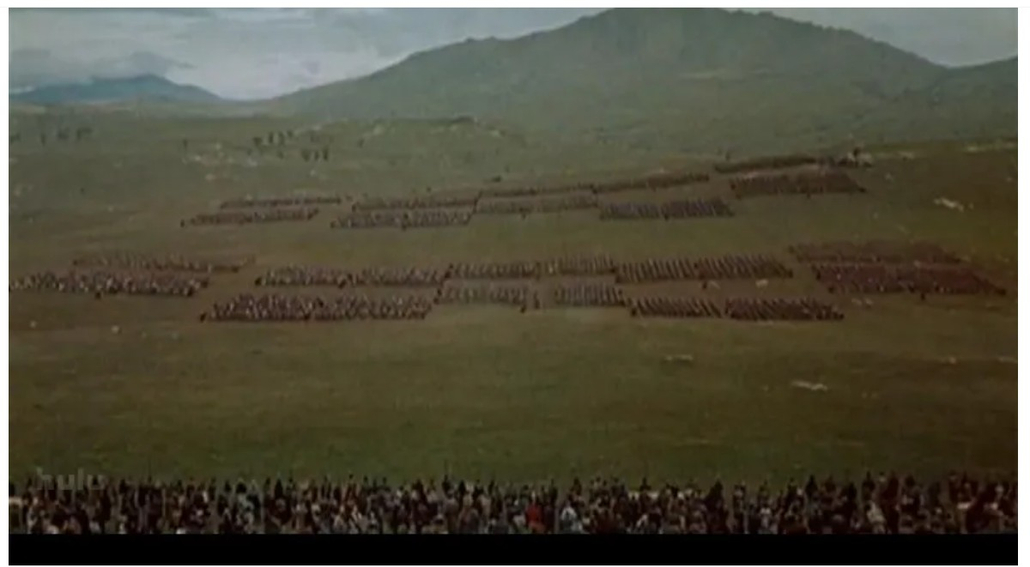
Lets also not forget the battle scenes. The film would be nothing without its incredibly staged battle scenes all done with ‘live’ extras.

It is simply stunning to see thousands of extras on both sides (by one count 10500+) – Roman Legionnaires and This was possible because the battles scenes were shot in Spain and the Spanish Army was used as extras for these scenes. (Spanish Armed Forces would figure in many 1960s war films such as Battle of the Bulge, Patton and most famously Battle of Britain as the Spanish Air Force still had operational WW2 vintage Me109 fighters and He111 bombers ). The rebellious former slaves and the Roman Legionnaires march to battle, get ready in battle formations and then finally clash. This is incredible epic film making in the style of The Ten Commandments , Ben Hur, Quo Vadis, etc.

In short this is an ETERNAL CLASSIC.

Historical background – 4 out of 5

Script – 5 out of 5

Story – 5 out of 5

Direction – 5 out of 5

Photography – 5 out of 5

 Total – 4.8 out of 5

4 comments on Spartacus (1960) – Eternal Classic

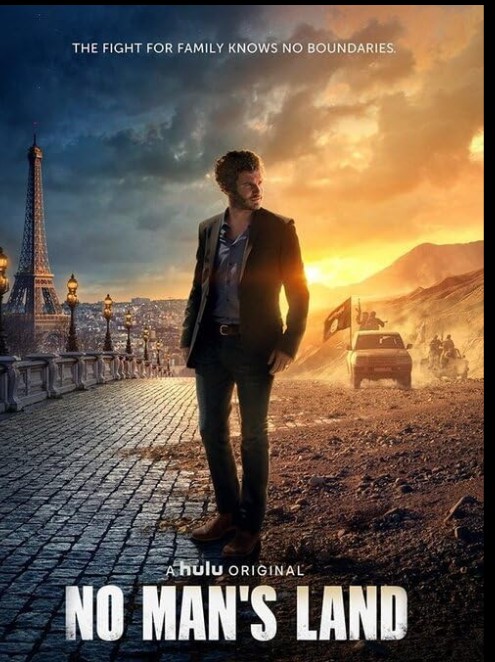
No Man’s Land – Season 1(2020) – Thrilling and Disturbing

Genre: Spy thriller cum war movie

Platform: Lionsgate Play thru Amazon (Paid)
Time: 8 episodes x average 45 minutes

Languages: English. French. Arabic. Kurdish

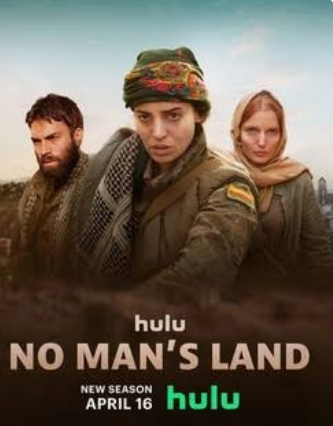
Cast:  Félix Moati (Antoine Habert). Mélanie Thierry (Anna Habert). Souheila Yacoub (Sarya Dogan). James Krishna Floyd (Nasser Yassin). Jaouhar Ben Ayed (Iyad Bel Tagi). Dean Ridge (Paul Wilkins).  James Purefoy (Stanley). Roda Canioglu (Commandant Adar). Julia Faure (Lorraine).

Plot: While visiting the hospital with his wife Lorraine, architect Antoine watches a news clip about Kurdish women fighters, fighting ISIS and is sure that he has seen his supposedly dead sister Melanie, when the video clip ends with an explosion. Antoine goes on a trip to Istanbul to visit Luke, an injured American in the video clip, which further takes him to the Syrian border and finally into Syrian heartland, in the middle of the Syrian Civil War. About to be ‘sold’ to ISIS soldiers, he is inadvertently rescued by the Kurdish female soldiers of the YPG who think he is also part of ISIS. Meanwhile three friends from Britain, Nasser, Iyad and Paul, join ISIS, due to a perceived ‘Islamophobia’ and “injustices’ in Britain. There is only one problem – Nasser has already been recruited by an intelligence officer known as Stanley who keeps popping up at regular intervals. Meanwhile Antoine meets Sarya, a Kurdish fighter; she is sure that Melanie is dead and asks him to return back to France which he refuses and goes with them on missions, determined to find out the truth about Melanie…

Its also clear from Nasser’s behavior that there is something very “off” about him as he is always watchful and cautious unlike his two friends who exult in the mayhem. I have already given a mild spoiler in that in Episode 3. Nasser, ex British Army and supposedly a British ISIS recruit, is already a spy for a man named Stanley whom he meets somewhere in no-man’s land and shares information about ISIS. (Don’t ask me how Nasser and Stanley escaped the regular ISIS patrols). There are some “are you kidding me” moments like these. Beyond that , its an absorbing thriller with some disturbing scenes in the ISIS segments.

The beauty of the series lies in the fact that like every good or great story, this is a quest. It’s about Antoine’s quest for the truth behind Melanie’s death. She was an archaeologist who had an Iranian boyfriend activist who was deported back to Iran and executed. She was supposedly blown up in a car bomb in Cairo due to her anti Iran activism. Antoine refuses to let go of this and keep digging more and more, while watching the brave Kurdish women fight off the ISIS who think they won’t attain paradise if they are killed by a woman! The women have much more to lose than anyone and so fight fiercely. The switches between Antoine’s quest, Nasser’s actions, the ISIS depredations (very disturbing), and the parallel stories that they generate are very interesting as we want to know what happened to Melanie and what is happening to the Kurdish women who have sworn to fight to death.

Spoilers: This series is NOT an easy watch as Episodes 3 and 4 deal with the ISIS depredations. Be warned, that though there is nothing graphic the sound effects, the actions and the dialogues make it clear what’s happening onscreen. All the more reason that the YPG women fight to the death. However, from Episodes 5 onwards, it more or less becomes a pure spy series as we learn about Melanie, Stanley, Nasser and how their fates are intertwined with each other. Iyad has become kill-happy while Paul is sure that there is something wrong with Nasser, as he has seen a change in his behavior.

Both Season 1 and Season 2 are available on Lionsgate Play (through Amazon Prime) and just for this series, I have subscribed to it. The night scenes are at times too dark and they give the required effect of dread.

If you want to watch a well-made series embedded in the brutality of the Syrian Civil War, the ISIS brutalities and all that centers around it, then this makes an equally disturbing and thrilling watch, due to the accurate historical backgrounds.

Historical background – 4 out of 5

Script – 4 out of 5

Story – 4 out of 5

Direction – 4 out of 5

Photography – 4 out of 5

Total – 4 out of 5
No comments on No Man’s Land – Season 1(2020) – Thrilling and Disturbing