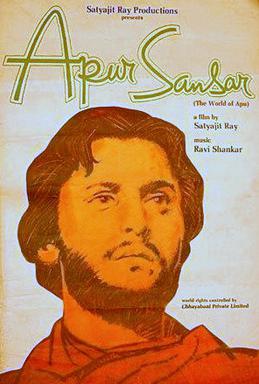
Plot: Apu quits college in Inter and wishes to find a job. He and his friend Pulu go to Pulu’s village to attend his cousin Aparna’s wedding but Apu ends up getting to Aparna, since the groom turns out to be mentally unstable. Apu brings Aparna to Calcutta and she is appalled at his existence in a single room atop a tenement. Soon she adjusts and they find married bliss in their simple existence where she manages the home and he earns money by giving tuitions. Aparna goes back to her native village and dies at childbirth…
Spoiler Alert:
Let me start with the film’s last scene / ending; working backwards, (hopefully) the essence of this human story becomes clearer.
Apu’s estranged 5 year old son Kajal: Tumi Kaun (who are you)?
Apu: Aami tomar bandhu (I am your friend)
Life has come full circle for Apu. Hope. to Confidence. to Love. to Anger and Despair. And once again Hope.
From being an orphan, to a student, to a married man who loses his wife at childbirth and finally becoming a friend to his five-year-old son who is running wild, (since the child lacks any kind of authority figure to ‘control’ him), Apu has undergone the full life cycle, while still in his 20s.
At the film’s beginning, Apu sets out to get a job. His college professor wishes that he continues his studies but Apu is clear that lack of money prevents him from continuing his science education. On a journey to his friend Pulu’s native town Khulna, Pulu reads Apu’s novel and urges him to get it published but fate has other plans in the shape of Pulu’s young teenage cousin Aparna, played with incredible absolute confidence by a then 15-year-old Sharmila Tagore, who Apu is forced to marry out of a sense of saving the girl’s honor and future.
Losing her to the rigors of childbirth. Losing interest in life. Working in a remote mine and sending money to his father-in- law to take care of Kajal. Apu’s overall depression and anger is brought out well in these scenes. He is bitter that life has dealt a bad hand to him . So much that he even doesn’t want anything to do with his son.
Once again it is Pulu’s intervention that proves critical. Pulu brought him to the marriage and Aparna. It is Pulu again who traces the child Kajal and the father Apu, and brings them together. Pulu’s job is over. Will Kajal and Apu live as father and son? The answer is provided by Apu himself to Kajal ; aami tomar bandhu.
In my view this is an ideal conclusion to the story which is actually from the second half of the novel Aparajito. The full circle of life that started with Apu’s birth and his journey till date is known to us . Aparna’s death acts as one more among the many blows that life has dealt him. Yet he comes out of it and despite not knowing what the future holds, he moves on with his ‘bandhu’. As to what Apu and his “bandhu’ will do in the future and what life holds for them is left to our imagination.
Lyrical is the word that frequently comes to my mind while watching the film. The pace is even and the third film of the trilogy shows Ray , the master observer of human emotions, in complete command of the medium. Be it a small river in rural Bengal or a dank tenement near a railway yard, the images that leap out of the screen onto us show the realities of life as seen by Apu (and by us). Subrata Mitra’s cinematography again shows the contrast between the peaceful rural areas and Apu’s somewhat harried life in his one room rooftop tenement that is open to the elements. The film also began Ray’s long association with Soumitra Chatterjee who remained his preferred lead actor well into the 1980s, acting in 14 of Ray’s films, in varying roles.
As the end titles appear, we wish that there had been more about Kajal and his bandhu and we could have known more about them and what happened to them. This is easily the most perfect film of the trilogy and a classic by any definition.
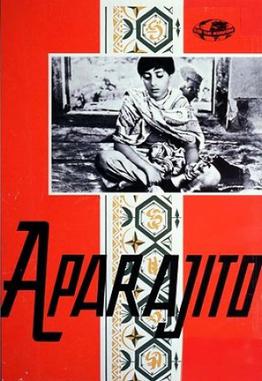
Plot: Apu’s father Hairhar is still struggling to make ends meet with his wife Sarbajaya, in Varanasi where they had shifted. Young Apu is just wandering around, playing with neighboring kids. Hari dies and an uncle helps them to return to a village so that Apu can take up the family tradition of priesthood. Apu however in interested in studying and proves to be a bright student, winning second prize in the district due to which he gets a chance to study in Calcutta. Sarbajaya is fearful but the adolescent Apu wants to learn science and goes off to Calcutta where he works in a printing press at night while studying in a college during daytime, struggling to balancing sleep, studies, friendship and money…
This is the second Apu story, written by novelist Bibhutibhushan Bandopadhyay. This is also an unusual film from Ray in that it shows that Apu is not all that loyal to his parents, especially later to his struggling mother and even insensitive to her loneliness and pain – totally in contrast with how children were always shown loyal in various Indian language films. Apu emerges almost as ruthlessly selfish as befitting any teenager who thinks only about himself and doesn’t care what’s happening in his village home. Sarbajaya’s longing look at the distant railway tracks every time a train passes on the horizon, speaks volumes about her feelings than any long sets of dialogues can say or mean.
Apu is also discovering a world beyond his supposedly simple village life – the complexity of living in a city, earning his bread, paying his rent and studying. The professor who discovers Apu sleeping in the class and sends him out reminded me of one of my school principals who would rarely speak but just gesture with his fingers – as the onscreen professor does 😊.
Apu’s disinterest in priesthood and leanings towards science also makes a subtle point about how Apu looks at the world. His constant twirling of the small globe, which he carries around, shows a desire to go beyond his small world and look for adventures beyond his own world. He finds it in multiple ways and especially as a student, who is forced to balance his life between his village / mother, his studies, his job, and generally dealing with life. As mentioned earlier, Apu emerges as a somewhat selfish person, who thinks only about himself. Sarbajaya’s lonely death, shown in multiple cuts with her gradually fading away, cuts the last bond which Apu had with the village. Though he regrets not being there in her last moments, he tells his uncle that he will perform her last rites in Calcutta and leaves everything behind . He is now a full-fledged city man, awaiting new adventures beyond his limited world view.
Once again Subrata Mitra’s outstanding cinematography deserves a special mention. Be it the Varanasi ghats or lanes, or a steam train on the horizon as seen by Sarbajaya, almost everything leaps off the screen in utter crisp clarity.
To me, the film looks is a bit underwhelming. Maybe its the second film in a trilogy where everything is yet to develop and we do not know what Apu will grow into, since Apu is trying to find his place in the world – exactly like Ray, with his second film was trying to do so. Despite my misplaced feelings, the film cant be faulted in its story of a boy growing into a teenager and suddenly encountering the world and becoming a man.
The film is on Amazon Prime and FREE on You Tube . You tube link as below:
2 responses to “Aparajito (1956) – Classic / Apu Trilogy Part 2”
Robin Bhat
Hi Rammesh,
Just an aside on Subrata Mitra:
His entry at Wikipedia is worth reading, as it relates to the pioneering use of ‘bounce lighting’ in the Satyajit Ray films.
On the Hindi film side – Teesri Kasam.
IMHO, never has Waheeda Rehman looked as majestic as she does in this film, thanks to the lens of Subrata Misra.
An ace cinematographer such as him (and a select few in the Indian Film Industry) demonstrate to us that it is in accurate to call it a ‘black-and-white film’.
Their masterworks use two primary colors: pure black and pure white… and the infinite number of fractional color values between them, beyond what the human eye can decipher.
Thanks. Will check it out . As a rule I try NOT to check ANY reference site, (at the most imdb for the artist names) lest it interfere with what I have to say ;).
Now that you have mentioned it, I will check it out. Thanks again.
Cast: Kanu Banerjee (Harihar Roy). Karuna Banerjee (Sarbajaya Roy). Subir Banerjee (Apurba “Apu” Roy). Uma Dasgupta (Durga Roy). Chunibala Devi (Indira Thakrun, the old aunt).
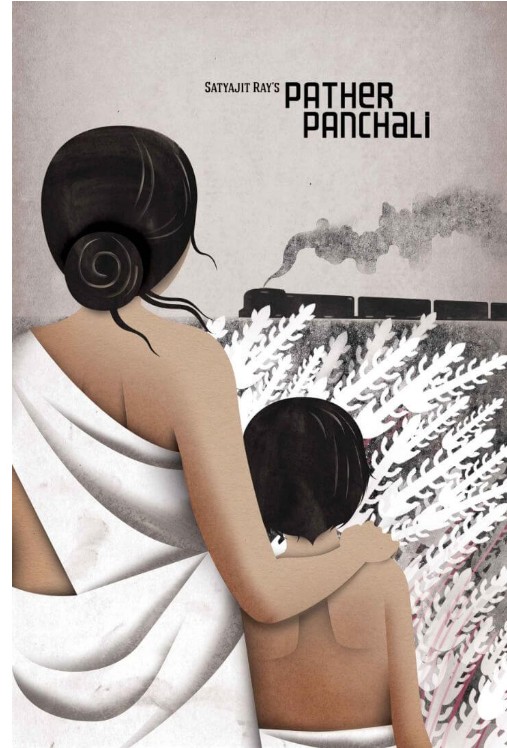
Plot: Apu is born to a poor priest Harihar, who is struggling to make ends meet with his wife Sarbajaya, and their daughter Durga. His wife resents the presence of an old aunt, who she feels is spoiling her daughter. Hari goes out of the village to multiple towns to earn money while Apu grows up in the village, learns about village life and sees the world through his innocent eyes. Sarbajaya worries about the lack of food, money and news of Hari…
The story by novelist Bibhutibhushan Bandyopadhyay was published in 1929. The film places the events in the same time period and has a total rural ambience including practices of the rural areas such as a village play (jatra), child marriage of girls who are generally uneducated , being married off at a very early age and an overall sense of rustic peace which will be surely broken by some kind of calamity.
The overall atmosphere is hardly doom laden but is filled with innocence as Apu sees the world through his eyes and cannot understand why his mother is slaving all the time , cooking, generally helping around while his elder sister Durga is playing with girls of her age . There are minimal dialogues as everything is visual , as Apu sees it. There are no cliches that one expects of films set in rural areas, such as the bad zamindar, the sly/ sympathetic priest , and so on. The village mostly has women doing all the hard household work. The men are barely seen.
Hari is essentially an optimist who feels that “the city’ will have more money and wants to try his chance there. With his meagre belongings he goes off to the city and thus starts Sarbajaya’s agony – not knowing what’s happening. The rare letter that arrives is usually rushed by Apu crying out aloud the arrival of a ‘chitti’. That the family can read is attributed to Hari being a Sanskrit teacher and helping his family to read, while composing stories and poems .
The supposedly simple village life is not all that simple as it appears to be. Sarbajaya is losing both her mental peace and must borrow money, leading to taunts and pressure from her lenders, to pay up or else. The expected tragedy as and when it happens is something that no one is prepared for. Apu also can’t understand what’s happening except that he sees his elder sister is not around any more . Durga’s death attains a more poignant tone when Hari returns with money from his various city jobs, including clothes for the family and learns of Durga’s death.
The final shot shows that Hari has had enough of the sufferings in his village and is leaving his village for the city. A snake entering Hari’s derelict broken house is the symbol that the house is inhabitable for humans. Its amazing that as early as 1929, someone had addressed the essential reason for migration from a simple rural life to an existence in a harsh uncaring city. The stage is set for part 2 and part 3 of the trilogy.
Overall the feeling of the film is like a blank canvas on which colours and shades are slowly filled. The poverty is not bleak but somehow the couple manage and finally throw in the towel. They may have been defeated for the time being but there are new adventures ahead, as seen through Apu’s eyes.
The simplicity of the film lies in its essence of everything seen through Apu’s eyes. Especially the scene where Apu and Durga rush to a railway line to see a train pass through as they have only heard its whistle and never seen it at close quarters. One of Durga’s friends being married off has its own poignancy as Durga also feels that maybe its time for her too. Durga is also accused of stealing a necklace from one of her friends but which is not found by anyone until much later , Apu finds it and quietly disposes it off at a nearby pond, thus cementing his jump from childish innocence to semi adulthood.
Personal Note: For me the village scenes, with the children running around, brought back vivid memories of my summer holidays, in my father’s village . It was his elder brother’s huge property which grew lots of vegetables and fruits . I and my cousins would run around plucking fruits or throwing stones at semi ripe mangos so that we could catch and eat them. It was a carefree time, and I can relate to Apu’s views of the village life.
The film wouldn’t be what it is , if not for the absolutely stunning photography by Subrata Mitra which shows every leaf, plant, dew drop and tree in exquisite sharp detail. The depth of focus is amazing in the long shots.
Overall this is a film that is a sure classic about the beginnings of Apu’s journey into adolescence, into adulthood and facing the thing called life.
Script – 5 out of 5
Story – 5 out of 5
Direction – 5 out of 5
Photography – 5 out of 5
Total – 5 out of 5
5 responses to “Pather Panchali (1955) – Classic / Apu Trilogy part 1”
Ram
Why No mention of Chunibala Devi as Indir Thakrun- who was a scene stealer-
Loved reading your review.. will await the next installments of your review of these delicate masterworks.
(small aside – I once did make the error of watching all three films in a single afternoon… mistake…. in the middle of the third film (Apur Sansar), was simply overwhelmed and left the theatre… (though, I have seen the films separately in the past, and do have the Blu-ray editions)
Criterion Collection:
“…shot over the course of five years, and each stands on its own as a tender, visually radiant journey. These films—which have risen from the ashes in meticulously reconstructed restorations, after the original negatives were burned in a fire—are among the most achingly beautiful, richly humane movies ever made.”
___
Best part of your review was your personal note… unrelated (sort of), but immediately reminded me of:
Aayaa hai mujhe phir yaad vo zalim
Guzara zamana bachapan ka
Haay re akele chhod ke jana
Aur na aanaa bachapan ka……
Vo khel vo saathi vo jhule
Vo dod ke kehanaa aa chhu le
Ham aaj talak bhi na bhule
Vo khwaab suhana bachapan ka…….
Mil kar roye fariyad kare
Un bite dino ki yaad kare
Ai kash kahi mil jaye koi
Vo mit purana bachapan ka
I like your practice of rewatching films you had seen in childhood again and recording your impressions. Apu Trilogy is truly a classic from a master filmmaker.
Cast: Matt Damon (Odysseus). Tom Holland (Telemachus). Anne Hathaway (Penelope). Robert Pattinson (Antinous). Lupita Nyong’ (Helen of Troy and Clytemnestra). John Leguizamo (Eumaeus). Samantha Morton (Circe). Zendaya (Athena). Charlize Theron (Calypso).
Plot: Queen Penelope of Ithaca waits for her husband Odysseus who is presumed lost and dead, after going to war and on a voyage. Many unruly suitors gather daily to ask her hand in marriage while her young son Telemachus, who is not of age and cannot assume the throne, watches with increasing revulsion and anger. The blind slave Eumaneus is convinced that Odysseus is alive as Argus, Odysseus’s very sick hunting dog, is unusually alive for twenty years, long past a dog’s usual life span. Odysseus is in an island with a beautiful woman Calypso with whose help he is trying to remember his past, who he was, what happened to him and what happened to ‘his men’ as he is sure he commanded a ship with many sailors…
Statutory Declarations:
I haven’t read Homer’s Odyssey. So, I do not know the “original” story and cannot “compare” the film with the original story.
I only have a vague idea that Odysseus went on a journey, had multiple adventures and finally came back to his kingdom.
An entire industry has started about what was there in Homer’s Odyssey and how Nolan has messed it up.
I approached it as a film comparable to our Indian epics.
Given this background, I saw a story of ancient civilizations, queens, kings, treachery, monsters, ghouls, spirits, witches and what not. And I ENJOYED IT IMMENSELY since I didn’t have material to compare with and pick holes in the story as to “nah – that’s not correct; this is not what happened; this is too filmy; etc “. While watching the film (twice), I was mentally comparing with other cinematic epics like Spartacus, The Ten Commandments, etc and our own two great epics Mahabharata and Ramayana, as the sensibilities are somewhat similar. Film critics, ancient historians, bloggers, and anyone with a keyboard, have said that the “soul” of the story had been destroyed by Nolan due to an over emphasis on Odysseus and his guilt of his dead soldiers, lending a “modern” politically correct sensibility and thus supposedly “destroying” the core of the original story. In my view, this “modern sensibility” is what probably appeals to many viewers. A commander cant send his troops into battle without feeling sorry about the deaths, especially when his decisions prove fatal to many of his troops . (WW2 nerdy data : many British generals of WW2 who fought as young men in WW1, generally were extremely cautious in offensive operations, lest it end up as a WW1 style mass massacre).
But thats digressing. Lets look at the core story.
A King in exile trying to piece together his past. A queen pining for her husband who may or may not be dead. A blind loyal slave (Leguizamo is brilliant as Eumaeus). Multiple journeys with many adventures of meeting evil monsters, giants, unusual ghouls, etc. Actions and its consequences – somewhat like the karmic sensibilities of the Mahabharata. War and its consequences. A blind belief in the “Laws of Zeus” which once broken, has all round negative consequences. In fact I feel the film is one large story about action and consequences.
As for the overall narration, it is done in the typical non linear choppy back and forth style for which Nolan is famous (or notorious as might be the viewpoint). Starting with Ithaca, the gift of the wooden horse to Troy, jumping to Odysseus and Calypso, then years before with a young Odysseus, Trojan war – this back and forth narration can leave one confused but his strong screenwriting doesn’t falter and the threads are absolutely intact so much that someone – and that includes most of the lay film lovers/ film goers – who don’t know anything about Homer’s Odyssey, and haven’t read a word about the story, can easily follow what is happening , all the way to the final conclusion when Odysseus returns from his involuntary exile , back to Ithaca, reclaim his throne and fend off the unruly turned evil suitors led by Antinous.
The first time I saw it on Imax at Inorbit Mall, Malad and didn’t really feel anything different about the Imax factor ; googling produced the result that this was actually a “LieMax”. The second time I saw it at PVR Palladium, Lower Parel (with my wife) and this time the 70 mm sweep of the story was visible along with the crisp clarity of prints. The various locations serve brilliantly for the various scenes.
This is easily one of the most passionately done epics in recent if not all times.
Script – 5 out of 5
Story – 5 out of 5
Direction – 5 out of 5
Photography – 5 out of 5
Total – 5 out of 5
A special rating for Passion for Film – 6 out of 5 😊
PS: MY wife simply LOVED IT .
4 responses to “The Odyssey (2026) – BRILLIANT EPIC”
You are hereby encouraged to get additional input into all your reviews! For whether it is that of Mrs. KVR, or Penelope or Athena or Calypso or sometimes even the dangerous Circe, a woman’s instinct is usually infallible!
Your review is spot on, as usual. Learned something new today – there is a format called ‘LieMax’; (what a name!)
Not much to add to your review.. just a few random points.
1
My experience shared with a few friends: seeing it the first time (3 hour film) was difficult; for the second-time I did a brief bit of prep-homework: read a summary of the epic. So, enjoyed/understood the film much more and it did not feel as long.
2
As expected, the film has entered the ‘Billion Dollar Club’.
3
One small puzzle – unless I did not hear the words right, the use (two times) of the F-word and once the S-word seemed out of place.
4
Anne Hathaway and Robert Pattison are having quite the season this year.. a couple of films released and more coming.
5
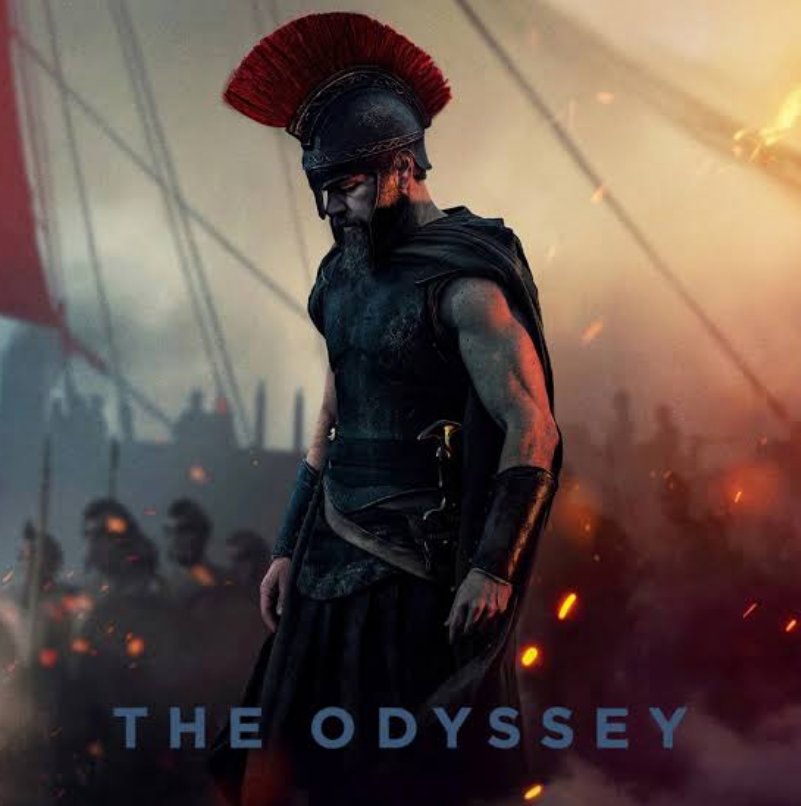
As is now widely-known, the official poster of the film was not on Matt Damon, but a body-double, Canadian stuntwoman Devlyn Dalton.
Forced Perspective: Standing at 4 feet 6 inches (137 cm), Dalton helped create the optical illusion of towering giants when paired with seven-foot tall stuntmen.
The Famous Biceps: Matt Damon publicly praised Dalton’s physique, stating she had “the greatest arms I’ve ever seen”. Her muscular arms are prominently featured both on screen and in the movie’s official poster.
6
So much of the film is a reminder of our own Indian epics: the breaking of the bow…. Exile…. superhuman gods and monsters…. eventual victory of good over evil….
7
Lastly, a good occasion to revisit Tennyson famous poem:
(the Latinized name of Odysseus)
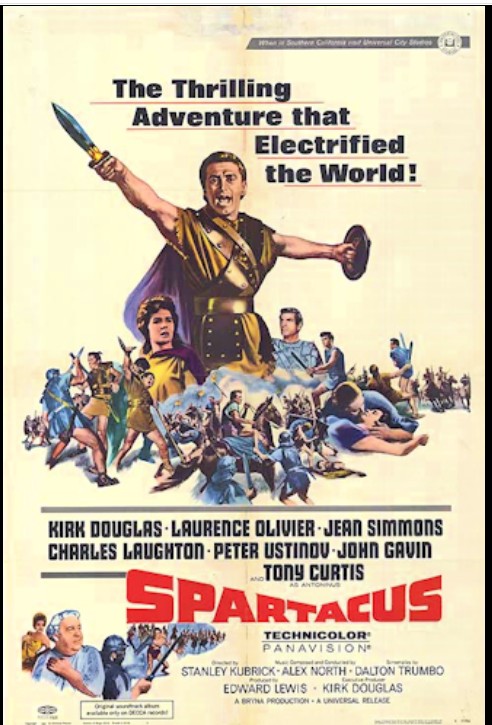
Cast: Kirk Douglas (Spartacus). Laurence Olivier (Crassus). Jean Simmons (Varinia). Charles Laughton (Gracchus). Peter Ustinov (Batiatus). Tony Curtis (Antoninus). John Dall (Marcus Publius Glabrus)
Plot: Sold as a slave, the ever rebellious Spartacus is bought from a rural salt mine owner by trader Batitutus and sold for gladiator combat where one gladiator fights another to death. Varinia is offered to him for his pleasure but he refuses. Soon they get attracted to each other. Spartacus is called into the gladiator ring to amuse Crassus, Marcus and their female companions. Spartacus’s opponent refused to kill him and instead tries to kill Gracchus and is instead killed. Soon all the slaves being trained as gladiators revolt and march on Rome. None of them are educated . Antonius, Crassus’s slave also escapes and acts as the translator of documents. Spartacus defeats the Roman Army of Marcus who is released back to face Roman senators led by Grachus who wants to promote a new leader Julius Caesar. The war against the slaves is on …
Wikipedia has a fairly decent link on the overall story of Spartacus and his role in The Third Servile War aka The Gladiator war, which was the third and the last of the rebellions that threatened the Roman Empire. His role in the revolt, and how it all ended was later written by Plutarch based on accounts. Given these accounts were not immediate, there is surely some possible embellishment. This is what provides wonderful cinematic material: a charismatic leader, the thirst and hunger to be free than be a slave and finally a rebellion that is surely doomed. Thousands of years later, Napoleon Bonaparte proved this, with his statement “God is on the side of the big battalions”.
The film has also many back stories that can itself provide material for another film, say, Spartacus rising – the making of Spartacus (or an equally mundane title). In the 2015 film Trumbo (played brilliantly by Bryan Cranston), there is a section where Kirk Douglas meets Dalton Trumbo and says that Trumbo will be credited for the screenplay. This was a huge risk given that the Cold War was turning colder, and the depredations of the McCarthy/ HUAC hearings were still being felt with “Reds under Beds” attitudes still prevalent everywhere. (Cinephiles know that Dalton Trumbo wrote the Oscar winning screenplay of A Roman Holiday where he was uncredited). Trumbo alluded to his internal beliefs and inner strength of characters in the scene where Crassus asks the slaves to give up Spartacus, so that their lives can be spared. Every slave shouts “I am Spartacus“. This was Trumbo’s middle finger to all the McCarthyists , saying that every decent person who was branded as a “Communist” was still a decent human being and wouldn’t inform on his fellow citizens whether they were Communist or not.
However the final result is simply STUNNING. This is one of those films that deserves to be seen ONLY ON THE BIG SCREEN. The original version was 174 minutes long = 2 hours 54 minutes long. The restored version which I saw at Regal was 3 hours and 17 minutes long , longer by 23 minutes and includes a scene between Laurence Olivier and Tony Curtis which ends with Olivier remarking that he likes both oysters and snails, a clear reference to the then (1950s and 1960s) taboo topic of sexuality and in this case bisexuality.
Douglas is suitably heroic and tragic in equal measures. In the initial scenes, he only acts with his eyes as slaves are forbidden to talk and that calls for some great emoting only with his eyes. Jean Simmons is luminous as his love interest. Olivier is brilliant as the arrogant, no nonsense Crassus who wants to crush the rebellion. But it is Peter Ustinov as the trader and Charles Laughton as the Roman Senator who steal everyone’s thunder with two equally laconic performances , with each matching sleaziness with the other. The slave trader is sleazy and will do anything for money which at times is “for the good” while the Senator is only concerned with advancing himself and his protégé, Julius Caesar, through sleazy politics. The other characters may appear a bit two dimensional but that cannot be helped. What else do you expect former slaves to do except to yearn for freedom and hate their former captors.
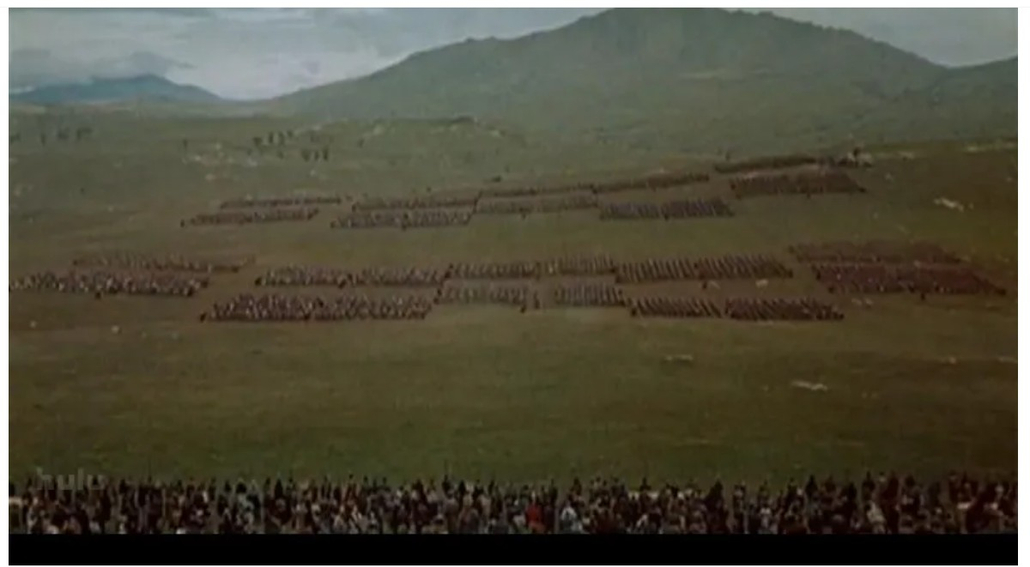
Lets also not forget the battle scenes. The film would be nothing without its incredibly staged battle scenes all done with ‘live’ extras.
It is simply stunning to see thousands of extras on both sides (by one count 10500+) – Roman Legionnaires and This was possible because the battles scenes were shot in Spain and the Spanish Army was used as extras for these scenes. (Spanish Armed Forces would figure in many 1960s war films such as Battle of the Bulge, Patton and most famously Battle of Britain as the Spanish Air Force still had operational WW2 vintage Me109 fighters and He111 bombers ). The rebellious former slaves and the Roman Legionnaires march to battle, get ready in battle formations and then finally clash. This is incredible epic film making in the style of The Ten Commandments , Ben Hur, Quo Vadis, etc.
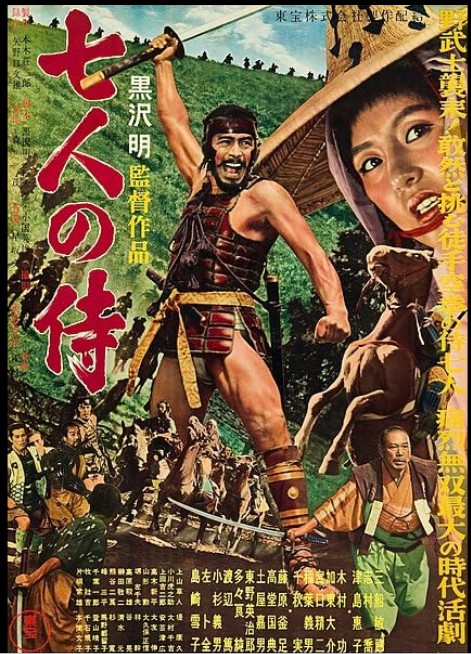
This is my 200th Post since November 2022 . I have been steadily posting every sunday and I wanted something special and chose the classic The Seven Samurai
Clickable Links in red
It can be argued that Akira Kurosawa’s film The Seven Samurai is highly influential worldwide as it put post WW2 Japan on the world cinema map. At the same time, Japan continued its string of ‘regular Japanese masala films’, like Godzilla – originally titled Gojira (1954) – continued and that too put Japanese cinema on the world cinema map.
The Seven Samurai has been exceptionally influential worldwide. The concept of a small town / village hiring mercenaries to defend itself against the depredations of local bandits who regularly harass them, proved cinematic gold. Hollywood made the first adaptation, which was virtually a copy-paste with localization into the Western genre. The Magnificent Seven (1960) gave ample scope for the employment of the disparate group of mercenaries, each with his own special skill. Even the young idealistic Samurai, who joins the experienced warriors, was copied as the young gunman, played by first time actor Horst Bucholz, who joins them. The same film was remade in 2016 but the original was the original. Return of the Seven (1966) with only Yul Brynner from the original cast, as the leader, proved that the magic of the original will always remain the original and any follow up would pale in comparison , which is what happened. The Wikipedia page of Akira Kurosawa cites some 10 worldwide inspirations and only 1 Indian inspiration, which only means that you can rely on Wiki only so much :). By my count there are at least 4 Hindi film inspirations and probably more that I am unaware of in other Indian languages. A google search ridiculously mentions Tamil film Thalapathi(1991) as one among many inspirations, while everyone who has seen the film knows that its a modern twist on the Karna-Arjun story from Mahabharat..
Except for Sholay, the other films are all available on You Tube. So, here’s my take on the inspirations that adhere to the formula “village hiring mercenaries to save itself from cruel dacoits”:
Mera Gaon Mera Desh (1971) – or One Samurai!
Casual criminal Ajit (Dharmendra) is hired by ex-Army soldier turned villager Jaswant (Jayant) to defend a village against a dreaded dacoit Jabbar (Vinod Khanna). After the initial false starts, Ajit soon starts liking village life to the extent of falling in love with a local lass Anju (Asha Parekh). Things turn a bit complicated when Jabbar’s mistress and nautch girl Munnibai (Laxmi Chaya) also starts liking Ajit and wants to wean him away from Anju.
Raj Khosla’s reputation as a “hit film maker” solidified with this film which was a perfect masala of story, action, dialogues, songs and charismatic main characters played by equally charismatic lead actors. Vinod Khanna’s reputation shot up after his role as Jabbar. Dharmendra was already on a roll as a bankable action star and so too Asha Parekh as a dependable leading lady. What’s unusual is that Laxmi Chhaya also got equal if not more footage as the semi vampish woman who finally sides with Ajit and naturally pays the cinematic price for doing so. The music by Laxmikant Pyarelal delivered one memorable song after another and what’s unusual is that Laxmi Chhaya, the vamp, had three songs picturised on her: “Aaya aaya atariya pe koi chor”, “Hai sharmaun kis kisko bataun” and the most famous of them all ‘Maar diya jaaye ke chhod diya jaaye”. What’s also unusual is that Lata Mangeshkar sang all the three songs for the vamp and also two for the lead heroine – the solo ‘Sona le jaa re” and the superb duet with Mohammed Rafi “Kuch kehta hai ye sawan” which hovers around six notes. The film preceded Sholay by a full four years and was a huge hit. The villages around Udaipur added to the authenticity of the rustic tale of one village against dacoits.
Watching it a few years ago on You Tube, I was struck by the fact that it still seemed fresh – if one doesnt unnecessarily compare with today’s films and understands the times in which it was made. (That applies to all the films discussed below)
My Rating – 4/5
Khotey Sikkey (1974) – or Five (and a half) Samurai meets The Man with No Name.
This is a clever mix of For a Few Dollars More and The Seven Samurai. Here it is dreaded local dacoit Janga (Ajit) and his depredations for which one of the villages sends Ramu (Paintal) to bring his cousin brother Jaggu (Narendranath) back to the village along with his friends Danny (Danny Denzongpa), Bhaggu (Sudhir), Salim (Ranjeet) , a wrestler and his midget friend. They soon encounter a lone man on a horseback (Feroze Khan), always dressed in black and whose name no one knows . Soon the six (and a half) band together to defend the village against Janga.
While the Seven Samurai part is clear, the Dollars part becomes even more in the segments dealing with Feroze Khan and his quest to take on Janga alone. The ticking musical watch that serves as the start of the killing of a police informant and in the long drawn out climatic fight between the duo – all these are a straight copy-paste from For a Few Dollars More.
The digressions and localisation are in the shape of Danny bringing his city girlfriend Reeta (Alka) to the village, a courtesan Paro (Rehana Sultan) being courted by the Man with No Name, Jaggu slowly liking the much-harassed widow Madhu (Madhu Chanda), Bhaggu the inveterate womaniser and the five goons being a mix of religions and communities. They are the ‘khotey sikkey’ – the fake coins – of the title that ultimately prove to be the ‘true’ coins. Writer Director Narinder Bedi does an excellent job and the overall action and plot is very much in keeping with the ethos and story of The Seven Samurai. In such a film, music can be a double-edged weapon as none of the main ‘Samurai’ can be seen singing. So, it is left to the horseback rider’s father singing in a flashback, Jeevan me tu darna nahi, which he sings to the village children and recurs as a refrain from time to time. Since Paro is a courtesan, she does the obligatory mujra number, Pyaari pyaari suratwaale. It might feel slightly kitschy but that is true for most films made in the 1960s and 1970s.
This is as enjoyable as they come even if it feels tacky at times.
My rating – 4/5
Sholay (1975) – or Two Samurai.
There is nothing much that can added to the classic and it still remains a perfect masala film with an equal share of comedy, tragedy, action, emotion and music. The recent release of the restored version with the original ending of Thakur killing Gabbar Singh , and its immediate aftermath of Thakur weeping as he has lost his life purpose, is far more powerful , than the original limp ending of Gabbar being led away by the police which was under political pressure about ‘law and order forces should be seen to triumph’ . That kind of dogma would soon be upended by a series of films where the main character would have shades of grey . As someone said, Hindi Film Industry can be divided into two eras – Before Sholay and After Sholay.
Both Amazon Prime and Jio Hotstar have the prints with “original” ending of Gabbar being handed over to the police!
My rating – 5/5
China Gate (1998) – or Seven “Old” Samurai 😊.
China Gate is the ONLY film that I know of where at the start of the film, there is a tribute to Akira Kurosawa and his film The Seven Samurai. Given this tribute, this film is a nice twist on the “Seven Samurai Universe” in that they are not mercenaries but seven ex-Army soldiers who had been cashiered/ court martialed for a critical anti terrorist operation that went wrong. All of them have been branded as cowards and their court case was also thrown out. The seven are old, surviving on odd jobs, facing private humiliation, generally past their best. Their old C.O. Colonel Krishnakant Puri (Om Puri) has faith in them, but the old men are not so sure. They are at the village to combat Jageera (Mukesh Tiwari) under the invitation of Sandhya (Mamta Kulkarni) whose father and Puri had been friends. There is also a would-be Samurai, a young runaway who wants to join the Army and thinks that being with the Samurai will teach him how to do it – this fulfils the original “young fresh samurai” formula.
Rajkumar Santoshi’s tribute is well made and has superb action sequences with the ‘old’ Samurai doing what they do best. There is a localization with a corrupt cop (Paresh Rawal) demanding that the seven show their arms licenses and generally trying to be obstructive. He is even friendly with Jagira and wonders out aloud “Better to be friends with them ; who knows tomorrow they may end up as politicians”. There is also the Hindu-Muslim tension in the form of the long feud between Colonel Keval Puri (Amrish Puri) and Major Sarfaraz Khan (Naseeruddin Shah). Depending on how one sees it, it’s a bit of fun to see the ‘old timers’ saving the village from the dreaded dacoit. Musically the number ‘Chamma Chamma’ for a special dance number by Urmila Matondkar, was a chartbuster. The posters and promos were all of her in the song costume while she was there only for the song. There were some rumors / press reports that the ‘heroine’ Mamta Kulkarni was upset at the director for not including her in the promos.
I didnt want to see it as I was sure it would be a disaster. Yet I saw it on the last day last show (9:30 pm) at Metro cinema in 1999. I wasnt sorry that I saw it and enjoyed it. Even Jageera was good and suitably nasty.
My rating – 4/5
In summary, these four Hindi make the grade perfectly. If there are any films in other languages that fulfill the ‘formula”, do share.
What’s your take on these Seven Samurai clones? Do you know of any other films that STRICTLY follows the “mercenaries hired by a village/ city” formula? Share your thoughts and do write in.
6 responses to “The Seven Samurai (1954) – and its Indian inspirations.”
Siddhesh Raut
A massive and really inspiring achievement! You now have an archive that people can trust to get the best of the best in your unique niche. Can I just say that your enthusiasm and detailed is so contagious and fun. You really engage with details in a way that makes your work authoritative, and fun too. It reminds of a tidbit around how a lot of archeaological/heritage work in India was done by enthusiastic government teachers who took out their bicycle to explore the countryside. I meaningful way to live if anything. Congrats and keep at it! :D
WRT the post: I really enjoyed Seven Samurai, and coincidently was going to watch Rashomon this week too.
Congratulations on your post ! In this world of forgettable/depressing/inconsequential news, they are certainly something to look forward to you! Adds a bit of mirch-masala to the week.
—
“The concept of a small town / village hiring mercenaries to defend itself against the depredations of local bandits who regularly harass them” – Hindi/Indian films
Have to think of this some more..but does ‘Ramgarh Ke Sholay’ count? I have not yet dared to view this film!
__
Congratulations on hitting 200 posts! Hats off to your consistency. I haven’t watched the original Seven Samurai and your post has convinced me to correct that at the earliest.
Of the Indian adaptations, I’ve watched Sholay and China Gate, and the latter has weirdly been one of my favourite movies to rewatch. I think Jageera as a villain is a bit overblown but everything else works well for me, including the lovely Alsation dog that Amrish Puri’s character has a problem with until the end, where he takes on his care. :D
Thanks. Jageera has to be overblown, given that there would be comparison with other “iconic” (how I hate that word for being overused) villains like Gabbar SIngh, Mogambo and so on.
As for the original, once you watch it, I am sure you will feel these are but pale imitations. Its available on You Tube but you the auto translate leaves much to be desired !
https://rammesh.co.in/wp-content/uploads/2025/05/1-pixel.png00Rammeshhttps://rammesh.co.in/wp-content/uploads/2025/05/1-pixel.pngRammesh2026-08-23 11:18:592026-08-23 13:53:53The Seven Samurai (1954) – and its Indian inspirations.
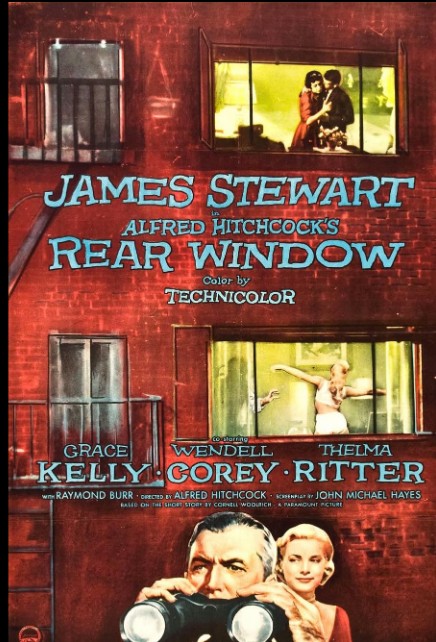
Cast: James Stewart (L.B. Jefferies). Grace Kelly (Lisa Fremont). Thelma Ritter (Stella). Wendell Corey (Tom Doyle). Raymond Burr (Lars Thorwald)
Plot: Due to an accident in which his leg was fractured while capturing a motor race accident, photographer Jeffries is confined to his wheelchair for six weeks in an apartment. With nothing to do he observes the neighbourhood through his window and sees various stereotypes. He is convinced that the jewellery salesman in the opposite flat has murdered his invalid wife as he has seen him make mysterious trips in the middle of the night. His girlfriend Lisa and his physiotherapist Stella think he is crazy but soon they too are convinced that something is not right ….
From the early to the late 1980s, I was a member of a film club which showed all the ‘world masters’ such as Kurosawa, Ingmar Berman, Fellini etc . I innocently asked one of the society organisers why they do not show Hitchcock films. He gave me a look that was a cross between disgust and anger. When I persisted , he mumbled something about appropriate 16 mm prints being unavailable .
During the Red Lorry Festival in March this year, I attended the “Directors masterclass” by Sriram Raghavan. Amazingly he narrated a similar incident where during his FTII days, he was ticked off for requesting that Hitchcock films be shown and even included in film studies. Hitchcock is more or less standard in most Western film schools while I am not sure whether it is taught in Indian film schools .
Because Rear Window remains an amazing example of the craft of film making.
Looking at the film today and judging by the audience response in a recent screening, the film still holds its own and is not at all dated. The audience response was EXACTLY the same as when I saw it three days in a row , forty years ago. A private screening at a friend’s place, the response was exactly the same with the audience letting out gasps at the same places as happened years ago.
So what is it that makes this CLASSIC?
The amazing set design? looking at how tightly the camera moves, it is impossible to believe that whatever Jeff sees from his point of view is actually one gigantic setting filled with amazing characters such as the struggling song writer, ‘Miss Lonelyhearts” – a single somewhat aged woman who is struggling to find a partner, Miss Torso – the well endowed ballet dancer who is trying to find the ‘right man’, a deaf sculptress, Thorwald the jewellery salesman mocked by his invalid wife, an aged childless couple who let down their pet dog every day by a basket , a newlywed couple who rarely open the window once they enter the nearby flat . And so on.
As mentioned by Donald Spoto in his classic book The Art of Alfred Hitchcock, each of them represents the various possibilities that Jeff and Lisa may end up as – lonely, embittered couple, childless couple ; as Jeff says “he would welcome trouble at this stage”. And boy does he get it.
Much more than the murder mystery angle is the totally sneaky way in which the film gradually peels away the layers and points out why we love films – basically we are all voyeurs! Stella clearly tells Jeff “we have become a race of peeping Toms; we should go out and take a good look at ourselves’. Since it happens in the film’s beginning most of us may miss that line but it is THE clear connection about film being nothing but scripted voyeurism!
This is sophisticated film making and as with any Hitchcock, the script crackles with wit , sometimes macabrely – when Jeff is about to eat his morning bacon breakfast, Stella looks at Thorwald’s flat and wonders aloud “where would he cut her up ? where could he have done it?’ Needless to say Jeff puts the bacon back on the plate.
Many moments like these pepper the film which remains easily among any top 10 Hitchcock films.
The final word – WATCH IT ANYHOW.
PS: With such a terrific story , its no wonder that many have tried to remake it . Some have succeeded while others remain meh! Here are the list of two remakes that I know of:
1. Rear Window (1998) – Christopher Reeve as a paralysed man confined to his wheel chair who is sure he has seen a murder; would love to watch to check out how it turned out. The film is available on You Tube!
2. Disturbia (2008) – A teenager confined to his home with an electronic locker on his foot, is sure he has seen a murder, in the neighboring home. Very gripping.
Script – 5 out of 5
Story – 5 out of 5
Direction – 5 out of 5
Photography – 5 out of 5
Total – 5 out of 5
One response to “Rear Window (1954) – Classic”
Robin Bhat
Hi Rammesh,
Another great review! Yes, to some extent or another, we are all ‘voyeurs’ !
A small bit of trivia, also from the Spoto book:
“The movie begins as the credits appear over a slowly ascending bamboo shade. The view we finally see beyond the shade is the panorama of the largest indoor set built by Paramount Studios up to the end of 1953 – the array of apartments in the buildings surrounding Jeff”.
The book goes on to explain how Hitchcock did his homework… the address of the apartment.. proximity to the police station… in the film, and in reality; this is not the first Hitchcock film where one can trace the local address/geography in the film to an actual map.
(In contrast.. unlike typical Bollywood masala, where most murders/takedowns/police sirens end up – if a Mumbai setting at the Ballard Estate area or if New Delhi, the ‘Lutyens’ area)
—
Any Hindi film remake of ‘Rear Window’ ?
—
Lastly, very impressed at knowing that you attended the “Directors Masterclass” conducted by none other than masterclass director Sriram Raghavan! (Ikkis, Andhadhun, Badlapur, Johnny Gaddar…)
When I was doing research for my book on Hrishikesh Mukherjee (Human Cinema available on Amazon on Kindle and Print ; for Amazon link, please click herehttp://bit.ly/4pnxUPL ), I came across this statement by Hrishida – “My film is not a copy of any foreign film; it is just a story of two friends one of whom doesn’t want to let go of the other”. If anything, Hrishida was very good at dissembling and diverting attention in a cheeky sort of way. He said similar things about Anupama (supposedly based on a cousin’s life story) and Abhiman (supposedly about one of his friends who had a problem with his wife and NOT any musical personalities’ personal lives).
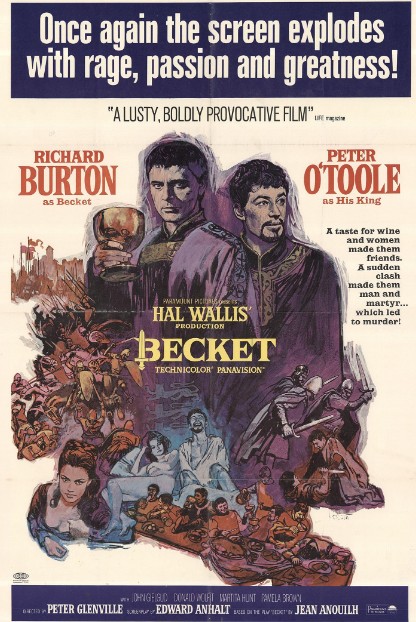
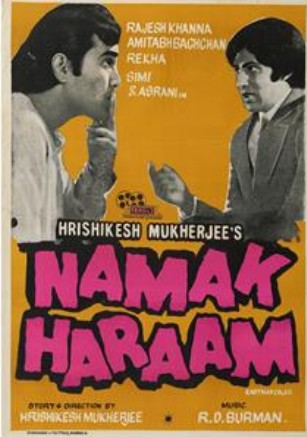
When Namak Haraam was released, there was some loose talk about it being a direct copy of the 1964 English film Becket, updated for modern times. I can confirm that this supposed loose talk is more than true. The King becomes the Industrialist and the Head Priest/ Arch Bishop becomes the Industrial worker turned Union Leader. In both cases the King/ Industrialist places his friend in a position thinking that his “friend” would be his puppet. Predictably his friend, the supposed puppet, turns adversary, does what is morally right and not what is convenient for the King.
There is NO WAY that anyone can dismiss Namak Haraam as anything but an – er – inspiration of Becket. Yet, I find the Indianisation perfect and contemporary to the times in which it was set in. The early 1970s were filled with news of various industrial strikes across India due to labour unrest, fuelled by a perception that the ordinary industrial worker was not getting his dues and all the ‘profits’ from their labour were filling the coffers of their masters. The most famous or should we say infamous example of this was the textile strike of the late 1970s/ early 1980s that ultimately resulted in massive job losses and multiple textile mills in the area of Parel-Lower Parel-Mahalaxmi shutting down and never opening again. Today the land has been sold and most of them are made in to apartments or malls while the chawls in which the workers lived, still stand in their original semi dilapidated condition, cheek by jowl with the towers.
Coming back to Namak Haram. When it was released in 1973, the biggest indicator of Amitabh Bachchan’s rising stardom was as shown in the hair cutting salon which I used to visit. There was an “Amitabh cut”, complete with Amitabh’s photo and how the hairdressers would go about doing it. This also was the second film in which Rajesh Khanna and Amitabh Bachchan worked together. Hrishida also said in an interview that he had to keep the ending a secret as both stars wanted mileage out of the ending. Amitabh was supposedly upset that he didn’t get to ‘die’ onscreen.
Vicky as a character is fascinating at best; he cannot give up his friend and he wants to childishly hold on to him despite growing evidence that Somu is a different human from the friend with whom he used to go drinking, chasing women and indulging in extravaganzas he couldn’t afford and he knows that everything is paid for, by Vicky. Somu ‘grows up’ from something of a ‘chamcha’ as his locality calls him, to a ‘planted union leader’ designed to break the stranglehold of Bipin Lal the Union leader, to finally a human who realises where his moral duty as a Union Leader lies, which is to fight for the labourer’s rights. In contrast, Vicky remains the same embittered somewhat childishly selfish person he always was. Only Somu’s death makes him see the light and he promises to set things right.
Becket’s story is somewhat similar. Becket’s King is bothered by The Church which keeps questioning his authority and wants him to submit to it. So, what better way to control it than to have his friend, a priest, be made the figurehead Arch Bishop whom he can control? While he thinks He, The King, is the law, the Arch Bishop soon starts countering saying that there is a HIGHER LAW that has to be obeyed and soon both are at loggerheads with each other.
So, which is the better version? This is incredibly difficult to answer.
Becket is the longer film and has some moments which we cannot relate to, especially the religious and historical angle. From that context alone, Namak Haram is easy to relate to due to the Indian milieu in which it is set, the focus on the friendships and of course music which forwards the story. The side plot of the drunk poet is something that is not there in the original film but is a perfect example of the localisation that was done, leading to an interesting song situation, the totally melancholic Mai shaayar badnaam. A fleeting shot of the dying poet looking at Bipin Lal’s daughter leaves us with a question – is she the woman who ditched him, leading to his alcoholism, and his sad smile is a final thank you? Such ambiguity is there in many of Hrishida’s films and we can make whatever meanings we want out of it.
Both films begin in the same way. In the Hindi film, Vicky released from prison, goes home and is confronted by the photo of a smiling Somu. In the English film, the King reaches a mausoleum where the death mask of the Bishop has been kept; the King starts questioning the death mask. So right from the first scene, we know both the characters are dead. Immediately the film cuts to the past with both of them running away from a young girl’s farm loft, while being chased by the girl’s parents. Similar scene in the Hindi film except that in keeping with th1 1970s, the two work in a law firm and sketch their boss’s female secretary.
Finally. Which is the better film? No. I am not going to answer that question but let you judge for yourself.
I would rate BOTH versions 5 out of 5 for direction, screenplay, dialogues and superb performances from the leads, namely Richard Burton and Peter O’Toole in the English original; Rajesh Khanna and Amitabh Bachchan in the respective Hindi roles.
One response to “Becket (1964) and Namak Haram (1973) – One story Two Versions – again”
Robin Bhat
Hi Rammesh,
Beautiful, side-by-side look at two classic films!
I would say that Namak Haram is easily the more relatable film to the Indian movie-goer.
Beckett is also a gem, with three huge actors (Peter O’Toole, John Gielgud and Richard Burton)… but unless one is deep into Henry II and his era (1154-1189), there is little context to the film., except for the titanic encounter of State vs. Religion. (a struggle resonating the news as recently as yesterday, July 4).
Naram Haram was in the hotbed of Indira’s India, the times when ‘Garibi Hatao’ became an empty slogan, and the unfortunate mill workers of Parel (Mumbai), became pawns in a ruthless war (the union strike, Datta Samant, etc.). Deewar was set in the same general time, and VInay Lal’s book on that film covers the same terrible angst of India (and Bombay’s) youth.
—
Only some points to add on Namak Haram:
1. This is the second (first being Buddha Mil Gaya) of ten (?) collaborations with R. D. Burman. Four solos for Kishore Kumar in Namak Haram, and, IMO, one of the very best of the RDB-Anand Bakshi efforts seen in ‘main shayar badnaam’.
Though probably having heard the others maybe a thousand times, the one I love is the evergreen election song! ‘Woh jhootha hai’ is a number that is useful every few months.
(Not ashamed to admit that only a few years ago, I voted for a local politico, who did get elected, but is now in prison. LOL!)
2.
Small, but important footnote. This was Gulzar’s second back-to-back Filmfare Award for Best Dialog – first Anand, then Namak Haram.
3.
A nod to Om Shivpuri for his role as wily father/factory owner.
4. Asrani was nominated for Best Comedian.
Lastly, I always a chuckle at Hrishida and Amitabh flaunting for us the ‘tech toys’ of that era – a spool recorder… a video camera!
https://rammesh.co.in/wp-content/uploads/2025/05/1-pixel.png00Rammeshhttps://rammesh.co.in/wp-content/uploads/2025/05/1-pixel.pngRammesh2026-07-05 11:23:112026-07-05 11:23:12Becket (1964) and Namak Haram (1973) – One story Two Versions – again
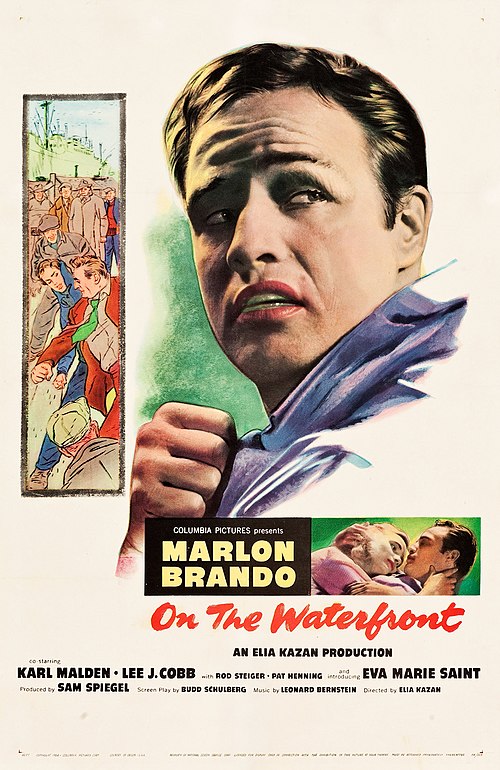
Cast: Marlon Brando. Eva Marie Saint. Rod Steiger. Lee J Cobb. Karl Malden.
Plot: Terry Malloy (Marlon Brando) watches his friend Joey Doyle being thrown off the roof by a couple of gangsters whom he knows is part of his brother Charlie’s (Rod Steiger) group who in turn reports to the boss of the waterfront extortion racket Johnny Friendly (Lee J Cobb). The whole area is “D&D” – Deaf and Dumb and everyone knows the truth but no one wants to talk. Terry pursues Edie, Joey’s sister who in turn wants answers to her brother’s death, aided by the local priest who tries to appeal to the conscience of the suffering labourers. Terry knows that if he testifies to the crime commission, he is as good as dead . Terry also knows that if he wants to win Edie’s love, he must tell her about the truth about his part in Joey’s death…
On the Waterfront got the Oscar for the best picture (producer Sam Spiegel), best director (Kazan) and best leading actor (Brando). The morality tale is camouflaged as a crime drama and was largely shot in the Hoboken , New Jersey , supposedly resembling the New York waterfront. The black and white cinematography adds to the overall gritty feeling of the film and we can feel the grime and desperation of the men, battling both their inner conscience and the need to earn an honest dollar in an honest way.
The film is also controversial for a completely different reason and this is to do with Kazan testifying in the HUAC – House of UnAmerican Activities – against some of his fellow Hollywood brethren resulting in some of them being blacklisted unjustly for belonging or suspicion of belonging to Communist organisations. There were even objections to him getting the Oscar for best director. The film was viewed as Kazan’s cinematic justification for his ratting out on his former comrades and saving his own life and career.
That may be the political angle but the direction can’t be faulted as everything moves perfectly and there is not a single performance or scene out of place. The confrontation scene between Charlie and Terry in the back of a taxi is the stuff of legends and has been endlessly studied and even imitated (Robert de Niro as Jake Lamotta, does an imitation in Raging Bull as per the character
The film is largely male dominated as it’s everything that one an expect from great cinema – brother against brother, crime versus conscience, harsh reality of dock workers versus flowery speeches about duty and honor , and finally the loss of innocence/ growth of Terry as a human with a conscience and what is morally and legally right.
Tailpiece: Ghulam (1998) starring Aamir Khan as “Terry Malloy”/ Munna, Sharat Saxena as “Johnny Friendly”/ Ronnie, Rajit Kapoor as Charlie/ “jai”, Rani Mukherjee as “Edie”/ Alisha was a 70% copy of On the Waterfront. It is Alisha’s brother Hari (Akshay Anand) who inspires the local shopkeepers to stand against Ronnie’s extortions , aided by a lawyer Fatima madam (Mita Vashist) and who pays the price, which shocks Munna. There is a long prologue about Munna engaging in confrontation with a bike gang where Alisha is a member and some distractions about how Munna is asked to throw a boxing match. The “taxi” scene becomes a temple pond’s bank scene and is less impactful even though the dialogues and even Jai’s killing are all the same. Despite that Ghulam is a decent 70% copy that adds the typical Indian masala moments that somewhat dilute the relentless gritty feel of the original.
I saw the film at the special screening of the Film Heritage Federation at Regal cinema, where they screen a classic every Thursday free for anyone, on a first come first served basis. Strangely I found the next day that the film was on Netflix too (Netflix gave me a notice of “you might like this”). The film is also free on You Tube (I saw it some forty odd years ago and also have the DVD).
Script – 5 out of 5
Story – 5 out of 5
Direction – 5 out of 5
Photography – 5 out of 5
Total – 5 out of 5
2 responses to “On the Waterfront (1954) – Classic”
Robin Bhat
Hi Rammesh,
Nothing much to add to your review… (except maybe to say bringing Aamir Khan into the discussion was a bit of a jolt !)
Some other random comments:
The film is among the handful that have won ‘The Big Five’ in Oscars -Best Picture, Direction, Actor, Actress, and Screenplay and an additional three, for a total of eight, out of twelve nominations.
One of three was for Best Black and White Cinematography… capturing the gritty environment of the Hudson Waterfront/Hoboken, New Jersey, across from New York City. (Hoboken was also the birthplace and hometown) of Frank Sinatra).
Probably the only film where all three primary supporting actors – Lee Cob, Rod Steiger, and Karl Malden were nominated for Best Supporting Actor. (Award went to another actor).
—
Eve Marie Saint, born not too far from Hoboken, will celebrate her 102 birthday this July 4 !
—
The thug who plays ‘Barney’ was Abe Simon, a real-life professional heavy-weight boxer and with his bulk and 6.4 feet frame, had nicknames like ‘The Ape’ and ‘The Hebrew Hulk/Hammer’.
—
A bit deeper trivia – “while preparing for the role, Marlon Brando became friendly with a young Al Lettieri, who was an acquaintance of real-life Mafiosos. Brando based much of his performance on Lettieri, who later become his co-star in The Godfather (1972)
One of the classic scenes with Lettieri (Sollozzo).
https://rammesh.co.in/wp-content/uploads/2025/05/1-pixel.png00Rammeshhttps://rammesh.co.in/wp-content/uploads/2025/05/1-pixel.pngRammesh2026-03-17 09:18:332026-03-17 09:18:34Red Lorry Film Festival – Day 2 – March 14, 2026