The Death Match – when WW2 legends meets cinema

6–9 minutes

Clickable links in red

Sometime in the mid-2000s, due to my deep interest in history and military history, I came across many hitherto unknown information that challenged the conventional (Western) military wisdom. With internet opening up in India and visiting many websites, I had many instances of new insights to old events. Many earlier accounts were now seen to be semi propaganda while others had to be revised due to new facts being revealed almost on a daily basis. One of them even questioned the supposedly ‘ superior competence’ of Western Allied generals who had access to the ULTRA secrets, the breaking of German ciphers and yet they were outfought and out maneuvered by the Germans in many engagements . I always wondered why and how the Germans fought so stubbornly, against overwhelming Allied superiority while at times the Allies appeared to be floundering in the dark.

On the Eastern Front, the earlier constant myth was that the Germans faced “human waves” of Russian soldiers and Russian generals were supposedly no good. This was the biggest lie as I understood that many Russian generals were smart and used the SAME GERMAN TACTICS against the Germans – use massive force in rapid pincer movements and crush the centre of the pincer, as happened at Stalingrad (and which accounted for the early lightning German victories from June to December 1941).

Yet another “Eastern Front story” was about a supposed ‘death match’ between Nazis and their captives. Depending on who was talking, the captives were hard core dedicated Soviet Communists, Ukrainian Nationalists, Jewish prisoners and everything else in between. The common element in all these stories was:

  1. The well fed, well nourished Nazis would play against a team composed of poorly fed and nourished players from the conquered territory/ country – hereafter referred to as the ‘slave team’.
  2. The slave team would be given their freedom if they lost to the Nazis; if they won, they were shot.
  3. The match was essentially an effort by the Nazis to show off their racial superiority over the “Untermenschen” – the supposed (Eastern) sub humans.
  4. Depending on who was talking, the slave team, ranging from Soviets, Ukrainians, Jews and everything in between, won decisively against the enraged Nazis, who shot them all dead to hide their humiliation at the hands of the supposed ‘sub humans’.

Thankfully Wikipedia has an excellent page that demolishes all the myths, with multiple citations and references.

Short version – most of the deaths were myths and the Nazis didn’t shoot any of the players. Since the matches happened in Kiev between a regular Ukrainian team and the Nazis, post war Soviet propaganda played it up to put a pro Soviet spin on the events. Some players were prosecuted as Nazi collaborators AFTER the war by the Soviets , and hence the Ukrainian version that they were all shot dead. Some survived the war and one of them even emigrated to Canada. Four ‘slave’ players were killed during WW2 for other reasons and that too long after the so called ‘death match’. Any which way you look at it , the Nazis were and are the super villains (and they will continue to be so).

As with most such stories, the enduring wisdom seems to conform to that old newspaper saying; “when the legend is larger than the truth; print the legend”. Thus, there are multiple stories and films of “slaves beat the masters’ versions, all of which are cited in the Wikipedia page.  I will talk about the two films that I have seen and my conclusions on the same


Escape to Victory (1981) – Dull
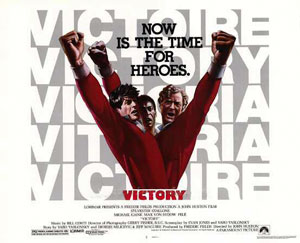
Genre: WW2 escape film + sports film

Platform: Amazon Prime US (UNAVAILABLE in India)

Time: 1 Hour 50 minutes

Director: John Huston

Cast:  Michael Caine (Captain John Colby). Sylvester Stallone (Robert Hatch). Pelé (Corporal Luis Fernandez). Max von Sydow (Major Karl von Steiner).

 Plot:  British Captain Colby wants to escape from a POW camp along with his fellow prisoners as part of an overall plan. Canadian Robert Hatch wants to go it alone. Camp commandant Steiner has a brilliant idea of a match between the POWs and the Germans to boost the morale. Colby insists on having to pick his men from various camps and also increase their rations. Hatch escapes from the camp and meets the Resistance leaders in Paris who ask him to be deliberately captured by the Nazis so that they can plan a mass escape of all POWs and the players ….


I remember that the film was promoted internationally as one where many top football players from various countries acted as POWs and that was supposedly the main attraction. Pele, a black Brazilian, was explained as being from the West Indies, which was under British rule. The story, as with all such ‘sports’ movies, was predictable in that you know very well that the ‘home team’ would win.

I also remember that Time magazine (or was that Newsweek) had commented on the film thus (from my memory): We don’t know what is more painful to watch. Caine trying to play football or Pele trying to act. I suppose that sums up the story perfectly. Here’s a small You Tube clip which is both silly and funny at the same – Pele explaining to Michael Caine how to beat the Germans

Curiously, it was filmed in then Communist Hungary. This was because it was supposedly based on the 1962 Hungarian film Két félidő a pokolban (Two half-times in Hell), which is a Hungarian version / reworking of the legend of the Death Match, but with Hungarian POWs instead of Ukrainian players.

Unfortunately, the film is unavailable on any Indian channels and is on Amazon Prime US.

Script – 3 out of 5

Story – 3 out of 5

Direction – 4 out of 5

Photography – 3 out of 5

Total – 3.3 out of 5

The Match (2021) – Engaging
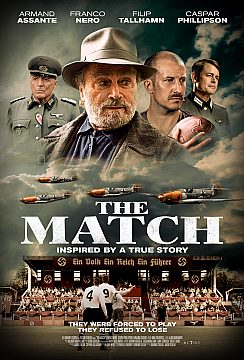
Genre: WW2 escape film + sports film

Platform: Amazon Prime India – rent

Time: 1 Hour 50 minutes

Director: Dominik and Jakov Sedlar

Cast:    Franco Nero (old Branko). Viktor Kulhanek (young Branko). Andrej Dojkić (Laszlo Horvath). Caspar Phillipson (Colonel Franz).

Plot:  In the current, an old Branko watches his grandson play football and lose to the opposing team. Branko takes his dejected grandson to a park and tells him that only as a team can they win football and narrates his life and death experience as a young boy during WW2. With Hungary occupied by Nazi Germany in March 1944, sizeable German troops are present in Hungary. The Hungarians don’t have much choice in what they say or do. Colonel Franz has an idea of a football match between his POWs and a Nazi team, on April 20, 1944 – Adolf Hitler’s Birthday, since he has spotted Laszlo Horvath, a famous football player, in his POW camp. Laszlo negotiates with the Colonel for better food and treatment, afternoons off for practice and so on. A young Branko who was being mistreated by another German officer is rescued by Laszlo and brought under his care and even made part of the team. The death match begins and at half time with the Hungarians leading 1-0 against the Nazis, Franz gives an ultimatum,. Lose the match and live. Win and you die. …

This is yet another variation of the same 1962 Hungarian film. The film was made in English, in Croatia and with a mix of Croat, Hollywood and actors from other countries.  This is a far better film than Escape to Victory, and is engaging, once Laszlo starts training the team. Since there are less ‘stars’ to cope with, the characters are given more importance.

The only grating thing is the constant cutting between the present / old Branko and the past with young Branko watching the events unfold in front of his eyes. Laszlo’s final order to “hide and live no matter what happens in the second half of the match” is how only Branko survives and narrates his story to his grandson.

The production design is also good and though limited to the camp, the tattered dresses of the POWs contrast the fresh ones of their Hungarian oppressors and their Nazi master. The final shots of the ‘Death Match’ has some limited CGI which is not all that great. The Match itself is a foregone conclusion with the story sticking to the legend. As I said earl;ier, the Nazis will always make great supervillains. Here, it makes a very engaging film. Anyway – didn’t the film declare that it was “Based on true events” in the beginning? 😊

Script – 4 out of 5

Story – 4 out of 5

Direction – 4 out of 5

Photography – 4 out of 5

Total – 4 out of 5
2 comments on The Death Match – when WW2 legends meets cinema

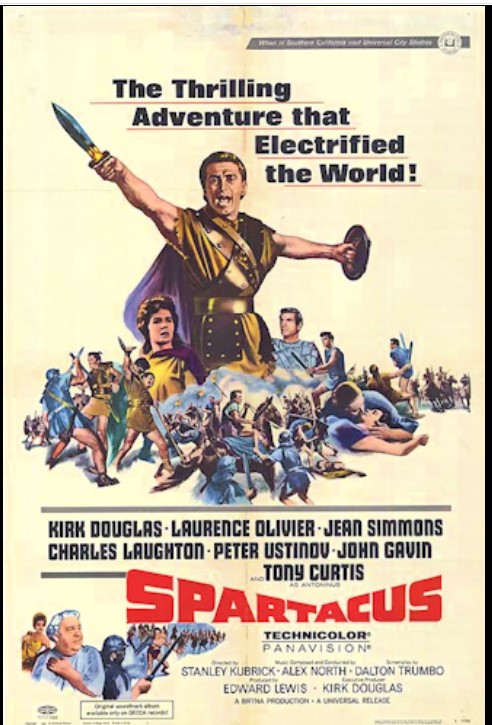
Spartacus (1960) – Eternal Classic

Embedded/ Clickable links in red

Time to read :

4–6 minutes

Genre: Historical Epic / a doomed Slave Rebellion/ based on true story.

Platform: Amazon (Rent)

Time: 3 hours 17 minutes (original time; Amazon 3 hours 1 minute)

Director: Stanley Kubrick

Cast:  Kirk Douglas (Spartacus). Laurence Olivier (Crassus). Jean Simmons (Varinia). Charles Laughton (Gracchus). Peter Ustinov (Batiatus). Tony Curtis (Antoninus). John Dall (Marcus Publius Glabrus)

Plot: Sold as a slave, the ever rebellious Spartacus is bought from a rural salt mine owner by trader Batitutus and sold for gladiator combat where one gladiator fights another to death. Varinia is offered to him for his pleasure but he refuses. Soon they get attracted to each other. Spartacus is called into the gladiator ring to amuse Crassus, Marcus and their female companions. Spartacus’s opponent refused to kill him and instead tries to  kill Gracchus and is instead killed. Soon all the slaves being trained as gladiators revolt and march on Rome. None of them are educated . Antonius, Crassus’s slave also escapes and acts as the translator of documents. Spartacus defeats the Roman Army of Marcus who is released back to face Roman senators led by Grachus who wants to promote a new leader Julius Caesar. The war against the slaves is on …

Wikipedia has a fairly decent link on the overall story of Spartacus and his role in The Third Servile War aka The Gladiator war, which was the third and the last of the rebellions that threatened the Roman Empire. His role in the revolt, and how it all ended was later written by Plutarch based on accounts. Given these accounts were not immediate, there is surely some possible embellishment. This is what provides wonderful cinematic material: a charismatic leader, the thirst and hunger to be free than be a slave and finally a rebellion that is surely doomed.  Thousands of years later, Napoleon Bonaparte proved this, with his statement “God is on the side of the big battalions”.

The film has also many back stories that can itself provide material for another film, say, Spartacus rising – the making of Spartacus (or an equally mundane title). In the 2015 film Trumbo (played brilliantly by Bryan Cranston), there is a section where Kirk Douglas meets Dalton Trumbo and says that Trumbo will be credited for the screenplay. This was a huge risk given that the Cold War was turning colder, and the depredations of the McCarthy/ HUAC hearings were still being felt with “Reds under Beds” attitudes still prevalent everywhere. (Cinephiles know that Dalton Trumbo wrote the Oscar winning screenplay of A Roman Holiday where he was uncredited). Trumbo alluded to his internal beliefs and inner strength of characters in the scene where Crassus asks the slaves to give up Spartacus, so that their lives can be spared. Every slave shouts “I am Spartacus“. This was Trumbo’s middle finger to all the McCarthyists , saying that every decent person who was branded as a “Communist” was still a decent human being and wouldn’t inform on his fellow citizens whether they were Communist or not.

And then finally Kubrick. Given his background in photography, he and the cinematographer were soon at odds . More details are available at the wiki link https://en.wikipedia.org/wiki/Spartacus_(film)#Development

However the final result is simply STUNNING. This is one of those films that deserves to be seen ONLY ON THE BIG SCREEN. The original version was 174 minutes long = 2 hours 54 minutes long. The restored version which I saw at Regal was 3 hours and 17 minutes long , longer by 23 minutes and includes a scene between Laurence Olivier and Tony Curtis which ends with Olivier remarking that he likes both oysters and snails, a clear reference to the then (1950s and 1960s) taboo topic of sexuality and in this case bisexuality.

Douglas is suitably heroic and tragic in equal measures. In the initial scenes, he only acts with his eyes as slaves are forbidden to talk and that calls for some great emoting only with his eyes. Jean Simmons is luminous as his love interest. Olivier is brilliant as the arrogant, no nonsense Crassus who wants to crush the rebellion. But it is Peter Ustinov as the trader and Charles Laughton as the Roman Senator who steal everyone’s thunder with two equally laconic performances , with each matching sleaziness with the other. The slave trader is sleazy and will do anything for money which at times is “for the good” while the Senator is only concerned with advancing himself and his protégé, Julius Caesar, through sleazy politics. The other characters may appear a bit two dimensional but that cannot be helped. What else do you expect former slaves to do except to yearn for freedom and hate their former captors.

Lets also not forget the battle scenes. The film would be nothing without its incredibly staged battle scenes all done with ‘live’ extras.

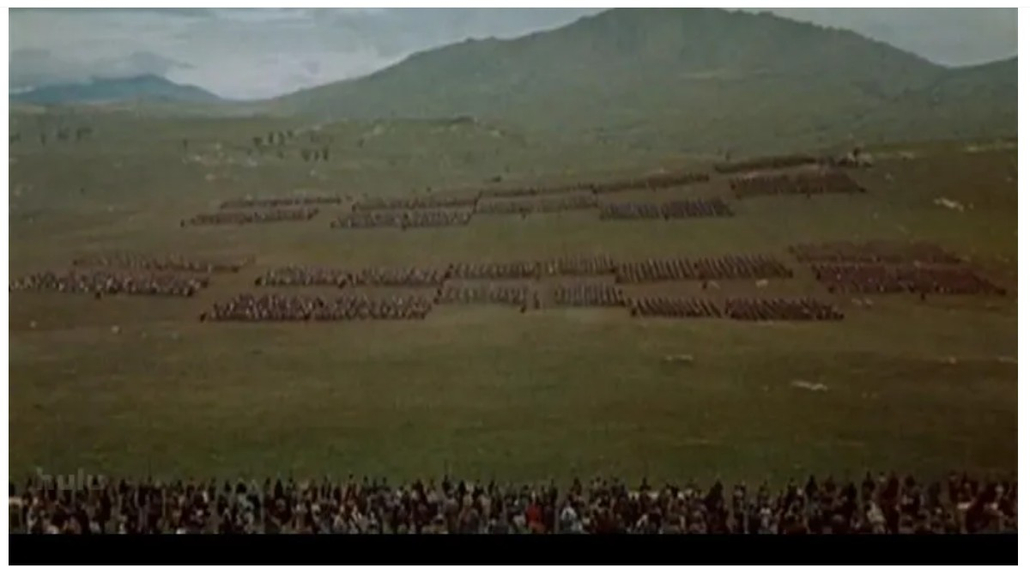
It is simply stunning to see thousands of extras on both sides (by one count 10500+) – Roman Legionnaires and This was possible because the battles scenes were shot in Spain and the Spanish Army was used as extras for these scenes. (Spanish Armed Forces would figure in many 1960s war films such as Battle of the Bulge, Patton and most famously Battle of Britain as the Spanish Air Force still had operational WW2 vintage Me109 fighters and He111 bombers ). The rebellious former slaves and the Roman Legionnaires march to battle, get ready in battle formations and then finally clash. This is incredible epic film making in the style of The Ten Commandments , Ben Hur, Quo Vadis, etc.

In short this is an ETERNAL CLASSIC.

Historical background – 4 out of 5

Script – 5 out of 5

Story – 5 out of 5

Direction – 5 out of 5

Photography – 5 out of 5

 Total – 4.8 out of 5

4 comments on Spartacus (1960) – Eternal Classic

Made in India_A Titan Story (2026) – “Sweet and Fully filmi Fun”

Clickable links in red

Genre: Based on a True Story – Business

Platform: Amazon Prime

Director: Robbie Grewal

Time: 6 episodes x 50 minutes average

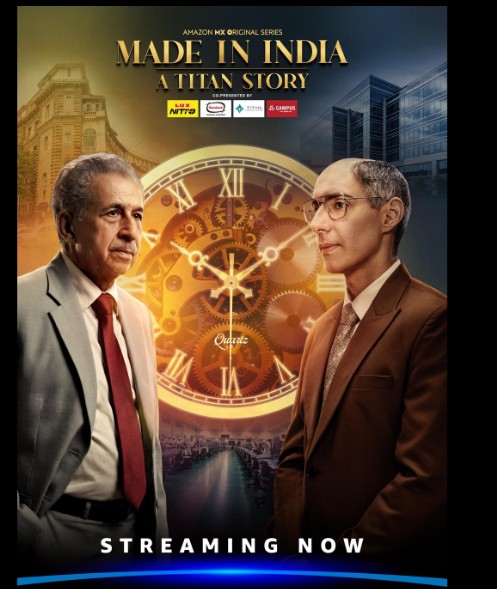
Cast:    Naseeruddin Shah (JRD Tata). Jim Sarbh (Xerxes Desai). Vaibhav Tatwawadi (Akash Bansal). Kaveri Seth (Megha Mhatre). Lakshvir Saran (Gaurav Dhar).

 Plot:  Surprised to discover that watch smuggling is a major activity due to the lack of any credible Indian brand of high quality, Xerxes Desai puts a proposal to manufacture high quality watches in India, to his mentor and friend J.R.D. Tata, the head of the Tata group, who is amused but doesn’t say anything. While on a visit abroad to explore the possibilities, JRD faces a personal insult by a Swiss precision watch manufacturer about India being unable to make any such high-quality precision watch. On his return, JRD gives the green signal to Xerxes. Desai gathers together a team that ultimately becomes the core group – Akash, Gaurav, Megha – that starts the process of setting up and manufacturing precision quartz watches with the Tata stamp of quality and dependability...

As a thumb rule, I avoid “sports movies”, “business success movies” as we know that the hero/ main protagonist will win in the end against all obstacles, hurdles, challenges, etc. He will be the one who will have multiple brainwaves while all the others around him / her stare at the sky and are motivated by the protagonist’s zeal and burning desire to bring forth the final result.  He/ she will overcome all personal and professional challenges with or without the support of people in his life. He / she is usually a very scrupulous/ honest person who follows all the rules of business and life . The Founder was probably the only film to break the rule as it showed Ray Kroc as a complete shit who stole the McDonalds brand name from the McDonald brothers, so much that they had to close their original restaurant and were unable to use their own name. ( Check out my take on The Founder at this link ).

This TV Series also follows this “business success story” template except that the core team is also shown contributing to the overall success story of Titan watches. This is not Xerxes ‘Zee’ Desai’s lone battle but that of his core team too who are as fired up as ‘Zee’ to get the final product into the Indian market, while facing multiple challenges.  So how much of this story is true? That will be the question on everyone’s lip, before starting the series. I like the series and since I have read the book, let me answer my own question in a fun way. Two of the five main characters in the TV series are “real” – Xerxes Desai and J.R.D. Tata. The rest are fully filmi composite characters (If you read the book, then you will know the real history).

Then why on earth was I smiling throughout the six episodes? Why on earth did I laugh out aloud at some of the silly, theatrical even ‘filmi’ devices in the story – like JRD himself refusing to wear a watch till the time Titan makes its first watch? And why on earth did I want to know what will happen next – so much that I almost binge watched the series?

Simple. Because of the emotional connect that the writing generates. Unlike all ‘foreign’ business success stories, this one has its heart in the right place, especially the constant references to an era when ‘smuggled watches’ were a sign of prestige and ‘local watches’ were generally ridiculed being a poor second cousin / okay quality. My personal experience will probably give a perspective, especially to those who were – er – not around in that era.

Sometime in my final year of college, 1980, I was presented an HMT Ajeeth watch with a green dial ( HMT is referred to as GMT in the TV series; click on the link to see how it looked). Now a watch itself was a prestige symbol, and a long-lasting watch, even more so (my father had the same mechanical watch for almost 40 years) and an HMT watch with its wide range was even a bigger prestige. On a visit to Singapore in 1982, I bought a Casio digital watch, which I used for a long time since the HMT had stopped working and couldn’t be repaired. Casio digital watch was the ‘hep thing’ in the early 1980s and Bombay’s DN Road had tons of smuggled watches being sold openly. Only sometime in the late 1990s did the famous Mozart Symphony No. 25 adorn my wrist by which time, I realised that not only did the Titan match in quality but also the price and feature range.

The TV series, somewhat follows this timeline and is on the dot when it comes to the Titan watches being widely available across India. Except that the story is full of dramatic incidents that we can only pass off as fully filmi. Eg – Xerxes and Aksah meet Haji Mastan? Who they discover is the king of the watch smuggling ring? Surely, they weren’t that naïve or that innocent. If as the book states, the core team had done its market research before entering the market, it surely wouldn’t have done something so foolish (and filmy). In the same way the “Titan Tune” – Mozart Symphony No.25 – wasn’t the result of JRD taking the entire team to a Western Classical Concert . Again this is a very filmi scene, but it still is nice to watch every character suddenly “connect” to THE tune that would make a lasting impression as The Titan Tune – especially after everyone is shown listening to multiple songs and tunes in various Indian languages with overall amusing results.

We can dismiss this and many other similar incidents as “creative liberty” that happily doesn’t detract from the story  but instead adds to the overall story of showing the emotional drive of the main characters. And it is on this emotional drive that the series is on target. That quality called as jazbaat  as the story telling that grabs you from the word go.

I have a problem with the overall underexposed even dull photography to depict those ‘gloomy’ times. All scenes inside the offices and anywhere else have a dank and gloomy look to it. The moment the two characters Megha and Gaurav were introduced, we immediately know that they will be ultimately married by the end of the TV series.  The real characters on whom they were based were already married when they joined the company ( at least the man was).

Despite such cliches, the TV series is heart warming and nice to see a real Indian success story without any hanky panky, due to the straight arrow guidance of JRD himself , played magnificently by Naseeruddin Shah. We know that JRD didn’t have to throw his weight around and THAT is PROJECTED amazingly by Naseer. A magnificent performance even though he doesn’t have as much screen time as Jimmy Sarbh’s endearing performance as the cranky, endearing, egoistic and finally human ‘Zee’. One would expect that the Head of Marketing would be an outgoing confident ‘Type A’ personality and this is probably the only blemish in the series, as Megha Mhatre comes across as a softspoken, somewhat diffident person. The foreigners are stereotypes – who have nothing but disdain for India and Indians. I was actually surprised to learn from the series (and the book) that “Andre Leuba” (actually the world-famous Swiss watch brand Favre Leuba) was acquired by Titan watches in 2011, which the Series shows truthfully in a small coda. (Titan sold off this acquisition in 2023).

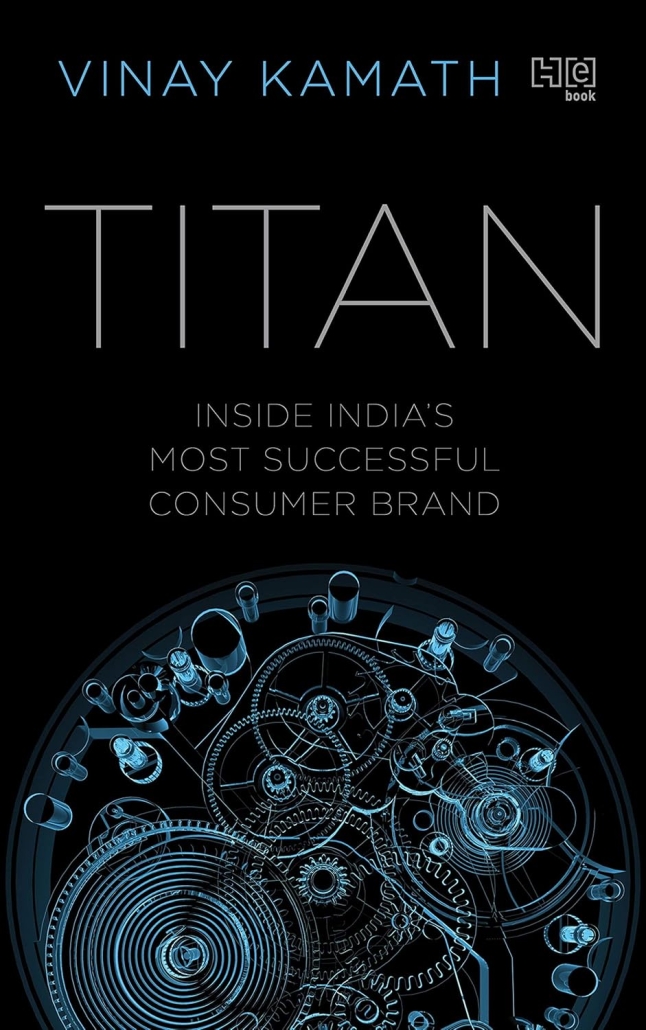
The overall atmosphere of the late 1970s, 1980s and early 1990s is superbly recreated and the production design team should be lauded for their painstaking attention to detail in many of the scenes, especially those set in the 1970s and 1980s. The book on which this TV series is based covers the rise of the brand and its misadventures in 4 out of its 10 chapters.

What would be the best way to summarize the story ?  Simple. It is BASED ON A TRUE STORY (which means , less true story and more masala ; here the masala is in perfect proportion with the overall story. Not too much, not too little) Overall, this is an absolute FEEL-GOOD TV series that I absolutely endorse due to the overall superb performances and attention to detail and excellent production design, aided by appropriate songs from mostly 1950s, 1960s and 1970s film songs, which at times mirror the storyline.

Real history – 2 out of 5

Script – 5 out of 5

Story – 5 out of 5

Direction – 5 out of 5

Photography – 3 out of 5  

Production Design – 4 out of 5

Total – 4 out of 5

2 comments on Made in India_A Titan Story (2026) – “Sweet and Fully filmi Fun”