Cast: Mélanie Thierry (Anna Habert). Souheila Yacoub (Sarya Dogan). James Krishna Floyd (Nasser Yassin). Dean Ridge (Paul Wilkins). Leo Hatton (Ellie Gordon). Zed Josef (Jake Al-Shami). Tasnim Cheham (Nisrine Dakka). Thibaut Evrard (Maximilien Weiser).
Plot: Anna rescues a 12 year old girl Nisrine from being sold as a sex slave. Nasser is still being pressured by Anna to get information on the ISIS and but Paul shoots her dead. Sarya is back from France after recovering from her life threatening wounds. Max, a French journalist wonders, how she was airlifted to France , since he has heard rumors of a French woman code named Shamaran working for the all female YPJ military unit. Ellie, a student counsellor in Lubbock, Texas, sees a video of a masked jihadi with a strong Texan accent and is sure that it is her much younger former student Jake, with whom she had an intense affair. She gets in touch with Jake who instructs her how to come to Raqqa to be with him forever…
The disparate strands of the story are superbly and deftly woven together neatly into episodes which usually show how the entire ISIS operations affect everyone and has long term consequences. Since Anna is shot dead by Paul, Nasser and he grow distant , though not at loggerheads. Nasser moves to the oil production unit, so that he can get information about how the oil money is moved around and get closer to the “money man” Jake. Nisrine, whose mother taught her French, wants to avenge her mother being sold into ISIS through a contractor.
The proceedings appear too complicated at first but are absolutely absorbing and ultimately disturbing to watch, especially the ISIS scenes. Elle is so madly in love with her student that she betrays the FBI team who want to apprehend him and reaches Raqqa to be with her Jake. At first , she is shocked at the instant justice doled out to homosexuals, pedophiles, and anyone who doesn’t agree with the ISIS way of life – being thrown alive from a building’s roof. Later she proves to be the perfect ISIS bride, even betraying one of the runaway women , to be sold as a slave. Her brainwashing is complete and these scenes are really disturbing.
The crisscross plot keeps moving at a blistering pace and yet we know all the strands that are in play. Paul’s brainwashing is also complete; he doesn’t want anything to do with the West and is now a complete ISIS acolyte, even ready to betray his childhood friend Nasser.
There is enough material here to keep us absorbed over the eight riveting and disturbing episodes (there is actually a warning before each episode about disturbing scenes). The oil extraction through very primitive and crude methods is shown fairly realistically.
There are some major goofs too – like women being allowed out alone without accompanying men. Usually this was not allowed with the all female al Khansa brigade questioning such lone women; in real life such lone women would have been immediately flogged or executed. Also the characters look too fresh and well bathed ; continuous field operations without any bathing or cleaning facilities would mean that they would all have been very dirty and filthy.
All these goofs can be overlooked as this fictional story is set around two incredibly disturbing realities of recent history that is only a decade old – the ISIS treating women as things to be sold and the all female YPJ taking up arms to fight them head on.
Overall a superb , disturbing view of recent historical events that pulls no punches
https://rammesh.co.in/wp-content/uploads/2025/05/1-pixel.png00Rammeshhttps://rammesh.co.in/wp-content/uploads/2025/05/1-pixel.pngRammesh2026-09-27 11:06:562026-09-27 12:43:08No Man’s Land – Season 2(2025) – Intense
Subject:The MiG-21’s retirement from the Indian Air Force in September 26, 2025
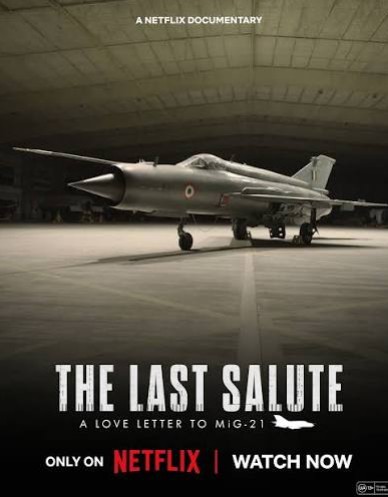
Its not every day that such a momentous and truly historic event happens and is celebrated publicly. There have been many planes before in the Indian Air Force/ Armed Forces history but none of them have been the subject of a documentary and that too by Netflix. Hunter, Sukhoi Su7, Canberra, Sea Hawk, Sea Harrier and many more were retired in ceremonies where only the service personnel were present . Since the giant Tupolev Tu-142 was replaced by the Boeing P-8I , it was a strictly Indian Navy event with very few outsiders allowed and there are very few clips available .
But none of them are subject of a full length movie/ documentary.
Background history of the MiG-21: The Mikoyan Gurevich (the name of the two lead designers of the MiG design bureau) MiG-21 was a product of the late 1950s thinking of catching high flying (30,000 feet + ) American bombers and shooting them down. Since it was all a matter of time to intercept, the plane had to be fast , fast , fast. Thus came the delta wing design which , as with any design, has both advantages and disadvantages; the main disadvantage were the high speeds of takeoff and landing. But it did the job and quickly at that. The 1950s thinking was that a plane could fire missiles at stand off ranges and shoot down an intruding bomber. It was NOT designed to be a dogfighter that would go against another fighter. The Americans too had similar delta wing designs for the US Air Force, the Convair F-102 Delta Dagger and the Convair F-106 Delta Dart, both of which served – unsurprisingly – as pure interceptors, intercepting Soviet Tu95 bombers which ‘tickled’ American radars into operation, thus enabling them to record the radar signature for future (conflicts , if that happened). The French delta design was the famous Mirage III which found fame against MiGs in the Middle East Wars (see below).
Operation Diamond and bad reputation: The Americans badly wanted a MiG-21 in their kitty so that they could study its weaknesses and take suitable counter measures. They sent the word out and lo and behold, they had a MiG-21 with them. Israel’s Mossad’s Operation Diamond persuaded an Iraqi Christian pilot to defect to Israel, in return for asylum for him and his family . The full details are available at this wiki linkhttps://en.wikipedia.org/wiki/Operation_Diamond. Steal the Sky is a 1988 film on this operation , though it shows a MiG-17 instead of a MiG-21 .
The Israelis flew the plane on their Independence Day , painting it in a primal red color and giving it a cheeky and infamous serial number ,007. (Wiki link shows the same picture). The Israelis and Americans dismissed the plane as a supersonic sports carand thanks to “bad handling” by the Arab pilots during the 1967 Six Day war, shot down many in air to air combat, with many further destroyed in the waves of attacks on airfields. (Those interested can check out videos on this topic by a You Tuber Showtime 112). It is however the post WW2 combat aircraft that was the most manufactured at 10,000+ units. Here’s a link from April 2026 that mentions some of these facts https://migflug.com/afterburner/the-mig-21-10000-built-60-countries-still-flying/
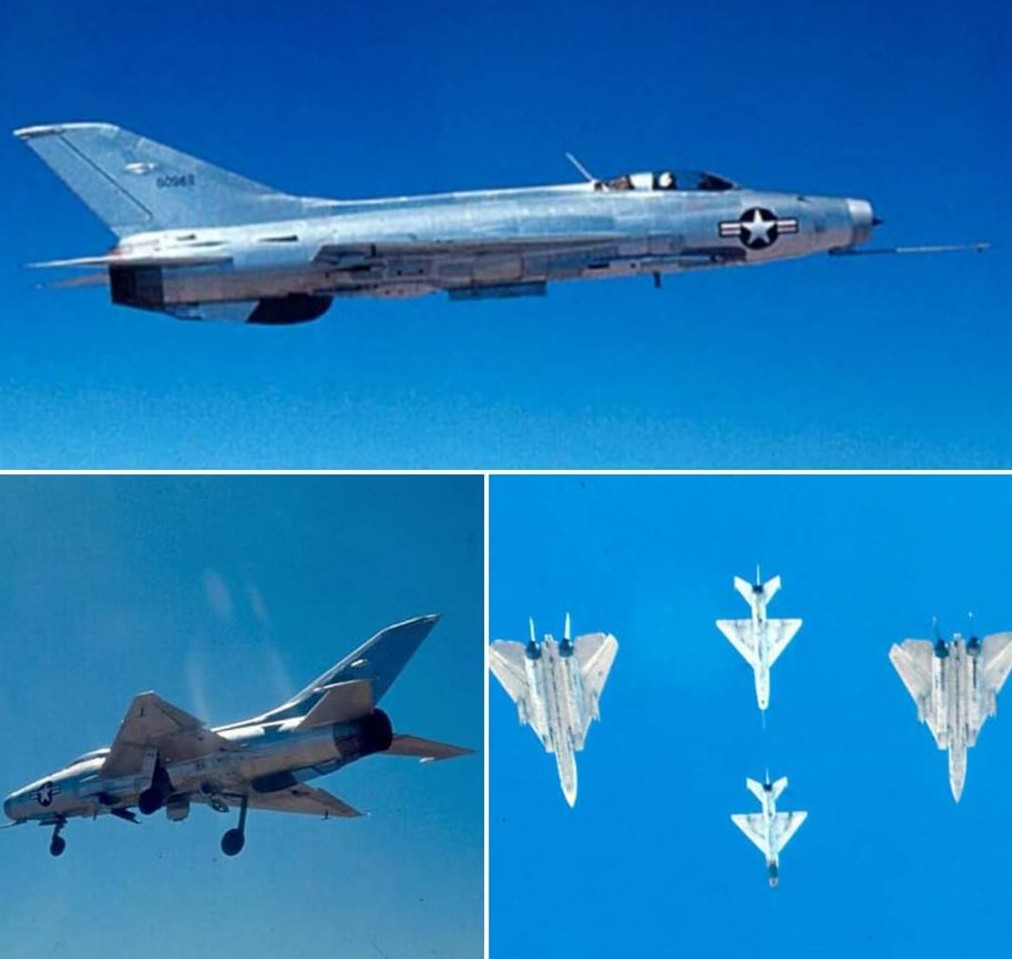
The US secret program Constant Peg: Despite their dismissal of the MiG-21 as a supersonic sports car, such was the US obsession with MiGs that they actually used real MiGs in a secret program called Constant Peg ; This was where MiG-15s, MiG-17s, MiG-19s, MiG-21s were actually bought secretly from various countries and used to train American fighter pilots. If that sounds weird and unbelievable, the above link on Constant Peg and the below photos of MiG-21s in US Air Force markings, in formation with US Navy F-14s should disprove this (and these pics are at least 15 – 20 years old._
India’s use: India actually wanted the Lockheed F-104 Starfighter . often dubbed missile with a man , due to its sleek design, but thanks to Cold War politics, ended up buying the MiG-21. There were just 10 MiG-21s in the 1965 war , 3 of which were destroyed on the ground by Pakistani attacks. Mostly they ended up doing CAP (Combat Air Patrol) – wasteful but essential duty of orbiting over a select area , ready to shoot down any intruding enemy planes. By the 1971 war, license manufacturing of the MiG-21 was well under way and it proved its worth very well , though sadly this was not trumpeted from the rooftops unlike Pakistan, which continued to share fabricated stories of Indian planes being shot down in droves.
MiG-21 in Indian Air Force combat use: The moment of truth arrived in the 1971 war in the Jamnagar sector when two MiG-21s met its contemporary adversary, the Lockheed F-104 Starfighter. The MiG-21s fired their missiles which missed , since most first generation air to air missiles were notoriously prone to failure. Though the Russians had supplied some gun packs and refused to take any more ownership saying that the MiG-21 was not a gunfighter, the Indian Air Force proved that the spirit of “positive jugaad” prevailed, resulting in shooting down the intruding F-104 off the Jamnagar coast, with guns. Here’s an excellent link from the superb Website on Indian Armed Forces Bharat-Rakshak . Sadly this incident is NOT COVERED in detail in this documentary which gives more focus on the Eastern Sector, where the MiG-21s were mostly used for ground attacks. It was a MiG-21 bombing attack that finally persuaded the Governor of East Pakistan to resign and within a day, the Pakistani Army surrendered.
By the time of the 1999 Kargil war, the IAF was operating the last variant of the MiG-21, the MiG-21 bis. While many aircraft types were involved in Operation Safed Sagar, the MiG-21 once again proved that it was a true multi role aircraft as it did photo recce, ground attack and CAP.
In the Balakot operations, a “2nd generation” MiG-21 supposedly shot down a “4th generation” F-16 and this is shown in the documentary as “Falcon Slayer”. Like all Indo-Pak war claims, this one is also highly debatable, as each side gives contradictory information about what happened. Since the truth about the 1965 and 1971 Indo Pak wars are available only now, after 50 to 60 years, we suppose we will have have to wait another 50 years for the truth to emerge about the claim of a F-16 shoot down by a MiG-21 :)
As an aside. it is worth mentioning that during the Vietnam war, the USAF F-4 Phantom pilots often complained that they didn’t get an opportunity to dogfight the MiG-21 , despite the F-4’s much “superior” technology and the MiG-21’s “inferior technology”. One pilot supposedly said “the Vietnamese MiG-21s could come screaming out of the sun, make a firing pass, disengage and vanish”. Only fools would argue that this was “not right”; tactically it was the perfect thing to do since the Vietnamese had very limited number of MiGs. (During WW2, many German aces who had more than 200 kills used the same tactic of one firing pass and then scoot away, most notably ace of aces Erich Hartmann, with 352 air to air kills). The Vietnamese MiGs however fell prey to a ruse codenamed Operation Bolo, where the MiG-21s were lured into the air combat by F-4 Phantoms mimicking signals, flight paths, code names of the F-105 bombers and were shot down.
Bad reputation : This is tackled in some length in the documentary. After the end of the Cold war and the breakup of the Soviet Union, with many factories in the newly independent republics, a desperately broke Russia demanded hard cash for the spares at four or even five times the going price. Accordingly , alternative sources from the former Eastern Bloc countries and the new republics, were thought to be a lucrative source for spares. Some reports suggest that these spares were often defective and of low quality, resulting in the MiG-21’s reputation in the Indian press and public consciousness, as flying coffins/ widow maker, and so on. Just one such link (among many) is included here https://timesofindia.indiatimes.com/india/india-buying-faulty-mig-parts-russia/articleshow/20395007.cms This aspect, namely the MiG-21 is NOT a flying coffin, is covered in depth in the documentary, with many veteran officers pooh poohing the irresponsible press reports. As with most such things the truth lies somewhere between these two extremes. Rang de Basanti , the hit 2006 film , also made it, the core idea of the story since the somewhat unfocused, “vagabond” characters band together, to ‘avenge’ the death of their MiG-21 pilot friend, who loses his life due to “corruption in the system of buying low quality spares”.
Except for Operation Diamond, the 1971 combat operations, Vietnamese use, many of the above mentioned facts are covered well in-depth in the documentary. The picture that emerges is of a plane, a powerful beast, that once tamed , can be and proved to be a benign plane . One of its champions Air Commodore (Retd.) S.S.Tyagi who logged a record 4003 hours on the MiG-21, is almost in tears when he says he would love to fly the plane again. Here’s a lovely tribute to both the man and the plane in Anchit Gupta’s superb page on the Indian Air Force
Verdict :Military nerds, like yours truly, simply love this film as its one of the rare Indian documentaries WITHOUT any jingoism and shows the man-machine interactions in detail than any jingoistic trumpeting However even the layman can watch it as most of the talking is done by the people who flew and maintained it ,both air and ground crew, which shows a picture of their enduring love for a much maligned beast of warplane.
https://rammesh.co.in/wp-content/uploads/2025/05/1-pixel.png00Rammeshhttps://rammesh.co.in/wp-content/uploads/2025/05/1-pixel.pngRammesh2026-09-20 11:17:552026-09-20 14:17:06The Last Salute (2026); a love letter to the MiG-21 – Heartfelt tribute
Cast: Matt Damon (Odysseus). Tom Holland (Telemachus). Anne Hathaway (Penelope). Robert Pattinson (Antinous). Lupita Nyong’ (Helen of Troy and Clytemnestra). John Leguizamo (Eumaeus). Samantha Morton (Circe). Zendaya (Athena). Charlize Theron (Calypso).
Plot: Queen Penelope of Ithaca waits for her husband Odysseus who is presumed lost and dead, after going to war and on a voyage. Many unruly suitors gather daily to ask her hand in marriage while her young son Telemachus, who is not of age and cannot assume the throne, watches with increasing revulsion and anger. The blind slave Eumaneus is convinced that Odysseus is alive as Argus, Odysseus’s very sick hunting dog, is unusually alive for twenty years, long past a dog’s usual life span. Odysseus is in an island with a beautiful woman Calypso with whose help he is trying to remember his past, who he was, what happened to him and what happened to ‘his men’ as he is sure he commanded a ship with many sailors…
Statutory Declarations:
I haven’t read Homer’s Odyssey. So, I do not know the “original” story and cannot “compare” the film with the original story.
I only have a vague idea that Odysseus went on a journey, had multiple adventures and finally came back to his kingdom.
An entire industry has started about what was there in Homer’s Odyssey and how Nolan has messed it up.
I approached it as a film comparable to our Indian epics.
Given this background, I saw a story of ancient civilizations, queens, kings, treachery, monsters, ghouls, spirits, witches and what not. And I ENJOYED IT IMMENSELY since I didn’t have material to compare with and pick holes in the story as to “nah – that’s not correct; this is not what happened; this is too filmy; etc “. While watching the film (twice), I was mentally comparing with other cinematic epics like Spartacus, The Ten Commandments, etc and our own two great epics Mahabharata and Ramayana, as the sensibilities are somewhat similar. Film critics, ancient historians, bloggers, and anyone with a keyboard, have said that the “soul” of the story had been destroyed by Nolan due to an over emphasis on Odysseus and his guilt of his dead soldiers, lending a “modern” politically correct sensibility and thus supposedly “destroying” the core of the original story. In my view, this “modern sensibility” is what probably appeals to many viewers. A commander cant send his troops into battle without feeling sorry about the deaths, especially when his decisions prove fatal to many of his troops . (WW2 nerdy data : many British generals of WW2 who fought as young men in WW1, generally were extremely cautious in offensive operations, lest it end up as a WW1 style mass massacre).
But thats digressing. Lets look at the core story.
A King in exile trying to piece together his past. A queen pining for her husband who may or may not be dead. A blind loyal slave (Leguizamo is brilliant as Eumaeus). Multiple journeys with many adventures of meeting evil monsters, giants, unusual ghouls, etc. Actions and its consequences – somewhat like the karmic sensibilities of the Mahabharata. War and its consequences. A blind belief in the “Laws of Zeus” which once broken, has all round negative consequences. In fact I feel the film is one large story about action and consequences.
As for the overall narration, it is done in the typical non linear choppy back and forth style for which Nolan is famous (or notorious as might be the viewpoint). Starting with Ithaca, the gift of the wooden horse to Troy, jumping to Odysseus and Calypso, then years before with a young Odysseus, Trojan war – this back and forth narration can leave one confused but his strong screenwriting doesn’t falter and the threads are absolutely intact so much that someone – and that includes most of the lay film lovers/ film goers – who don’t know anything about Homer’s Odyssey, and haven’t read a word about the story, can easily follow what is happening , all the way to the final conclusion when Odysseus returns from his involuntary exile , back to Ithaca, reclaim his throne and fend off the unruly turned evil suitors led by Antinous.
The first time I saw it on Imax at Inorbit Mall, Malad and didn’t really feel anything different about the Imax factor ; googling produced the result that this was actually a “LieMax”. The second time I saw it at PVR Palladium, Lower Parel (with my wife) and this time the 70 mm sweep of the story was visible along with the crisp clarity of prints. The various locations serve brilliantly for the various scenes.
This is easily one of the most passionately done epics in recent if not all times.
Script – 5 out of 5
Story – 5 out of 5
Direction – 5 out of 5
Photography – 5 out of 5
Total – 5 out of 5
A special rating for Passion for Film – 6 out of 5 😊
PS: MY wife simply LOVED IT .
4 responses to “The Odyssey (2026) – BRILLIANT EPIC”
You are hereby encouraged to get additional input into all your reviews! For whether it is that of Mrs. KVR, or Penelope or Athena or Calypso or sometimes even the dangerous Circe, a woman’s instinct is usually infallible!
Your review is spot on, as usual. Learned something new today – there is a format called ‘LieMax’; (what a name!)
Not much to add to your review.. just a few random points.
1
My experience shared with a few friends: seeing it the first time (3 hour film) was difficult; for the second-time I did a brief bit of prep-homework: read a summary of the epic. So, enjoyed/understood the film much more and it did not feel as long.
2
As expected, the film has entered the ‘Billion Dollar Club’.
3
One small puzzle – unless I did not hear the words right, the use (two times) of the F-word and once the S-word seemed out of place.
4
Anne Hathaway and Robert Pattison are having quite the season this year.. a couple of films released and more coming.
5
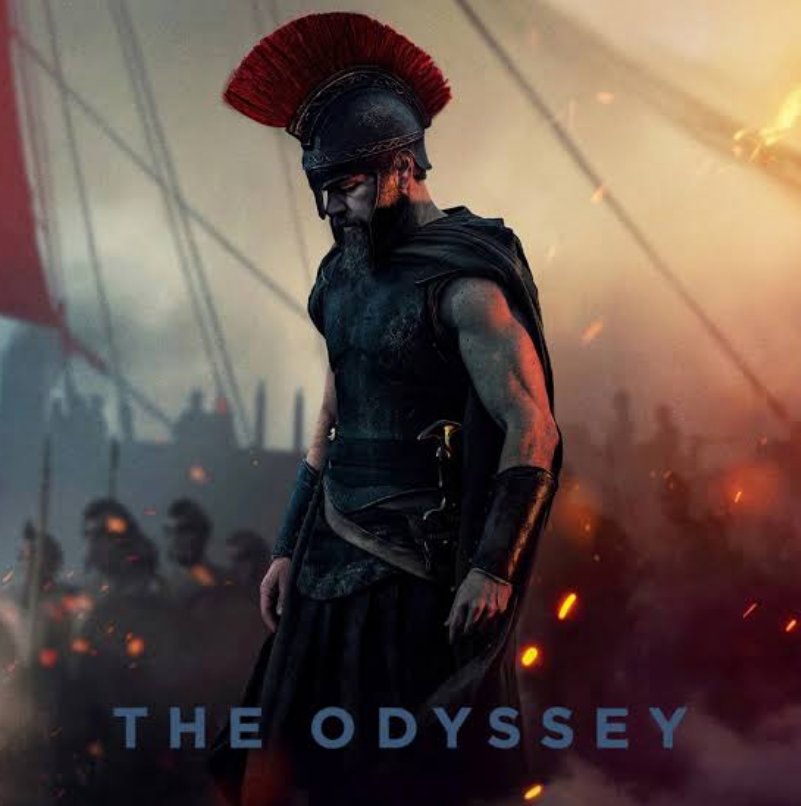
As is now widely-known, the official poster of the film was not on Matt Damon, but a body-double, Canadian stuntwoman Devlyn Dalton.
Forced Perspective: Standing at 4 feet 6 inches (137 cm), Dalton helped create the optical illusion of towering giants when paired with seven-foot tall stuntmen.
The Famous Biceps: Matt Damon publicly praised Dalton’s physique, stating she had “the greatest arms I’ve ever seen”. Her muscular arms are prominently featured both on screen and in the movie’s official poster.
6
So much of the film is a reminder of our own Indian epics: the breaking of the bow…. Exile…. superhuman gods and monsters…. eventual victory of good over evil….
7
Lastly, a good occasion to revisit Tennyson famous poem:
(the Latinized name of Odysseus)
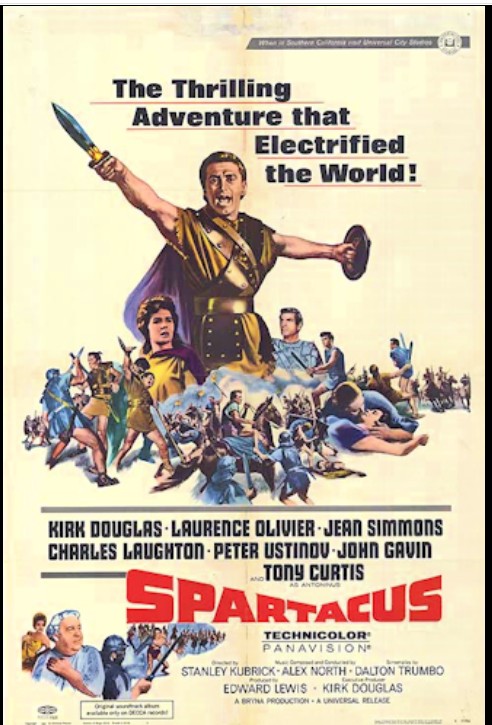
Cast: Kirk Douglas (Spartacus). Laurence Olivier (Crassus). Jean Simmons (Varinia). Charles Laughton (Gracchus). Peter Ustinov (Batiatus). Tony Curtis (Antoninus). John Dall (Marcus Publius Glabrus)
Plot: Sold as a slave, the ever rebellious Spartacus is bought from a rural salt mine owner by trader Batitutus and sold for gladiator combat where one gladiator fights another to death. Varinia is offered to him for his pleasure but he refuses. Soon they get attracted to each other. Spartacus is called into the gladiator ring to amuse Crassus, Marcus and their female companions. Spartacus’s opponent refused to kill him and instead tries to kill Gracchus and is instead killed. Soon all the slaves being trained as gladiators revolt and march on Rome. None of them are educated . Antonius, Crassus’s slave also escapes and acts as the translator of documents. Spartacus defeats the Roman Army of Marcus who is released back to face Roman senators led by Grachus who wants to promote a new leader Julius Caesar. The war against the slaves is on …
Wikipedia has a fairly decent link on the overall story of Spartacus and his role in The Third Servile War aka The Gladiator war, which was the third and the last of the rebellions that threatened the Roman Empire. His role in the revolt, and how it all ended was later written by Plutarch based on accounts. Given these accounts were not immediate, there is surely some possible embellishment. This is what provides wonderful cinematic material: a charismatic leader, the thirst and hunger to be free than be a slave and finally a rebellion that is surely doomed. Thousands of years later, Napoleon Bonaparte proved this, with his statement “God is on the side of the big battalions”.
The film has also many back stories that can itself provide material for another film, say, Spartacus rising – the making of Spartacus (or an equally mundane title). In the 2015 film Trumbo (played brilliantly by Bryan Cranston), there is a section where Kirk Douglas meets Dalton Trumbo and says that Trumbo will be credited for the screenplay. This was a huge risk given that the Cold War was turning colder, and the depredations of the McCarthy/ HUAC hearings were still being felt with “Reds under Beds” attitudes still prevalent everywhere. (Cinephiles know that Dalton Trumbo wrote the Oscar winning screenplay of A Roman Holiday where he was uncredited). Trumbo alluded to his internal beliefs and inner strength of characters in the scene where Crassus asks the slaves to give up Spartacus, so that their lives can be spared. Every slave shouts “I am Spartacus“. This was Trumbo’s middle finger to all the McCarthyists , saying that every decent person who was branded as a “Communist” was still a decent human being and wouldn’t inform on his fellow citizens whether they were Communist or not.
However the final result is simply STUNNING. This is one of those films that deserves to be seen ONLY ON THE BIG SCREEN. The original version was 174 minutes long = 2 hours 54 minutes long. The restored version which I saw at Regal was 3 hours and 17 minutes long , longer by 23 minutes and includes a scene between Laurence Olivier and Tony Curtis which ends with Olivier remarking that he likes both oysters and snails, a clear reference to the then (1950s and 1960s) taboo topic of sexuality and in this case bisexuality.
Douglas is suitably heroic and tragic in equal measures. In the initial scenes, he only acts with his eyes as slaves are forbidden to talk and that calls for some great emoting only with his eyes. Jean Simmons is luminous as his love interest. Olivier is brilliant as the arrogant, no nonsense Crassus who wants to crush the rebellion. But it is Peter Ustinov as the trader and Charles Laughton as the Roman Senator who steal everyone’s thunder with two equally laconic performances , with each matching sleaziness with the other. The slave trader is sleazy and will do anything for money which at times is “for the good” while the Senator is only concerned with advancing himself and his protégé, Julius Caesar, through sleazy politics. The other characters may appear a bit two dimensional but that cannot be helped. What else do you expect former slaves to do except to yearn for freedom and hate their former captors.
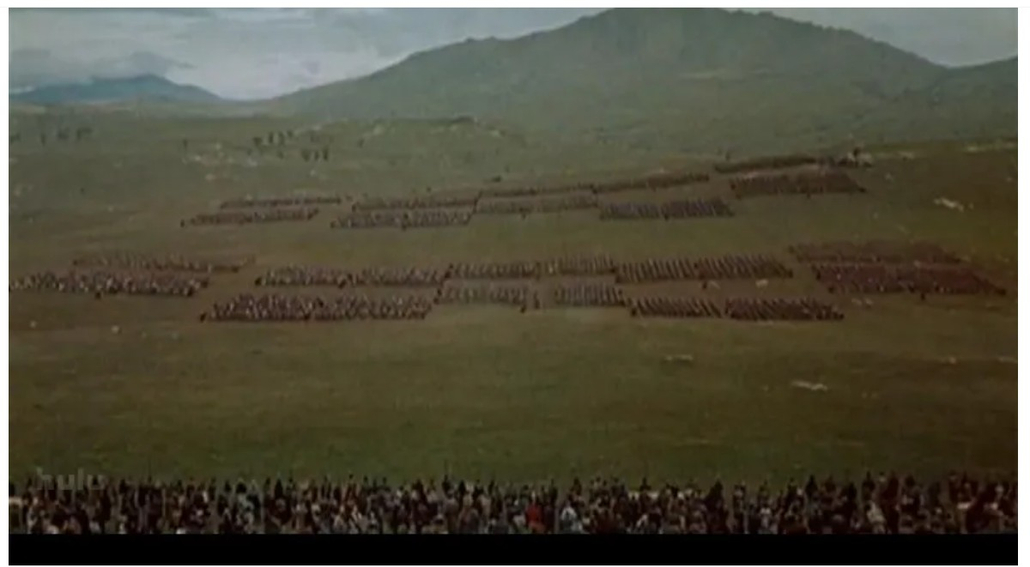
Lets also not forget the battle scenes. The film would be nothing without its incredibly staged battle scenes all done with ‘live’ extras.
It is simply stunning to see thousands of extras on both sides (by one count 10500+) – Roman Legionnaires and This was possible because the battles scenes were shot in Spain and the Spanish Army was used as extras for these scenes. (Spanish Armed Forces would figure in many 1960s war films such as Battle of the Bulge, Patton and most famously Battle of Britain as the Spanish Air Force still had operational WW2 vintage Me109 fighters and He111 bombers ). The rebellious former slaves and the Roman Legionnaires march to battle, get ready in battle formations and then finally clash. This is incredible epic film making in the style of The Ten Commandments , Ben Hur, Quo Vadis, etc.