Archive for month: October, 2026

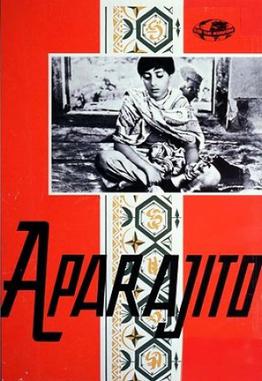
Aparajito (1956) – Classic / Apu Trilogy Part 2

3–4 minutes

Genre: Human Drama

Platform: Amazon Prime / You Tube Free

Time: 1 hour 50 minutes  

Director: Satyajit Ray

Cast:   Kanu Banerjee (Harihar Roy). Karuna Banerjee (Sarbajaya Roy). Pinaki Sengupta (young Apurba “Apu” ). Smaran Ghosal (Apu – adolescent). Ramani Ranjan Sengupta (Apu’s great uncle).

Plot: Apu’s father Hairhar is still struggling to make ends meet with his wife Sarbajaya, in Varanasi where they had shifted. Young Apu is just wandering around, playing with neighboring kids. Hari dies and an uncle helps them to return to a village so that Apu can take up the family tradition of priesthood. Apu however in interested in studying and proves to be a bright student, winning second prize in the district due to which he gets a chance to study in Calcutta. Sarbajaya is fearful but the adolescent Apu wants to learn science and goes off to Calcutta where he works in a printing press at night while studying in a college during daytime, struggling to balancing sleep, studies, friendship and money…

This is the second Apu story, written by novelist Bibhutibhushan Bandopadhyay. This is also an unusual film from Ray in that it shows that Apu is not all that loyal to his parents, especially later to his struggling mother and even insensitive to her loneliness and pain – totally in contrast with how children were always shown loyal in various Indian language films. Apu emerges almost as ruthlessly selfish as befitting any teenager who thinks only about himself and doesn’t care what’s happening in his village home. Sarbajaya’s longing look at the distant railway tracks every time a train passes on the horizon, speaks volumes about her feelings than any long sets of dialogues can say or mean.

Apu is also discovering a world beyond his supposedly simple village life – the complexity of living in a city, earning his bread, paying his rent and studying. The professor who discovers Apu sleeping in the class and sends him out reminded me of one of my school principals who would rarely speak but just gesture with his fingers – as the onscreen professor does 😊.

Apu’s disinterest in priesthood and leanings towards science also makes a subtle point about how Apu looks at the world. His constant twirling of the small globe, which he carries around, shows a desire to go beyond his small world and look for adventures beyond his own world. He finds it in multiple ways and especially as a student, who is forced to balance his life between his village / mother, his studies, his job, and generally dealing with life. As mentioned earlier, Apu emerges as a somewhat selfish person, who thinks only about himself. Sarbajaya’s lonely death, shown in multiple cuts with her gradually fading away, cuts the last bond which Apu had with the village. Though he regrets not being there in her last moments, he tells his uncle that he will perform her last rites in Calcutta and leaves everything behind . He is now a full-fledged city man, awaiting new adventures beyond his limited world view.

Once again Subrata Mitra’s outstanding cinematography deserves a special mention. Be it the Varanasi ghats or lanes, or a steam train on the horizon as seen by Sarbajaya, almost everything leaps off the screen in utter crisp clarity.

To me, the film looks is a bit underwhelming. Maybe its the second film in a trilogy where everything is yet to develop and we do not know what Apu will grow into, since Apu is trying to find his place in the world – exactly like Ray, with his second film was trying to do so. Despite my misplaced feelings, the film cant be faulted in its story of a boy growing into a teenager and suddenly encountering the world and becoming a man.

The film is on Amazon Prime and FREE on You Tube . You tube link as below:

https://youtu.be/scgyxNLiAL8?t=35


Script – 5 out of 5

Story – 4 out of 5

Direction – 5 out of 5

Photography – 5 out of 5

Total – 4.8 out of 5

2 responses to “Aparajito (1956) – Classic / Apu Trilogy Part 2”

  1. Robin Bhat avatar
    Robin Bhat

    Hi Rammesh,

    Just an aside on Subrata Mitra:

    His entry at Wikipedia is worth reading, as it relates to the pioneering use of ‘bounce lighting’ in the Satyajit Ray films.

    On the Hindi film side – Teesri Kasam.

    IMHO, never has Waheeda Rehman looked as majestic as she does in this film, thanks to the lens of Subrata Misra.

    An ace cinematographer such as him (and a select few in the Indian Film Industry) demonstrate to us that it is in accurate to call it a ‘black-and-white film’.

    Their masterworks use two primary colors: pure black and pure white… and the infinite number of fractional color values between them, beyond what the human eye can decipher.

    Thanks,

    Robin

    1. Rammesh avatar
      Rammesh

      Robin

      Thanks. Will check it out . As a rule I try NOT to check ANY reference site, (at the most imdb for the artist names) lest it interfere with what I have to say ;).

      Now that you have mentioned it, I will check it out. Thanks again.

      KVR

Leave a Reply

Your email address will not be published. Required fields are marked *

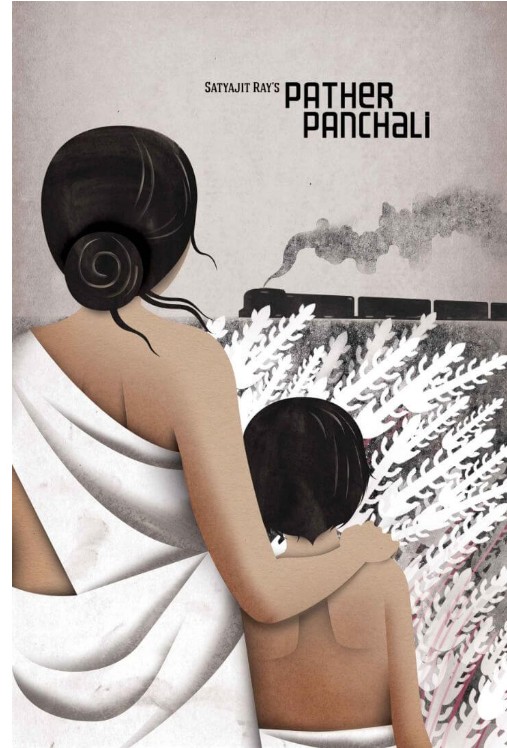
Pather Panchali (1955) – Classic / Apu Trilogy part 1

4–6 minutes

Genre: Human Drama

Platform: Amazon (Rent) You Tube Free

Time: 1 hour 50 minutes  

Director: Satyajit Ray

Cast:   Kanu Banerjee (Harihar Roy). Karuna Banerjee (Sarbajaya Roy). Subir Banerjee (Apurba “Apu” Roy). Uma Dasgupta (Durga Roy). Chunibala Devi (Indira Thakrun, the old aunt).

Plot: Apu is born to a poor priest Harihar, who is struggling to make ends meet with his wife Sarbajaya, and their daughter Durga. His wife resents the presence of an old aunt, who she feels is spoiling her daughter. Hari goes out of the village to multiple towns to earn money while Apu grows up in the village, learns about village life and sees the world through his innocent eyes. Sarbajaya worries about the lack of food, money and news of Hari…

The story by novelist  Bibhutibhushan Bandyopadhyay was published in 1929. The film places the events in the same time period and has a total rural ambience including practices of the rural areas such as a village play (jatra), child marriage of girls who are generally uneducated , being married off at a very early age and an overall sense of rustic peace which will be surely broken by some kind of calamity.

The overall atmosphere is hardly doom laden but is filled with innocence as Apu sees the world through his eyes and cannot understand why his mother is slaving all the time , cooking, generally helping around while his elder sister Durga is playing with girls of her age . There are minimal dialogues as everything is visual , as Apu sees it. There are no cliches that one expects of films set in rural areas, such as the bad zamindar, the sly/ sympathetic priest , and so on. The village mostly has women doing all the hard household work. The men are barely seen.

Hari is essentially an optimist who feels that “the city’ will have more money and wants to try his chance there. With his meagre belongings he goes off to the city and thus starts Sarbajaya’s agony – not knowing what’s happening. The rare letter that arrives is usually rushed by Apu crying out aloud the arrival of a ‘chitti’.  That the family can read is attributed to Hari being a Sanskrit teacher and helping his family to read, while composing stories and poems .

The supposedly simple village life is not all that simple as it appears to be. Sarbajaya is losing both her mental peace and must borrow money, leading to taunts and pressure from her lenders, to pay up or else. The expected tragedy as and when it happens is something that no one is prepared for. Apu also can’t understand what’s happening except that he sees his elder sister is not around any more . Durga’s death attains a more poignant tone when Hari returns with money from his various city jobs, including clothes for the family and learns of Durga’s death.

The final shot shows that Hari has had enough of the sufferings in his village and is leaving his village for the city. A snake entering Hari’s derelict broken house is the symbol that the house is inhabitable for humans. Its amazing that as early as 1929, someone had addressed the essential reason for migration from a simple rural life to an existence in a harsh uncaring city. The stage is set for part 2 and part 3 of the trilogy.

Overall the feeling of the film is like a blank canvas on which colours and shades are slowly filled. The poverty is not bleak but somehow the couple manage and finally throw in the towel. They may have been defeated for the time being but there are new adventures ahead, as seen through Apu’s eyes.

The simplicity of the film lies in its essence of everything seen through Apu’s eyes. Especially the scene where Apu and Durga rush to a railway line to see a train pass through as they have only heard its whistle and never seen it at close quarters. One of Durga’s friends being married off has its own poignancy as Durga also feels that maybe its time for her too. Durga is also accused of stealing a necklace from one of her friends but which is not found by anyone until much later , Apu finds it and quietly disposes it off at a nearby pond, thus cementing his jump from childish innocence to semi adulthood.

Personal Note: For me the village scenes, with the children running around, brought back vivid memories of my summer holidays, in my father’s village . It was his elder brother’s huge property which grew lots of vegetables and fruits . I and my cousins would run around plucking fruits or throwing stones at semi ripe mangos so that we could catch and eat them. It was a carefree time, and I can relate to Apu’s views of the village life.

The film wouldn’t be what it is , if not for the absolutely stunning photography by Subrata Mitra which shows every leaf, plant, dew drop and tree in exquisite sharp detail. The depth of focus is amazing in the long shots.

Overall this is a film that is a sure classic about the beginnings of Apu’s journey into adolescence, into adulthood and facing the thing called life.

Script – 5 out of 5

Story – 5 out of 5

Direction – 5 out of 5

Photography – 5 out of 5

Total – 5 out of 5

5 responses to “Pather Panchali (1955) – Classic / Apu Trilogy part 1”

  1. Ram avatar
    Ram

    Why No mention of Chunibala Devi as Indir Thakrun- who was a scene stealer-

    1. Rammesh avatar
      Rammesh

      Mentioned in passing as “old aunt”

  2. Robin Bhat avatar
    Robin Bhat

    Hi Rammesh,

    Loved reading your review.. will await the next installments of your review of these delicate masterworks.

    (small aside – I once did make the error of watching all three films in a single afternoon… mistake…. in the middle of the third film (Apur Sansar), was simply overwhelmed and left the theatre… (though, I have seen the films separately in the past, and do have the Blu-ray editions)

    Criterion Collection:
    “…shot over the course of five years, and each stands on its own as a tender, visually radiant journey. These films—which have risen from the ashes in meticulously reconstructed restorations, after the original negatives were burned in a fire—are among the most achingly beautiful, richly humane movies ever made.”

    ___
    Best part of your review was your personal note… unrelated (sort of), but immediately reminded me of:

    Aayaa hai mujhe phir yaad vo zalim
    Guzara zamana bachapan ka
    Haay re akele chhod ke jana
    Aur na aanaa bachapan ka……

    Vo khel vo saathi vo jhule
    Vo dod ke kehanaa aa chhu le
    Ham aaj talak bhi na bhule
    Vo khwaab suhana bachapan ka…….

    Mil kar roye fariyad kare
    Un bite dino ki yaad kare
    Ai kash kahi mil jaye koi
    Vo mit purana bachapan ka

    —
    Regards,

    Robin

  3. Lalitha Ravindran avatar
    Lalitha Ravindran

    I like your practice of rewatching films you had seen in childhood again and recording your impressions. Apu Trilogy is truly a classic from a master filmmaker.

    1. Rammesh avatar
      Rammesh

      Hi Lalitha

      Indeed. What was dull is now refreshing . Guess its a matter of perspective that improves with age :)

      KVR

Leave a Reply

Your email address will not be published. Required fields are marked *