Latest News
My latest ramblings.
Enjoy! I definitely got important things to say


Clickable links in red
Subject: The MiG-21’s retirement from the Indian Air Force in September 26, 2025
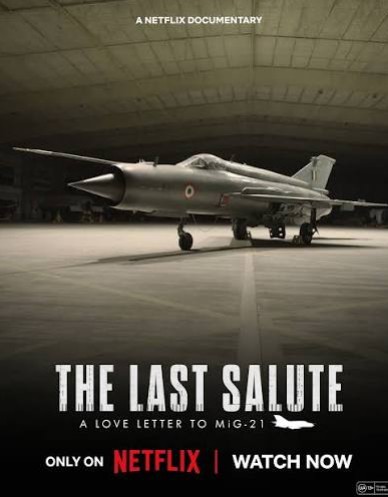
Its not every day that such a momentous and truly historic event happens and is celebrated publicly. There have been many planes before in the Indian Air Force/ Armed Forces history but none of them have been the subject of a documentary and that too by Netflix. Hunter, Sukhoi Su7, Canberra, Sea Hawk, Sea Harrier and many more were retired in ceremonies where only the service personnel were present . Since the giant Tupolev Tu-142 was replaced by the Boeing P-8I , it was a strictly Indian Navy event with very few outsiders allowed and there are very few clips available .
But none of them are subject of a full length movie/ documentary.
Background history of the MiG-21: The Mikoyan Gurevich (the name of the two lead designers of the MiG design bureau) MiG-21 was a product of the late 1950s thinking of catching high flying (30,000 feet + ) American bombers and shooting them down. Since it was all a matter of time to intercept, the plane had to be fast , fast , fast. Thus came the delta wing design which , as with any design, has both advantages and disadvantages; the main disadvantage were the high speeds of takeoff and landing. But it did the job and quickly at that. The 1950s thinking was that a plane could fire missiles at stand off ranges and shoot down an intruding bomber. It was NOT designed to be a dogfighter that would go against another fighter. The Americans too had similar delta wing designs for the US Air Force, the Convair F-102 Delta Dagger and the Convair F-106 Delta Dart, both of which served – unsurprisingly – as pure interceptors, intercepting Soviet Tu95 bombers which ‘tickled’ American radars into operation, thus enabling them to record the radar signature for future (conflicts , if that happened). The French delta design was the famous Mirage III which found fame against MiGs in the Middle East Wars (see below).
Operation Diamond and bad reputation: The Americans badly wanted a MiG-21 in their kitty so that they could study its weaknesses and take suitable counter measures. They sent the word out and lo and behold, they had a MiG-21 with them. Israel’s Mossad’s Operation Diamond persuaded an Iraqi Christian pilot to defect to Israel, in return for asylum for him and his family . The full details are available at this wiki link https://en.wikipedia.org/wiki/Operation_Diamond. Steal the Sky is a 1988 film on this operation , though it shows a MiG-17 instead of a MiG-21 .
The Israelis flew the plane on their Independence Day , painting it in a primal red color and giving it a cheeky and infamous serial number ,007. (Wiki link shows the same picture). The Israelis and Americans dismissed the plane as a supersonic sports car and thanks to “bad handling” by the Arab pilots during the 1967 Six Day war, shot down many in air to air combat, with many further destroyed in the waves of attacks on airfields. (Those interested can check out videos on this topic by a You Tuber Showtime 112). It is however the post WW2 combat aircraft that was the most manufactured at 10,000+ units. Here’s a link from April 2026 that mentions some of these facts https://migflug.com/afterburner/the-mig-21-10000-built-60-countries-still-flying/
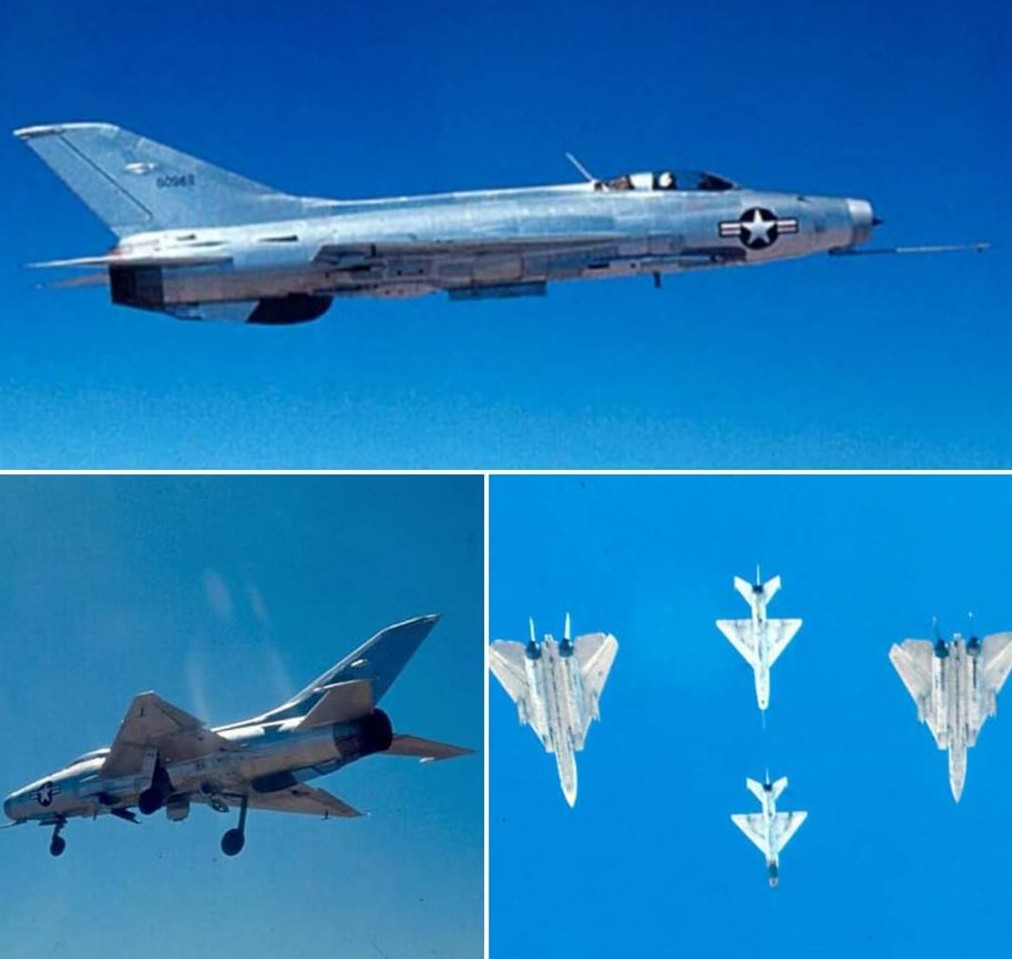
The US secret program Constant Peg: Despite their dismissal of the MiG-21 as a supersonic sports car, such was the US obsession with MiGs that they actually used real MiGs in a secret program called Constant Peg ; This was where MiG-15s, MiG-17s, MiG-19s, MiG-21s were actually bought secretly from various countries and used to train American fighter pilots. If that sounds weird and unbelievable, the above link on Constant Peg and the below photos of MiG-21s in US Air Force markings, in formation with US Navy F-14s should disprove this (and these pics are at least 15 – 20 years old._
India’s use: India actually wanted the Lockheed F-104 Starfighter . often dubbed missile with a man , due to its sleek design, but thanks to Cold War politics, ended up buying the MiG-21. There were just 10 MiG-21s in the 1965 war , 3 of which were destroyed on the ground by Pakistani attacks. Mostly they ended up doing CAP (Combat Air Patrol) – wasteful but essential duty of orbiting over a select area , ready to shoot down any intruding enemy planes. By the 1971 war, license manufacturing of the MiG-21 was well under way and it proved its worth very well , though sadly this was not trumpeted from the rooftops unlike Pakistan, which continued to share fabricated stories of Indian planes being shot down in droves.
MiG-21 in Indian Air Force combat use: The moment of truth arrived in the 1971 war in the Jamnagar sector when two MiG-21s met its contemporary adversary, the Lockheed F-104 Starfighter. The MiG-21s fired their missiles which missed , since most first generation air to air missiles were notoriously prone to failure. Though the Russians had supplied some gun packs and refused to take any more ownership saying that the MiG-21 was not a gunfighter, the Indian Air Force proved that the spirit of “positive jugaad” prevailed, resulting in shooting down the intruding F-104 off the Jamnagar coast, with guns. Here’s an excellent link from the superb Website on Indian Armed Forces Bharat-Rakshak . Sadly this incident is NOT COVERED in detail in this documentary which gives more focus on the Eastern Sector, where the MiG-21s were mostly used for ground attacks. It was a MiG-21 bombing attack that finally persuaded the Governor of East Pakistan to resign and within a day, the Pakistani Army surrendered.
By the time of the 1999 Kargil war, the IAF was operating the last variant of the MiG-21, the MiG-21 bis. While many aircraft types were involved in Operation Safed Sagar, the MiG-21 once again proved that it was a true multi role aircraft as it did photo recce, ground attack and CAP.
In the Balakot operations, a “2nd generation” MiG-21 supposedly shot down a “4th generation” F-16 and this is shown in the documentary as “Falcon Slayer”. Like all Indo-Pak war claims, this one is also highly debatable, as each side gives contradictory information about what happened. Since the truth about the 1965 and 1971 Indo Pak wars are available only now, after 50 to 60 years, we suppose we will have have to wait another 50 years for the truth to emerge about the claim of a F-16 shoot down by a MiG-21 :)
As an aside. it is worth mentioning that during the Vietnam war, the USAF F-4 Phantom pilots often complained that they didn’t get an opportunity to dogfight the MiG-21 , despite the F-4’s much “superior” technology and the MiG-21’s “inferior technology”. One pilot supposedly said “the Vietnamese MiG-21s could come screaming out of the sun, make a firing pass, disengage and vanish”. Only fools would argue that this was “not right”; tactically it was the perfect thing to do since the Vietnamese had very limited number of MiGs. (During WW2, many German aces who had more than 200 kills used the same tactic of one firing pass and then scoot away, most notably ace of aces Erich Hartmann, with 352 air to air kills). The Vietnamese MiGs however fell prey to a ruse codenamed Operation Bolo, where the MiG-21s were lured into the air combat by F-4 Phantoms mimicking signals, flight paths, code names of the F-105 bombers and were shot down.
Bad reputation : This is tackled in some length in the documentary. After the end of the Cold war and the breakup of the Soviet Union, with many factories in the newly independent republics, a desperately broke Russia demanded hard cash for the spares at four or even five times the going price. Accordingly , alternative sources from the former Eastern Bloc countries and the new republics, were thought to be a lucrative source for spares. Some reports suggest that these spares were often defective and of low quality, resulting in the MiG-21’s reputation in the Indian press and public consciousness, as flying coffins/ widow maker, and so on. Just one such link (among many) is included here https://timesofindia.indiatimes.com/india/india-buying-faulty-mig-parts-russia/articleshow/20395007.cms This aspect, namely the MiG-21 is NOT a flying coffin, is covered in depth in the documentary, with many veteran officers pooh poohing the irresponsible press reports. As with most such things the truth lies somewhere between these two extremes. Rang de Basanti , the hit 2006 film , also made it, the core idea of the story since the somewhat unfocused, “vagabond” characters band together, to ‘avenge’ the death of their MiG-21 pilot friend, who loses his life due to “corruption in the system of buying low quality spares”.
Except for Operation Diamond, the 1971 combat operations, Vietnamese use, many of the above mentioned facts are covered well in-depth in the documentary. The picture that emerges is of a plane, a powerful beast, that once tamed , can be and proved to be a benign plane . One of its champions Air Commodore (Retd.) S.S.Tyagi who logged a record 4003 hours on the MiG-21, is almost in tears when he says he would love to fly the plane again. Here’s a lovely tribute to both the man and the plane in Anchit Gupta’s superb page on the Indian Air Force
Verdict : Military nerds, like yours truly, simply love this film as its one of the rare Indian documentaries WITHOUT any jingoism and shows the man-machine interactions in detail than any jingoistic trumpeting However even the layman can watch it as most of the talking is done by the people who flew and maintained it ,both air and ground crew, which shows a picture of their enduring love for a much maligned beast of warplane.
Total – 5 out of 5
Clickable links in red
Genre: Historical Epic
Platform: Theatre
Time: 2 hours 53 minutes
Director: Christopher Nolan
Cast: Matt Damon (Odysseus). Tom Holland (Telemachus). Anne Hathaway (Penelope). Robert Pattinson (Antinous). Lupita Nyong’ (Helen of Troy and Clytemnestra). John Leguizamo (Eumaeus). Samantha Morton (Circe). Zendaya (Athena). Charlize Theron (Calypso).
Plot: Queen Penelope of Ithaca waits for her husband Odysseus who is presumed lost and dead, after going to war and on a voyage. Many unruly suitors gather daily to ask her hand in marriage while her young son Telemachus, who is not of age and cannot assume the throne, watches with increasing revulsion and anger. The blind slave Eumaneus is convinced that Odysseus is alive as Argus, Odysseus’s very sick hunting dog, is unusually alive for twenty years, long past a dog’s usual life span. Odysseus is in an island with a beautiful woman Calypso with whose help he is trying to remember his past, who he was, what happened to him and what happened to ‘his men’ as he is sure he commanded a ship with many sailors…
Statutory Declarations:
Given this background, I saw a story of ancient civilizations, queens, kings, treachery, monsters, ghouls, spirits, witches and what not. And I ENJOYED IT IMMENSELY since I didn’t have material to compare with and pick holes in the story as to “nah – that’s not correct; this is not what happened; this is too filmy; etc “. While watching the film (twice), I was mentally comparing with other cinematic epics like Spartacus, The Ten Commandments, etc and our own two great epics Mahabharata and Ramayana, as the sensibilities are somewhat similar. Film critics, ancient historians, bloggers, and anyone with a keyboard, have said that the “soul” of the story had been destroyed by Nolan due to an over emphasis on Odysseus and his guilt of his dead soldiers, lending a “modern” politically correct sensibility and thus supposedly “destroying” the core of the original story. In my view, this “modern sensibility” is what probably appeals to many viewers. A commander cant send his troops into battle without feeling sorry about the deaths, especially when his decisions prove fatal to many of his troops . (WW2 nerdy data : many British generals of WW2 who fought as young men in WW1, generally were extremely cautious in offensive operations, lest it end up as a WW1 style mass massacre).
But thats digressing. Lets look at the core story.
A King in exile trying to piece together his past. A queen pining for her husband who may or may not be dead. A blind loyal slave (Leguizamo is brilliant as Eumaeus). Multiple journeys with many adventures of meeting evil monsters, giants, unusual ghouls, etc. Actions and its consequences – somewhat like the karmic sensibilities of the Mahabharata. War and its consequences. A blind belief in the “Laws of Zeus” which once broken, has all round negative consequences. In fact I feel the film is one large story about action and consequences.
As for the overall narration, it is done in the typical non linear choppy back and forth style for which Nolan is famous (or notorious as might be the viewpoint). Starting with Ithaca, the gift of the wooden horse to Troy, jumping to Odysseus and Calypso, then years before with a young Odysseus, Trojan war – this back and forth narration can leave one confused but his strong screenwriting doesn’t falter and the threads are absolutely intact so much that someone – and that includes most of the lay film lovers/ film goers – who don’t know anything about Homer’s Odyssey, and haven’t read a word about the story, can easily follow what is happening , all the way to the final conclusion when Odysseus returns from his involuntary exile , back to Ithaca, reclaim his throne and fend off the unruly turned evil suitors led by Antinous.
This is BRILLIANT film making, reducing a long poem into a manageable 3-hour film length, shooting it on Imax film, not using VFX or keeping them to an absolute minimum. Here’s a result from AI about how the complicated Scylla and Charybdis scenes were done using manual means and minimal CGI
The first time I saw it on Imax at Inorbit Mall, Malad and didn’t really feel anything different about the Imax factor ; googling produced the result that this was actually a “LieMax”. The second time I saw it at PVR Palladium, Lower Parel (with my wife) and this time the 70 mm sweep of the story was visible along with the crisp clarity of prints. The various locations serve brilliantly for the various scenes.
This is easily one of the most passionately done epics in recent if not all times.
Script – 5 out of 5
Story – 5 out of 5
Direction – 5 out of 5
Photography – 5 out of 5
Total – 5 out of 5
A special rating for Passion for Film – 6 out of 5 😊
PS: MY wife simply LOVED IT .

I loved this film

Brilliant film making, keeping the major factors of the story intact. The visuals of the sea and the city of Troy were lifelike.
Please correct the word crip to crisp near the end.

Hi Bulbul
Thanks for that; I am quite a spelling fiend and yet this escaped my attention :)
KVR

Hi Rammesh,
You are hereby encouraged to get additional input into all your reviews! For whether it is that of Mrs. KVR, or Penelope or Athena or Calypso or sometimes even the dangerous Circe, a woman’s instinct is usually infallible!
Your review is spot on, as usual. Learned something new today – there is a format called ‘LieMax’; (what a name!)
Not much to add to your review.. just a few random points.
1
My experience shared with a few friends: seeing it the first time (3 hour film) was difficult; for the second-time I did a brief bit of prep-homework: read a summary of the epic. So, enjoyed/understood the film much more and it did not feel as long.
2
As expected, the film has entered the ‘Billion Dollar Club’.
3
One small puzzle – unless I did not hear the words right, the use (two times) of the F-word and once the S-word seemed out of place.
4
Anne Hathaway and Robert Pattison are having quite the season this year.. a couple of films released and more coming.
5
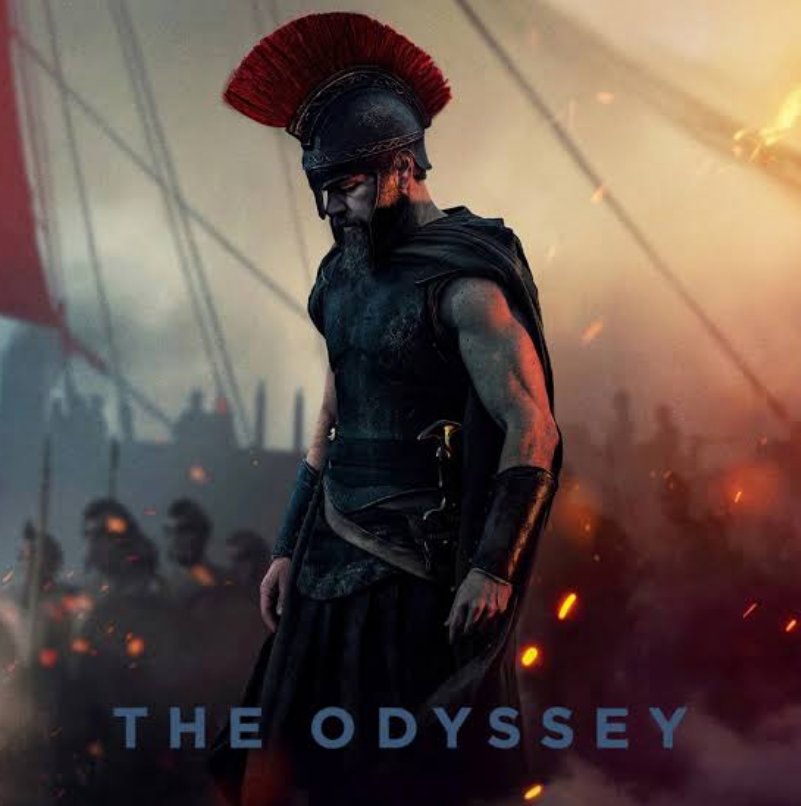
As is now widely-known, the official poster of the film was not on Matt Damon, but a body-double, Canadian stuntwoman Devlyn Dalton.
Forced Perspective: Standing at 4 feet 6 inches (137 cm), Dalton helped create the optical illusion of towering giants when paired with seven-foot tall stuntmen.
The Famous Biceps: Matt Damon publicly praised Dalton’s physique, stating she had “the greatest arms I’ve ever seen”. Her muscular arms are prominently featured both on screen and in the movie’s official poster.
6
So much of the film is a reminder of our own Indian epics: the breaking of the bow…. Exile…. superhuman gods and monsters…. eventual victory of good over evil….
7
Lastly, a good occasion to revisit Tennyson famous poem:
(the Latinized name of Odysseus)
https://www.poetryfoundation.org/poems/45392/ulysses
Thanks,
Robin
Embedded/ Clickable links in red
Time to read :
Genre: Historical Epic / a doomed Slave Rebellion/ based on true story.
Platform: Amazon (Rent)
Time: 3 hours 17 minutes (original time; Amazon 3 hours 1 minute)
Director: Stanley Kubrick
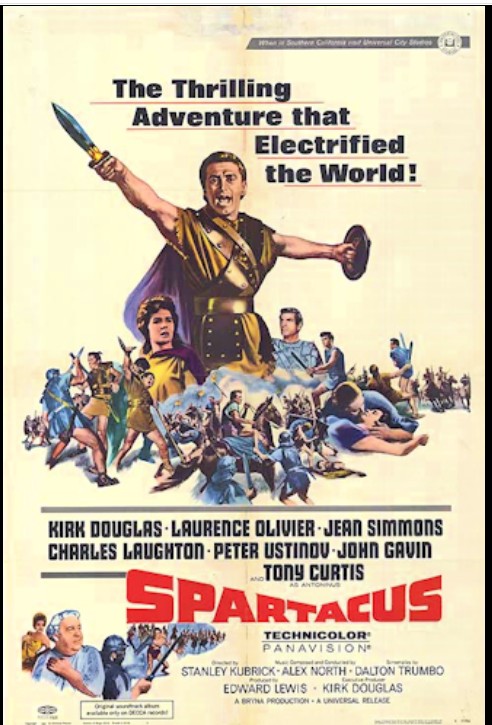
Cast: Kirk Douglas (Spartacus). Laurence Olivier (Crassus). Jean Simmons (Varinia). Charles Laughton (Gracchus). Peter Ustinov (Batiatus). Tony Curtis (Antoninus). John Dall (Marcus Publius Glabrus)
Plot: Sold as a slave, the ever rebellious Spartacus is bought from a rural salt mine owner by trader Batitutus and sold for gladiator combat where one gladiator fights another to death. Varinia is offered to him for his pleasure but he refuses. Soon they get attracted to each other. Spartacus is called into the gladiator ring to amuse Crassus, Marcus and their female companions. Spartacus’s opponent refused to kill him and instead tries to kill Gracchus and is instead killed. Soon all the slaves being trained as gladiators revolt and march on Rome. None of them are educated . Antonius, Crassus’s slave also escapes and acts as the translator of documents. Spartacus defeats the Roman Army of Marcus who is released back to face Roman senators led by Grachus who wants to promote a new leader Julius Caesar. The war against the slaves is on …
Wikipedia has a fairly decent link on the overall story of Spartacus and his role in The Third Servile War aka The Gladiator war, which was the third and the last of the rebellions that threatened the Roman Empire. His role in the revolt, and how it all ended was later written by Plutarch based on accounts. Given these accounts were not immediate, there is surely some possible embellishment. This is what provides wonderful cinematic material: a charismatic leader, the thirst and hunger to be free than be a slave and finally a rebellion that is surely doomed. Thousands of years later, Napoleon Bonaparte proved this, with his statement “God is on the side of the big battalions”.
The film has also many back stories that can itself provide material for another film, say, Spartacus rising – the making of Spartacus (or an equally mundane title). In the 2015 film Trumbo (played brilliantly by Bryan Cranston), there is a section where Kirk Douglas meets Dalton Trumbo and says that Trumbo will be credited for the screenplay. This was a huge risk given that the Cold War was turning colder, and the depredations of the McCarthy/ HUAC hearings were still being felt with “Reds under Beds” attitudes still prevalent everywhere. (Cinephiles know that Dalton Trumbo wrote the Oscar winning screenplay of A Roman Holiday where he was uncredited). Trumbo alluded to his internal beliefs and inner strength of characters in the scene where Crassus asks the slaves to give up Spartacus, so that their lives can be spared. Every slave shouts “I am Spartacus“. This was Trumbo’s middle finger to all the McCarthyists , saying that every decent person who was branded as a “Communist” was still a decent human being and wouldn’t inform on his fellow citizens whether they were Communist or not.
And then finally Kubrick. Given his background in photography, he and the cinematographer were soon at odds . More details are available at the wiki link https://en.wikipedia.org/wiki/Spartacus_(film)#Development
However the final result is simply STUNNING. This is one of those films that deserves to be seen ONLY ON THE BIG SCREEN. The original version was 174 minutes long = 2 hours 54 minutes long. The restored version which I saw at Regal was 3 hours and 17 minutes long , longer by 23 minutes and includes a scene between Laurence Olivier and Tony Curtis which ends with Olivier remarking that he likes both oysters and snails, a clear reference to the then (1950s and 1960s) taboo topic of sexuality and in this case bisexuality.
Douglas is suitably heroic and tragic in equal measures. In the initial scenes, he only acts with his eyes as slaves are forbidden to talk and that calls for some great emoting only with his eyes. Jean Simmons is luminous as his love interest. Olivier is brilliant as the arrogant, no nonsense Crassus who wants to crush the rebellion. But it is Peter Ustinov as the trader and Charles Laughton as the Roman Senator who steal everyone’s thunder with two equally laconic performances , with each matching sleaziness with the other. The slave trader is sleazy and will do anything for money which at times is “for the good” while the Senator is only concerned with advancing himself and his protégé, Julius Caesar, through sleazy politics. The other characters may appear a bit two dimensional but that cannot be helped. What else do you expect former slaves to do except to yearn for freedom and hate their former captors.
Lets also not forget the battle scenes. The film would be nothing without its incredibly staged battle scenes all done with ‘live’ extras.
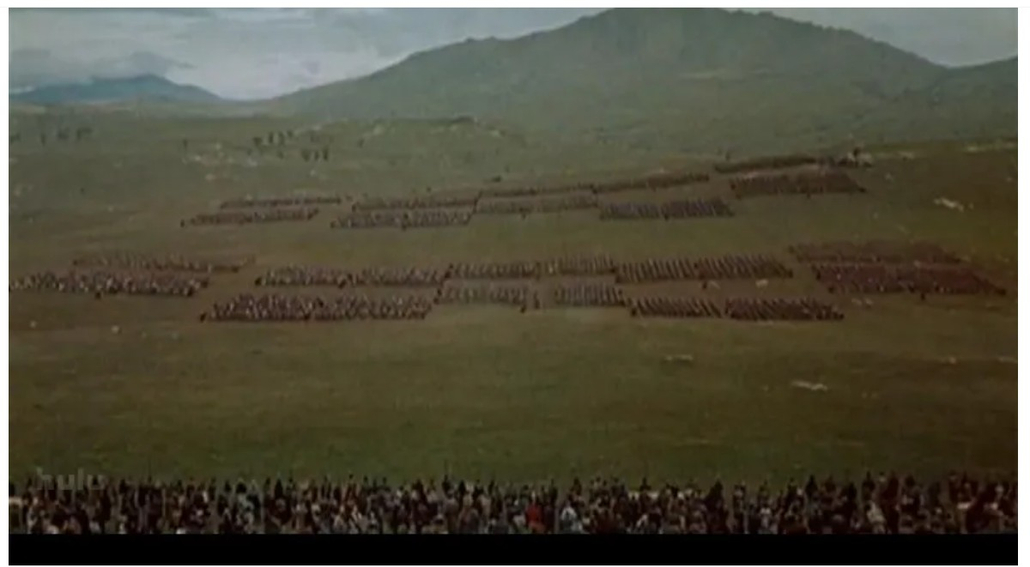
It is simply stunning to see thousands of extras on both sides (by one count 10500+) – Roman Legionnaires and This was possible because the battles scenes were shot in Spain and the Spanish Army was used as extras for these scenes. (Spanish Armed Forces would figure in many 1960s war films such as Battle of the Bulge, Patton and most famously Battle of Britain as the Spanish Air Force still had operational WW2 vintage Me109 fighters and He111 bombers ). The rebellious former slaves and the Roman Legionnaires march to battle, get ready in battle formations and then finally clash. This is incredible epic film making in the style of The Ten Commandments , Ben Hur, Quo Vadis, etc.
In short this is an ETERNAL CLASSIC.
Historical background – 4 out of 5
Script – 5 out of 5
Story – 5 out of 5
Direction – 5 out of 5
Photography – 5 out of 5
Total – 4.8 out of 5
Genre: Spy thriller cum war movie
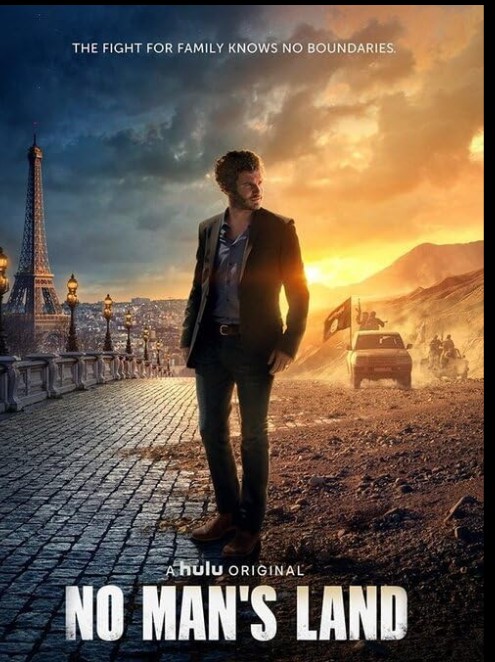
Platform: Lionsgate Play thru Amazon (Paid)
Time: 8 episodes x average 45 minutes
Languages: English. French. Arabic. Kurdish
Cast: Félix Moati (Antoine Habert). Mélanie Thierry (Anna Habert). Souheila Yacoub (Sarya Dogan). James Krishna Floyd (Nasser Yassin). Jaouhar Ben Ayed (Iyad Bel Tagi). Dean Ridge (Paul Wilkins). James Purefoy (Stanley). Roda Canioglu (Commandant Adar). Julia Faure (Lorraine).
Plot: While visiting the hospital with his wife Lorraine, architect Antoine watches a news clip about Kurdish women fighters, fighting ISIS and is sure that he has seen his supposedly dead sister Melanie, when the video clip ends with an explosion. Antoine goes on a trip to Istanbul to visit Luke, an injured American in the video clip, which further takes him to the Syrian border and finally into Syrian heartland, in the middle of the Syrian Civil War. About to be ‘sold’ to ISIS soldiers, he is inadvertently rescued by the Kurdish female soldiers of the YPG who think he is also part of ISIS. Meanwhile three friends from Britain, Nasser, Iyad and Paul, join ISIS, due to a perceived ‘Islamophobia’ and “injustices’ in Britain. There is only one problem – Nasser has already been recruited by an intelligence officer known as Stanley who keeps popping up at regular intervals. Meanwhile Antoine meets Sarya, a Kurdish fighter; she is sure that Melanie is dead and asks him to return back to France which he refuses and goes with them on missions, determined to find out the truth about Melanie…
Its also clear from Nasser’s behavior that there is something very “off” about him as he is always watchful and cautious unlike his two friends who exult in the mayhem. I have already given a mild spoiler in that in Episode 3. Nasser, ex British Army and supposedly a British ISIS recruit, is already a spy for a man named Stanley whom he meets somewhere in no-man’s land and shares information about ISIS. (Don’t ask me how Nasser and Stanley escaped the regular ISIS patrols). There are some “are you kidding me” moments like these. Beyond that , its an absorbing thriller with some disturbing scenes in the ISIS segments.
The beauty of the series lies in the fact that like every good or great story, this is a quest. It’s about Antoine’s quest for the truth behind Melanie’s death. She was an archaeologist who had an Iranian boyfriend activist who was deported back to Iran and executed. She was supposedly blown up in a car bomb in Cairo due to her anti Iran activism. Antoine refuses to let go of this and keep digging more and more, while watching the brave Kurdish women fight off the ISIS who think they won’t attain paradise if they are killed by a woman! The women have much more to lose than anyone and so fight fiercely. The switches between Antoine’s quest, Nasser’s actions, the ISIS depredations (very disturbing), and the parallel stories that they generate are very interesting as we want to know what happened to Melanie and what is happening to the Kurdish women who have sworn to fight to death.
Spoilers: This series is NOT an easy watch as Episodes 3 and 4 deal with the ISIS depredations. Be warned, that though there is nothing graphic the sound effects, the actions and the dialogues make it clear what’s happening onscreen. All the more reason that the YPG women fight to the death. However, from Episodes 5 onwards, it more or less becomes a pure spy series as we learn about Melanie, Stanley, Nasser and how their fates are intertwined with each other. Iyad has become kill-happy while Paul is sure that there is something wrong with Nasser, as he has seen a change in his behavior.
Both Season 1 and Season 2 are available on Lionsgate Play (through Amazon Prime) and just for this series, I have subscribed to it. The night scenes are at times too dark and they give the required effect of dread.
If you want to watch a well-made series embedded in the brutality of the Syrian Civil War, the ISIS brutalities and all that centers around it, then this makes an equally disturbing and thrilling watch, due to the accurate historical backgrounds.
Historical background – 4 out of 5
Script – 4 out of 5
Story – 4 out of 5
Direction – 4 out of 5
Photography – 4 out of 5
Total – 4 out of 5
This is my 200th Post since November 2022 . I have been steadily posting every sunday and I wanted something special and chose the classic The Seven Samurai
Clickable Links in red
It can be argued that Akira Kurosawa’s film The Seven Samurai is highly influential worldwide as it put post WW2 Japan on the world cinema map. At the same time, Japan continued its string of ‘regular Japanese masala films’, like Godzilla – originally titled Gojira (1954) – continued and that too put Japanese cinema on the world cinema map.
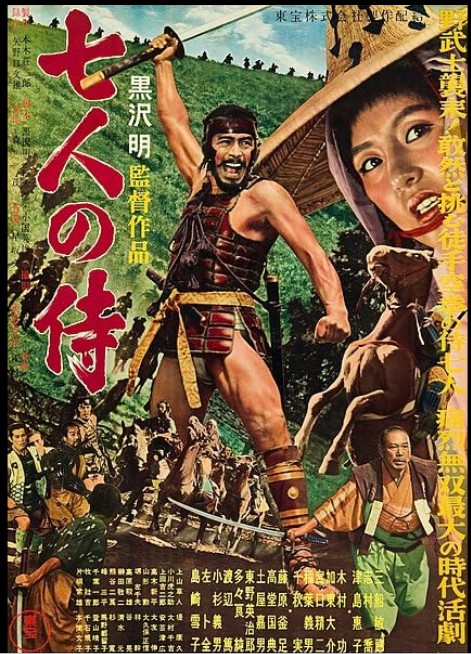
The Seven Samurai has been exceptionally influential worldwide. The concept of a small town / village hiring mercenaries to defend itself against the depredations of local bandits who regularly harass them, proved cinematic gold. Hollywood made the first adaptation, which was virtually a copy-paste with localization into the Western genre. The Magnificent Seven (1960) gave ample scope for the employment of the disparate group of mercenaries, each with his own special skill. Even the young idealistic Samurai, who joins the experienced warriors, was copied as the young gunman, played by first time actor Horst Bucholz, who joins them. The same film was remade in 2016 but the original was the original. Return of the Seven (1966) with only Yul Brynner from the original cast, as the leader, proved that the magic of the original will always remain the original and any follow up would pale in comparison , which is what happened. The Wikipedia page of Akira Kurosawa cites some 10 worldwide inspirations and only 1 Indian inspiration, which only means that you can rely on Wiki only so much :). By my count there are at least 4 Hindi film inspirations and probably more that I am unaware of in other Indian languages. A google search ridiculously mentions Tamil film Thalapathi(1991) as one among many inspirations, while everyone who has seen the film knows that its a modern twist on the Karna-Arjun story from Mahabharat..
Except for Sholay, the other films are all available on You Tube. So, here’s my take on the inspirations that adhere to the formula “village hiring mercenaries to save itself from cruel dacoits”:
Casual criminal Ajit (Dharmendra) is hired by ex-Army soldier turned villager Jaswant (Jayant) to defend a village against a dreaded dacoit Jabbar (Vinod Khanna). After the initial false starts, Ajit soon starts liking village life to the extent of falling in love with a local lass Anju (Asha Parekh). Things turn a bit complicated when Jabbar’s mistress and nautch girl Munnibai (Laxmi Chaya) also starts liking Ajit and wants to wean him away from Anju.
Raj Khosla’s reputation as a “hit film maker” solidified with this film which was a perfect masala of story, action, dialogues, songs and charismatic main characters played by equally charismatic lead actors. Vinod Khanna’s reputation shot up after his role as Jabbar. Dharmendra was already on a roll as a bankable action star and so too Asha Parekh as a dependable leading lady. What’s unusual is that Laxmi Chhaya also got equal if not more footage as the semi vampish woman who finally sides with Ajit and naturally pays the cinematic price for doing so. The music by Laxmikant Pyarelal delivered one memorable song after another and what’s unusual is that Laxmi Chhaya, the vamp, had three songs picturised on her: “Aaya aaya atariya pe koi chor”, “Hai sharmaun kis kisko bataun” and the most famous of them all ‘Maar diya jaaye ke chhod diya jaaye”. What’s also unusual is that Lata Mangeshkar sang all the three songs for the vamp and also two for the lead heroine – the solo ‘Sona le jaa re” and the superb duet with Mohammed Rafi “Kuch kehta hai ye sawan” which hovers around six notes. The film preceded Sholay by a full four years and was a huge hit. The villages around Udaipur added to the authenticity of the rustic tale of one village against dacoits.
Watching it a few years ago on You Tube, I was struck by the fact that it still seemed fresh – if one doesnt unnecessarily compare with today’s films and understands the times in which it was made. (That applies to all the films discussed below)
My Rating – 4/5
This is a clever mix of For a Few Dollars More and The Seven Samurai. Here it is dreaded local dacoit Janga (Ajit) and his depredations for which one of the villages sends Ramu (Paintal) to bring his cousin brother Jaggu (Narendranath) back to the village along with his friends Danny (Danny Denzongpa), Bhaggu (Sudhir), Salim (Ranjeet) , a wrestler and his midget friend. They soon encounter a lone man on a horseback (Feroze Khan), always dressed in black and whose name no one knows . Soon the six (and a half) band together to defend the village against Janga.
While the Seven Samurai part is clear, the Dollars part becomes even more in the segments dealing with Feroze Khan and his quest to take on Janga alone. The ticking musical watch that serves as the start of the killing of a police informant and in the long drawn out climatic fight between the duo – all these are a straight copy-paste from For a Few Dollars More.
The digressions and localisation are in the shape of Danny bringing his city girlfriend Reeta (Alka) to the village, a courtesan Paro (Rehana Sultan) being courted by the Man with No Name, Jaggu slowly liking the much-harassed widow Madhu (Madhu Chanda), Bhaggu the inveterate womaniser and the five goons being a mix of religions and communities. They are the ‘khotey sikkey’ – the fake coins – of the title that ultimately prove to be the ‘true’ coins. Writer Director Narinder Bedi does an excellent job and the overall action and plot is very much in keeping with the ethos and story of The Seven Samurai. In such a film, music can be a double-edged weapon as none of the main ‘Samurai’ can be seen singing. So, it is left to the horseback rider’s father singing in a flashback, Jeevan me tu darna nahi, which he sings to the village children and recurs as a refrain from time to time. Since Paro is a courtesan, she does the obligatory mujra number, Pyaari pyaari suratwaale. It might feel slightly kitschy but that is true for most films made in the 1960s and 1970s.
This is as enjoyable as they come even if it feels tacky at times.
My rating – 4/5
There is nothing much that can added to the classic and it still remains a perfect masala film with an equal share of comedy, tragedy, action, emotion and music. The recent release of the restored version with the original ending of Thakur killing Gabbar Singh , and its immediate aftermath of Thakur weeping as he has lost his life purpose, is far more powerful , than the original limp ending of Gabbar being led away by the police which was under political pressure about ‘law and order forces should be seen to triumph’ . That kind of dogma would soon be upended by a series of films where the main character would have shades of grey . As someone said, Hindi Film Industry can be divided into two eras – Before Sholay and After Sholay.
Both Amazon Prime and Jio Hotstar have the prints with “original” ending of Gabbar being handed over to the police!
My rating – 5/5
China Gate is the ONLY film that I know of where at the start of the film, there is a tribute to Akira Kurosawa and his film The Seven Samurai. Given this tribute, this film is a nice twist on the “Seven Samurai Universe” in that they are not mercenaries but seven ex-Army soldiers who had been cashiered/ court martialed for a critical anti terrorist operation that went wrong. All of them have been branded as cowards and their court case was also thrown out. The seven are old, surviving on odd jobs, facing private humiliation, generally past their best. Their old C.O. Colonel Krishnakant Puri (Om Puri) has faith in them, but the old men are not so sure. They are at the village to combat Jageera (Mukesh Tiwari) under the invitation of Sandhya (Mamta Kulkarni) whose father and Puri had been friends. There is also a would-be Samurai, a young runaway who wants to join the Army and thinks that being with the Samurai will teach him how to do it – this fulfils the original “young fresh samurai” formula.
Rajkumar Santoshi’s tribute is well made and has superb action sequences with the ‘old’ Samurai doing what they do best. There is a localization with a corrupt cop (Paresh Rawal) demanding that the seven show their arms licenses and generally trying to be obstructive. He is even friendly with Jagira and wonders out aloud “Better to be friends with them ; who knows tomorrow they may end up as politicians”. There is also the Hindu-Muslim tension in the form of the long feud between Colonel Keval Puri (Amrish Puri) and Major Sarfaraz Khan (Naseeruddin Shah). Depending on how one sees it, it’s a bit of fun to see the ‘old timers’ saving the village from the dreaded dacoit. Musically the number ‘Chamma Chamma’ for a special dance number by Urmila Matondkar, was a chartbuster. The posters and promos were all of her in the song costume while she was there only for the song. There were some rumors / press reports that the ‘heroine’ Mamta Kulkarni was upset at the director for not including her in the promos.
I didnt want to see it as I was sure it would be a disaster. Yet I saw it on the last day last show (9:30 pm) at Metro cinema in 1999. I wasnt sorry that I saw it and enjoyed it. Even Jageera was good and suitably nasty.
My rating – 4/5
In summary, these four Hindi make the grade perfectly. If there are any films in other languages that fulfill the ‘formula”, do share.
What’s your take on these Seven Samurai clones? Do you know of any other films that STRICTLY follows the “mercenaries hired by a village/ city” formula? Share your thoughts and do write in.

A massive and really inspiring achievement! You now have an archive that people can trust to get the best of the best in your unique niche. Can I just say that your enthusiasm and detailed is so contagious and fun. You really engage with details in a way that makes your work authoritative, and fun too. It reminds of a tidbit around how a lot of archeaological/heritage work in India was done by enthusiastic government teachers who took out their bicycle to explore the countryside. I meaningful way to live if anything. Congrats and keep at it! :D
WRT the post: I really enjoyed Seven Samurai, and coincidently was going to watch Rashomon this week too.

Fantastic and Nostalgic – back to school days!
Lovely to read about the details which are hazy after decades.
One possible entry could be Kaala Sona – Feroz and Danny – a kind of two Samurai with 2 girlfriends. But my memory is vague.
There was also a film called Saat Hindustani (Amitabh?).
Anyway, great article. Keep it going. All the best.
Hi Rammesh,
Congratulations on your post ! In this world of forgettable/depressing/inconsequential news, they are certainly something to look forward to you! Adds a bit of mirch-masala to the week.
—
“The concept of a small town / village hiring mercenaries to defend itself against the depredations of local bandits who regularly harass them” – Hindi/Indian films
Have to think of this some more..but does ‘Ramgarh Ke Sholay’ count? I have not yet dared to view this film!
__
Cheers…
🤣🤣 Ramgarh ke Sholay and RGV ki aag . Now why didnt I think of those 🤣🤣
KVR

Congratulations on hitting 200 posts! Hats off to your consistency. I haven’t watched the original Seven Samurai and your post has convinced me to correct that at the earliest.
Of the Indian adaptations, I’ve watched Sholay and China Gate, and the latter has weirdly been one of my favourite movies to rewatch. I think Jageera as a villain is a bit overblown but everything else works well for me, including the lovely Alsation dog that Amrish Puri’s character has a problem with until the end, where he takes on his care. :D
Hi Gowri
Thanks. Jageera has to be overblown, given that there would be comparison with other “iconic” (how I hate that word for being overused) villains like Gabbar SIngh, Mogambo and so on.
As for the original, once you watch it, I am sure you will feel these are but pale imitations. Its available on You Tube but you the auto translate leaves much to be desired !
KVR
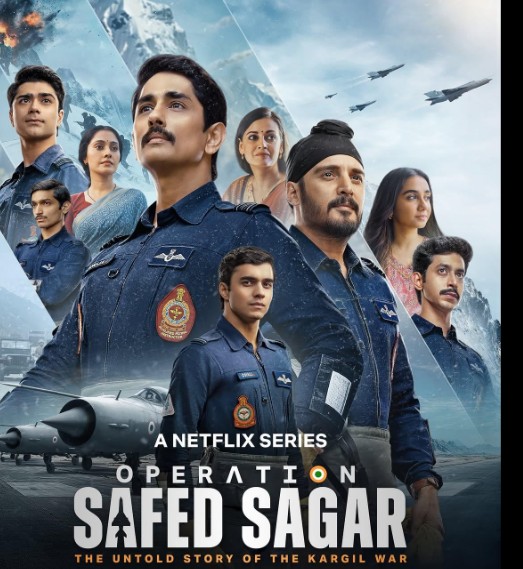
Genre: Indian War Movie (TV series)
Platform: Netflix
Time: 6 episodes x average 55 minutes
Cast: Siddharth (Squadron Leader Ajay Ahuja). Jimmy Shergill (Wing Commander ‘Tony’ Dhanoa). Adil Hussain (Air Marshal Vinod Patney). Abhay Verma (Flying Officer Rajpal Singh Dhaliwal a.k.a. Dhali). Mihir Ahuja (Flying Officer C.H. Bal Reddy a.k.a. Baldy). K.C Shankar (Squadron leader Alok Choudhury aka Chou). Amrita Bagchi (Alka Ahuja). Dia Mirza (Kamalpreet Dhanoa). Prajakta Koli (Madhavi Reddy). Manu Rishi Chadha (General Pervez Musharraf). Vinay Pathak (PM Nawaz Sharif). Anjan Srivastava (PM A.B.Vajpayee)
Plot: In 1999, the forward posts of the Indian Army near the Line of Control (LoC) which are vacated during the harsh winter, are occupied by the Pakistani Army. The order to evict them results in the first ‘televised war’, with journalists from news channels vying for attention while reporting on the heroism of the Army soldiers. Meanwhile, the Indian Air Force is grappling with problems for its own counter strike preparations , codenamed Operation Safed Sagar,. They have lost two pilots, one of whom is returned safely while the other is tortured and executed. Demands from the Army for air support results in some innovative solutions to bomb the Pakistani occupied Indian posts resulting in the status quo.
Border (1997) and Border 2 (2026) are the benchmarks for a “successful war movie”, as they are filled with hyper action , multiple explosions and screaming dialogues against Pakistan. From that point alone Operation Safed Sagar (hereafter OSS) compares like a slow-moving art film, thanks to the meticulous attention to detail and minutiae of the overall war from the Air Force’s view. Being an Air Force story, the full cooperation of the Indian Air Force was given including access to air force bases, coaches and consultants for the actors to emulate the air force way of life. The Air Force is thanked at the beginning of each episode
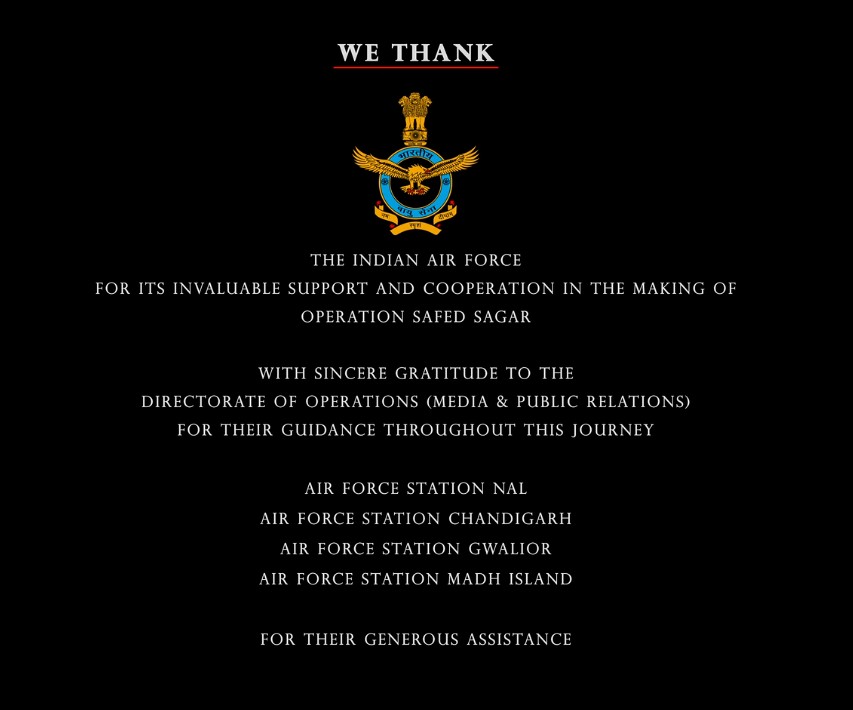
Thanks to the overall restrained writing, there is no need for any screaming matches, nor do the pilots indulge in taunts with the enemy as shown in Border 2. And why should they? They would be too busy doing their multiple tasks while flying at near supersonic speeds. So those who are expecting screaming and shouting a la Border, forget it. This is not for you.
Those who want a well-researched, true to history drama, with the obligatory emotional moments and even somewhat predictable sequences, this is for you! Well worth your 6 hours.
For those unfamiliar with what happened, here’s a quick history lesson (those who know this part, can skip to the next para). Indian Prime Minister A.B.Vajpayee took a historical bus ride to Lahore to be met by his Pakistani counterpart Nawaz Sharif. Unknown to the Pakistani PM, his Army Chief General Parvez Musharraf was planning an operation to occupy the Indian posts vacated during winter, presenting India and the world with a fait accompli. India hopefully won’t do anything to counter this embarrassment and soon Kashmir will be under Pakistani control, as these Indian posts overlook the critical Srinagar-Leh highway. Contrary to this convoluted Pakistani logic, India responded with full military force. After (nearly) 3 months of bloody fighting where Indian officers led from the front, resulting in a high officer casualty rate, the “intruders”, who were actually regular Pakistani Army personnel but were projected as “mujahedeen”, were evicted from the posts. The LoC was restored to the same status. The Indian Air Force played a huge part in demolishing these posts, after lots of trials and tribulations, and in a truly innovative spirit of ‘jugaad’, using the machines beyond their designed limits. Two Indian Migs (1 x Mig 21, 1 x Mig 27) were shot down with the pilot of the Mig 21, Ajay Ahuja, being tortured and killed. The Mig 27 pilot was returned unharmed. About 550 Indian Army soldiers lost their lives with twice that number injured. Pakistan was not condemned for any of this and on the contrary, Musharraf seized power in a military coup three months later. Pakistan did not acknowledge they were Pakistan Army regulars until much later, when the highest military medal Nishan e Haidar, were given to Captain Karnal Sher Khan and Havildar Lalak Jan, both from 12th Northern Light Infantry. Karnal Sher Khan’s award was based on a letter kept in the dead Captain’s pocket by Indian Brigadier M. P. S. Bajwa, praising Khan’s valor and leadership.
So, how is the overall story arc of the series? Very good, though the switch to the Pakistani side showing Sharif being hounded by Musharraf, takes away from the focus on the Indian Air Force officers trying to find a solution to the problems. At times, the real clips of the events are shown to highlight all the diplomatic, civil and military happenings. The (onscreen) Air Force officers speak of the problems encountered in high altitude warfare – different performance of weapons in the high altitude due to lesser air density, since most weapons are “geared” for low to medium altitudes. The persistent efforts to do “jugaad” are also explained for the audience as conversations between Air Force officers.
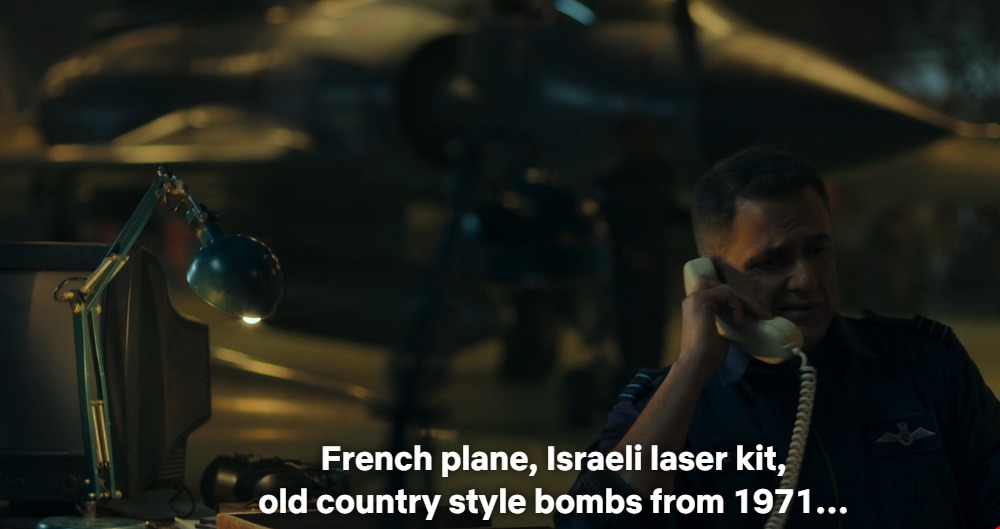
Top Gun and other Western air combat films have made the standard air warfare film templates, that are adhered to in OSS but in a milder way. A gung-ho pilot (Dhali). A pilot with repeated personal problems (Baldy). The restrained C.O (Tony). The innovative out of box solutions brought by the new officer (Ahuja). The overall C.O who has to manage his Air Warriors chafing for action (Patney). The standard “woman supporting at home” template that is normal in most Indian war films. Baldy is worried about his girlfriend Pooja who has run away from home and lands up at his airbase. The “problems” are fairly cliched and stereotyped and can be overlooked , as many Indian war films show similar cliches but they do take the attention away from the warriors. All the performances are remarkably restrained but a special mention about Vinay Pathak as the somewhat clueless Nawaz Sharif , consistently outsmarted by his Army Chief Musharraf played remarkably creepy by Manu Rishi Chaddha. Also equally creepy is veteran S.M.Zahir (people may remember him from Hum Log) as Nawaz Sharif’s father, Abbaji. Jimmy Shergill is always good as the restrained C.O. of the Golden Arrows, managing his team of fresh and experienced pilots. At the end of episode 6, all the real pilots and their future lives are briefly shown, with ‘Tony’ Dhanoa becoming the Air Force Chief.
Visual Fx: The real world aircraft such as Mig 21, Mig 27, Canberra, used in OSS, have been retired from service while the Mirage 2000 (shown briefly) and Jaguars (not shown in the series), still soldier on. So its a given that VFX has to be the main resource for the flying sequences. For the Mig 21s, it’s a mix of real-world action and VFX. Check out the below pics.
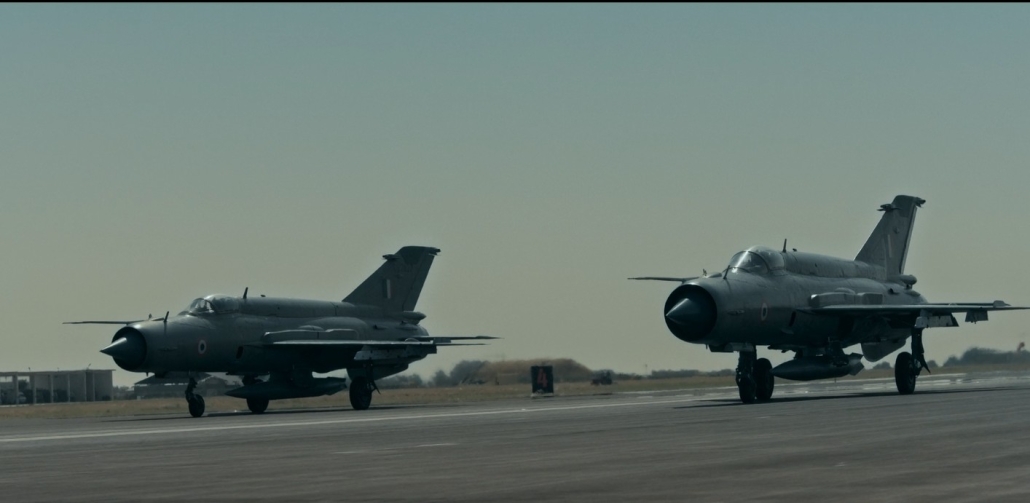
The ground shots of the Mig 21s take off
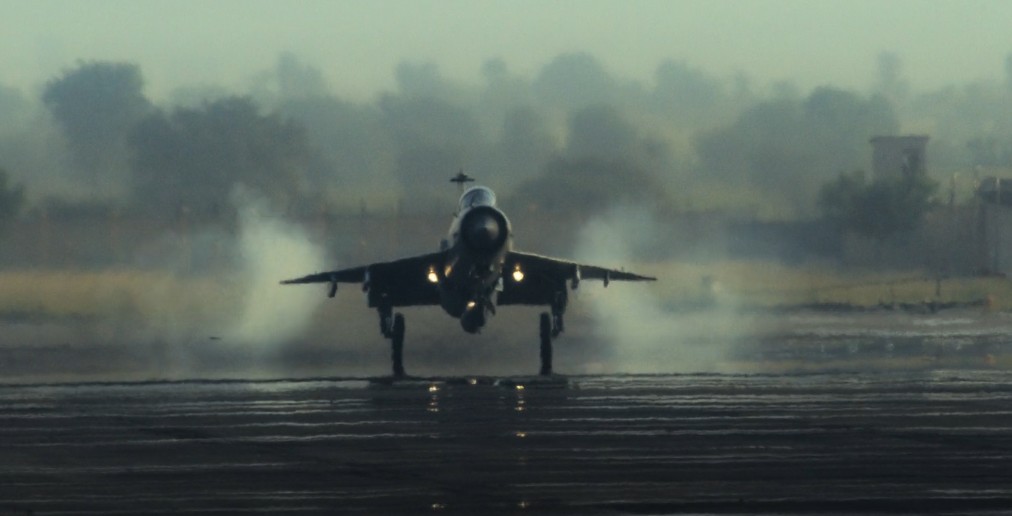
and landing , as above, are real . Shot probably at Nal Air Force base, Gujarat (judging by the background terrain). Nal, Chandigarh , Gwalior are credited in the beginning of each episode.
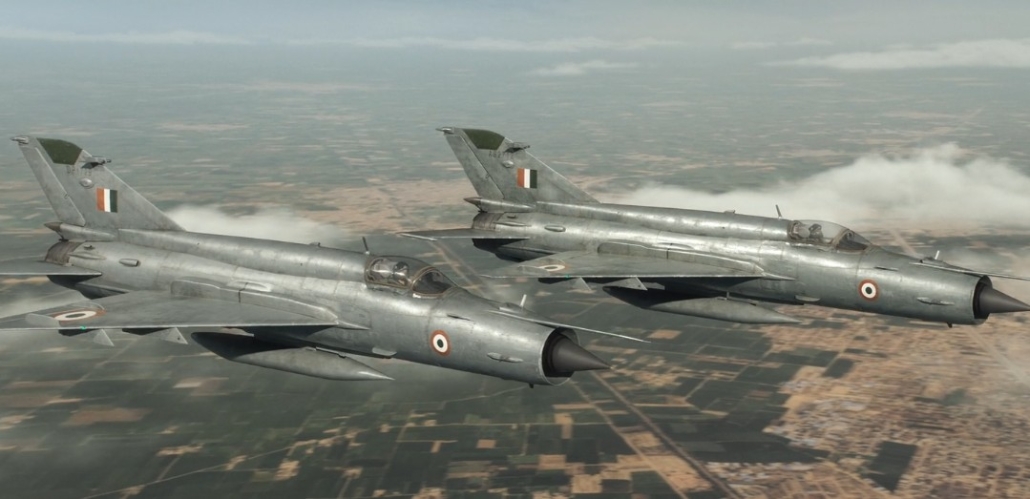
while the air to air of the MIg 21
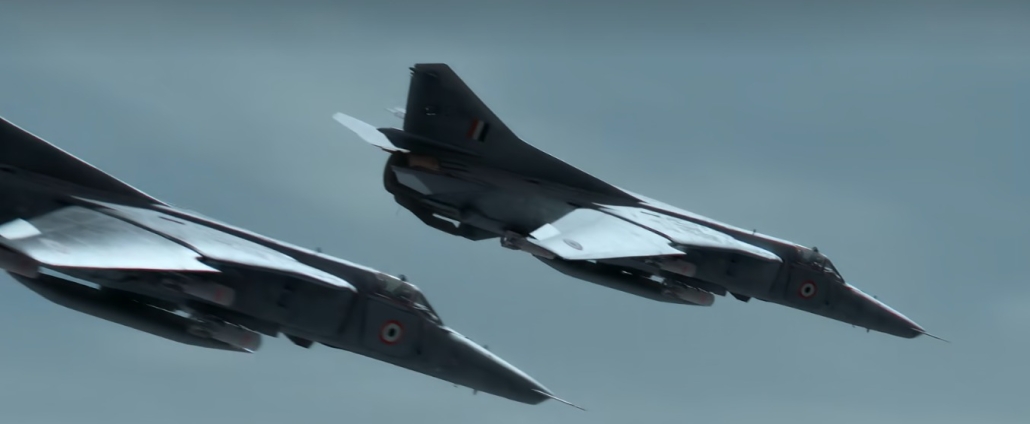
and the air to ground attack shots of the Mig 21 and Mig 27s are VFX
The VFX varies from excellent (especially the Mig 27) to the meh level, latter in the mass formation shots, with combat planes flipping in somewhat impossible flights.
.
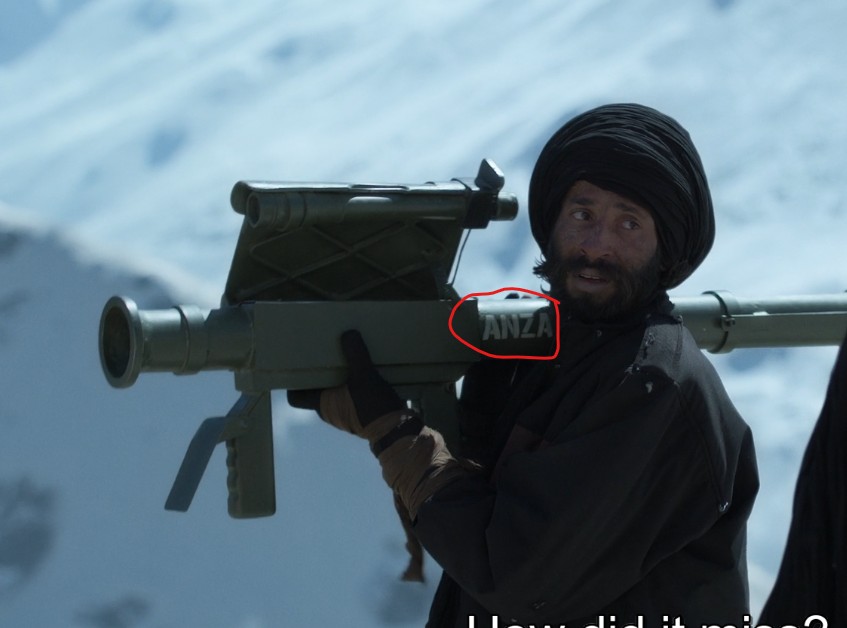
There are some minor goofs such as Stinger missiles being mentioned and the Anza, shown on the missile launcher (Anza being a Pakistani copy/ clone of the Russian SA7 Grail) and the Mig 21s moving as if they have modern thrust vectoring. It was an Anza that actually brought down Ahuja’s Mig 21 and not a Stinger.
The ground level action is also fairly okay as the emphasis is not on the Army but on the Air Force. As for the obligatory Pakistan bashing, it is not even required as Pakistan’s actions during the war, such as not acknowledging their own troops, to the extent of denying a funeral for its martyred regular soldiers, shows their mentality and fanaticism.
I would like to say more about the serial but then it would spoil your viewing pleasure. This is a restrained yet truthful TV series, with the obligatory dose of drama and masala which can be ignored if you focus on the overall story arc, which is faithful to the overall historical happenings. 6 hours well spent and a wonderful tribute to the Indian Air Force and its Operation Safed Sagar
Real History / Historical Background – 5 out of 5
Script – 4 out of 5
Story – 4 out of 5
Direction – 4 out of 5
Photography – 4 out of 5
VFX – 3 out of 5
Total – 4 out of 5

Agree whole heartedly with you Mr Rammesh.. a very well made series and I would actually gloss over the vfx part since we are still concentrating on paying actors more than spending money on the film’s screenplays. As you said, the historical facts of the movie are really good and creative liberty has to be taken to fill in the gaps.. minute to minute history can’t be replicated. getting a 4/5 from you speaks volumes of the series. A must see for those who haven’t yet.
K.V. Ramesh
10:29 AM (0 minutes ago)
to dorai
Dear SIr
Thank you for your kind words. Its one of the few , the VERY few, Indian series or films with an Armed Forces background, that shows professionals at work and not “dialogue baazi”.
Now. If only we could do something similar for the Navy ;)
Regards
KVR
I am always prejudiced against the quality of any films and shows coming out of India. But thanks to you, KV, I am happy to know that there are occassional glimmers of hope. Thanks for your detailed review. I look forward to watching this.
Siddhesh
Thanks . It is one TV series I was looking forward to and praying that it wouldn’t be ruined by foaming at the mouth dialogues and screaming and shouting. Glad to see that it was not. As for the planes and details, thats just the military nerd talking :) – you can safely ignore that and focus on the overall story.
KVR
Hi Rammesh,
A simply superb write-up; I will starting watching the series this evening.
A side adjacent comment on Indian VFX/CGI studios. Jaw-dropping, exhilarating and beyond state-of-the-art work products! I watch all films till the very last frame, for one main reason – enjoy reading the almost-endless list of Indian names.
Sometimes, such as in the 2025 ‘How To Train Your Dragon’, Indian names dominate the end-credit rolls.
More detail, in case of interest:
(AI-generated)
“India is a global powerhouse for visual effects (VFX) and animation, hosting major international studios and massive domestic operations. Top studios include Prime Focus (known for Avatar), DNEG India (Oscar-winning work on Dune and Tenet), Shah Rukh Khan’s Red Chillies VFX (Ra.One, Brahmastra), MPC India (The Lion King), and PhantomFX (Pushpa).
Major Global and Domestic Players
• DNEG: Operates massive hubs in Mumbai, Chennai, Bengaluru, and Pune, contributing heavily to top-tier Hollywood feature films and streaming projects.
• Prime Focus: A pioneering global giant headquartered in Mumbai offering end-to-end creative services, stereo 3D conversion, and visual effects.
• Red Chillies VFX: The premier Bollywood-centric studio delivering high-end CGI and visual wizardry for major Indian cinematic blockbusters.
• MPC & Technicolor India: Bengaluru and Mumbai locations support hyper-realistic creature design and environment rendering for major international studio tentpoles.
• Phantom Digital Effects (PhantomFX): Based in Chennai with global reach, renowned for seamless compositing and effects work on major regional and international action titles.
—
Regards,
Robin

Liked your review – but do not agree to your remark ‘ women supporting at home’. The series showed the cantonment life very well. The houses were spot on, the way junior officers will land up at your house unannounced late in the night for drinks and dinner – and the lady of the house no matter the time – hustle up something. The dresses of the women was spot on – from sarees to salwar kameez to jeans.
One more aspect about the conversations being more English and less of Hindi,
Hi Ravi
Agree to all your explanations but a small explanation from my side .
Based on my years of watching Indian war movies , they mostly show women only at “the home front” and hence my term ‘supporting at home’. Fighter and Operation Valentine showed women in combat roles but the less said about Fighter, the better:) .
KVR
Hi Rammesh,
I completed viewing ‘Operation Safed Sagar’ and also read the two Kargil chapters from Arjun Subramaniam’s ‘Full Spectrum: India’s Wars, 1972-2020’, to get at least a high-level understanding of the conflict.
Summary – a well-made show, probably the only one to be dedicated to the heroes of the Kargil air-war. A solid, sincere attempt to narrate the general history, with credible actors, deep research, and outstanding Visual FX.
Some off-hand – and probably debatable comments:
1
Overall, a fairly faithful adherence of the script to the actual events, in the larger sense.
2
Some scenes maybe overdramatized and ‘inspired’ from the two ‘Top Gun’ films –
1. Pilot shown losing his cool one times too many because his friend was brutally KIA.
2. The bombing range practice runs.
3. (And these compromised by GPS jamming from high-altitude American spy satellites? Really!)
4. At the risk of losing a segment of the audience, maybe too much screen-time for the ladies, kids, etc.
5. Instead maybe, and even if not directly tied to OSS, some screen time could have been devoted to “Flight Lieutenant Gunjan Saxena, the pioneering Indian Air Force pilot who made history as the first woman to fly in a combat zone during the 1999 Kargil War. Operating a Cheetah helicopter under enemy fire, she evacuated over 900 injured soldiers and earned the moniker “The Kargil Girl””. (Currently viewing her biopic, acted by Janhvi Kapoor)
3
Though we will never know the actual facts, I thought the Musharraf/Sharif/Daddy Sharif scenes were near-comedic –
With that fox-that-swallowed-the-chicken tight smirk, Mush dismisses Nawaz-miyan with simply one-or-two sentence nehle-pe-delha style lines.
And if Nawaz is still unsure, Abba Sharif closes the deal with just a severe stare and/or a one-sentence warning to his son.
Musharraf good at delivering a proverb to a two-man Chinese delegation in Beijing, and taking it on the chin when they strike back with a one-liner on a frog in a well. Ha ha ha !
(and somehow, Nawaz-miyan does not raise this treachery till weeks later? One would think President Zemin would have been on the phone with him the same day)
4
What could have been highlighted instead, as a post-script at the end:
“.. in his book ‘In The Line of Fire’, Musharraf all but disowned the operation despite being its principal orchestrator. His reluctance to write about the major battles in the Kargil conflict and highlight conspicuous acts of individual gallantry reveals a clear unwillingness to claim ownership of the conflict as the leader who put his men in the line of fire.”
What a wretched, lying, traitorous coward!
5
Most importantly, I am surprised (or maybe missed it entirely), this was not included in the series, even if it was not directly related to OSS. Quoting from the book:
“As the war progressed, there was a greater need for the IAF to support operations in the Batalik Sector. To do this, it committed significant reconnaissance efforts to identify the major logistics hub for sustaining Pakistani posts in the area. One such hub was the Munthadalo logistics camp, which had grown from eight to ten fabricated tents to about fifty to sixty igloo tents by mid-June. Following a dummy run in a trainer with Litening pods to exactly locate the camp the previous day, on June 17 (1999) six Mirages of 7 Squadron dropped thrity-six-250 kg bombs on this camp – one of the most impactful air attacks of the campaign. The sprawling hub was razed to the ground. This effectively choked Pakistani supplies to the Batalik and Kaksar sectors, thereby sealing the fate of all their posts there.
This strike was followed closely by the MIG-27 strikes at Kukarthang, which turned out to be a fuel-supply dump that was seen smoking for days.
General Malik (Army Chief) acknowledges the impact of air power in the Batalik sector and reckons that IAF pilots would not have been able to carry out their attacks *without crossing the LoC*. A senior Mirage-2000 pilot admits that it did happen several times, particularly during air defense escort missions’.
(Glad to know that such self-imposed shackles were cast off during ‘Operation Sindoor.’ An LoC or International Border (IB) is inviolate only as long as the line is not crossed. Once it is, it is an act of war and needs an equal-or-greater response. If anything, Kargil proved for the first (?) time that two nuclear nations could engage in limited, conventional warfare,
6
Lastly, perhaps less time could have been spent showing the fainting, morose pilot, and maybe a couple of frames on Operation Talwar – the Indian Navy’s aggressive deployment in the northern Arabian sea to – if ordered so – impose a blockade of Karachi, and with it, the logistical supply chain going to the mountains.
7
As a post-script, Pervez Musharraf had the last laugh – ousted Nawaz Sharif precisely over the public clamor of their Kargil ‘misadventure’, and in a few short years, had another American President eating out of his hands – virtually unlimited arms and treasure to Pakistan, to ‘fight the Taliban’, post 9/11. That ruse worked at least for a few years.
(now waiting to get schooled by you on all logical/historical assertions above) 😊
—
Warm regards,
Robin
Hi Robin
1. On point n0.5 – Gunjan Saxena . She was SAR – Search and Rescue , in itself a form of combat operations but it is not part of the overall effort to bomb the hell out of the Pakistani posts. So it was unnecessary . Good luck with your viewing of Kargil Girl; my comments in my book were very moderate. Today I would be more pithy, after seeing Jahnvi’s mono expressions in movies where she was the lead actress.
2. The Musharraf/ Abbaji/ Sharif scenes were surely written with an idea to show how perfidious the whole bunch was and so I will leave it at that.
3. Again on Operation Talwar. No screen time possible as it was all about the Air Force efforts which had a direct impact on the overall Army ops.
4. I want to quote a friend (with whom I have since fallen out) about Pakistan’s fleet footed behaviour towards the US “The Americans are so far up the Pakistani ass that any shit the Pakistanis give them is taken as the whole truth only because it serves the American purpose of treating India with its usual historical disdain, as India never bowed to it and was peripherally in the Soviet orbit”, the latter said with his disgust about the Soviet Union. I think that was probably the best ever comment on the US-India-Pakistan relationship tangle. These days, finally. the US has managed to treat India with disdain (but thats a whole different discussion and lets leave it at that).
KVR

Finished watching OSS last night. Was restricted to watching only 1 episode per night because of wife’s duty hours. While I’m no expert on military hardware or VFX, their explanation on various jugaad like dropping bombs from 30K feet to be out of Stinger range, or placing laser guided old bombs on Mirages we were able to understand.
The story was told well, with all the right emotions and pacing. And as you’ve rightly said, it didn’t have the Bollywoodian hyperbole.
Didn’t read your review until now. Was afraid there could be spoilers. And there was. It was only after Ahuja is killed that we remembered it was in the news in 1999, while you mention it here. No sweat.
All in all, an enjoyable show.
Hi Sanjay
Ahuja being killed was national news at that time and the whole nation was in an uproar because he had been tortured and killed. SO too all the Army personnel who were killed in the initial days, especially Lt. Saurav Kalia whose father is still fighting for justice to treat Pakistan as a war criminal. Sadly , nothing on that till date . I will leave it at that and not go into an anti-Pakistan diatribe ; as one commentator said , Pakistan exists only because India exists – an external enemy to blame for all its internal failings. Somewhat like “foreign hands” being blamed in India for all our domestic failings; the foreign hand goes back to Congress days :)
KVR