
Operation Safed Sagar (2026) – Restrained historical drama
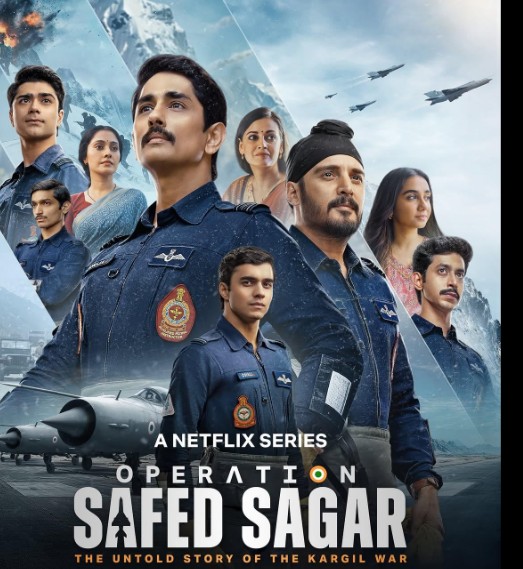
Genre: Indian War Movie (TV series)
Platform: Netflix
Time: 6 episodes x average 55 minutes
Cast: Siddharth (Squadron Leader Ajay Ahuja). Jimmy Shergill (Wing Commander ‘Tony’ Dhanoa). Adil Hussain (Air Marshal Vinod Patney). Abhay Verma (Flying Officer Rajpal Singh Dhaliwal a.k.a. Dhali). Mihir Ahuja (Flying Officer C.H. Bal Reddy a.k.a. Baldy). K.C Shankar (Squadron leader Alok Choudhury aka Chou). Amrita Bagchi (Alka Ahuja). Dia Mirza (Kamalpreet Dhanoa). Prajakta Koli (Madhavi Reddy). Manu Rishi Chadha (General Pervez Musharraf). Vinay Pathak (PM Nawaz Sharif). Anjan Srivastava (PM A.B.Vajpayee)
Plot: In 1999, the forward posts of the Indian Army near the Line of Control (LoC) which are vacated during the harsh winter, are occupied by the Pakistani Army. The order to evict them results in the first ‘televised war’, with journalists from news channels vying for attention while reporting on the heroism of the Army soldiers. Meanwhile, the Indian Air Force is grappling with problems for its own counter strike preparations , codenamed Operation Safed Sagar,. They have lost two pilots, one of whom is returned safely while the other is tortured and executed. Demands from the Army for air support results in some innovative solutions to bomb the Pakistani occupied Indian posts resulting in the status quo.
Border (1997) and Border 2 (2026) are the benchmarks for a “successful war movie”, as they are filled with hyper action , multiple explosions and screaming dialogues against Pakistan. From that point alone Operation Safed Sagar (hereafter OSS) compares like a slow-moving art film, thanks to the meticulous attention to detail and minutiae of the overall war from the Air Force’s view. Being an Air Force story, the full cooperation of the Indian Air Force was given including access to air force bases, coaches and consultants for the actors to emulate the air force way of life. The Air Force is thanked at the beginning of each episode
Thanks to the overall restrained writing, there is no need for any screaming matches, nor do the pilots indulge in taunts with the enemy as shown in Border 2. And why should they? They would be too busy doing their multiple tasks while flying at near supersonic speeds. So those who are expecting screaming and shouting a la Border, forget it. This is not for you.
Those who want a well-researched, true to history drama, with the obligatory emotional moments and even somewhat predictable sequences, this is for you! Well worth your 6 hours.
For those unfamiliar with what happened, here’s a quick history lesson (those who know this part, can skip to the next para). Indian Prime Minister A.B.Vajpayee took a historical bus ride to Lahore to be met by his Pakistani counterpart Nawaz Sharif. Unknown to the Pakistani PM, his Army Chief General Parvez Musharraf was planning an operation to occupy the Indian posts vacated during winter, presenting India and the world with a fait accompli. India hopefully won’t do anything to counter this embarrassment and soon Kashmir will be under Pakistani control, as these Indian posts overlook the critical Srinagar-Leh highway. Contrary to this convoluted Pakistani logic, India responded with full military force. After (nearly) 3 months of bloody fighting where Indian officers led from the front, resulting in a high officer casualty rate, the “intruders”, who were actually regular Pakistani Army personnel but were projected as “mujahedeen”, were evicted from the posts. The LoC was restored to the same status. The Indian Air Force played a huge part in demolishing these posts, after lots of trials and tribulations, and in a truly innovative spirit of ‘jugaad’, using the machines beyond their designed limits. Two Indian Migs (1 x Mig 21, 1 x Mig 27) were shot down with the pilot of the Mig 21, Ajay Ahuja, being tortured and killed. The Mig 27 pilot was returned unharmed. About 550 Indian Army soldiers lost their lives with twice that number injured. Pakistan was not condemned for any of this and on the contrary, Musharraf seized power in a military coup three months later. Pakistan did not acknowledge they were Pakistan Army regulars until much later, when the highest military medal Nishan e Haidar, were given to Captain Karnal Sher Khan and Havildar Lalak Jan, both from 12th Northern Light Infantry. Karnal Sher Khan’s award was based on a letter kept in the dead Captain’s pocket by Indian Brigadier M. P. S. Bajwa, praising Khan’s valor and leadership.
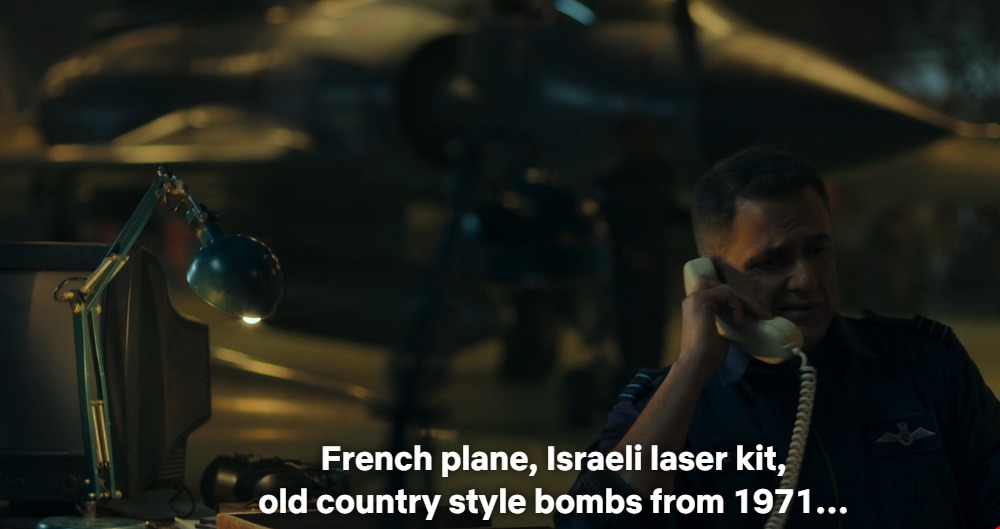
So, how is the overall story arc of the series? Very good, though the switch to the Pakistani side showing Sharif being hounded by Musharraf, takes away from the focus on the Indian Air Force officers trying to find a solution to the problems. At times, the real clips of the events are shown to highlight all the diplomatic, civil and military happenings. The (onscreen) Air Force officers speak of the problems encountered in high altitude warfare – different performance of weapons in the high altitude due to lesser air density, since most weapons are “geared” for low to medium altitudes. The persistent efforts to do “jugaad” are also explained for the audience as conversations between Air Force officers.
Top Gun and other Western air combat films have made the standard air warfare film templates, that are adhered to in OSS but in a milder way. A gung-ho pilot (Dhali). A pilot with repeated personal problems (Baldy). The restrained C.O (Tony). The innovative out of box solutions brought by the new officer (Ahuja). The overall C.O who has to manage his Air Warriors chafing for action (Patney). The standard “woman supporting at home” template that is normal in most Indian war films. Baldy is worried about his girlfriend Pooja who has run away from home and lands up at his airbase. The “problems” are fairly cliched and stereotyped and can be overlooked , as many Indian war films show similar cliches but they do take the attention away from the warriors. All the performances are remarkably restrained but a special mention about Vinay Pathak as the somewhat clueless Nawaz Sharif , consistently outsmarted by his Army Chief Musharraf played remarkably creepy by Manu Rishi Chaddha. Also equally creepy is veteran S.M.Zahir (people may remember him from Hum Log) as Nawaz Sharif’s father, Abbaji. Jimmy Shergill is always good as the restrained C.O. of the Golden Arrows, managing his team of fresh and experienced pilots. At the end of episode 6, all the real pilots and their future lives are briefly shown, with ‘Tony’ Dhanoa becoming the Air Force Chief.
Visual Fx: The real world aircraft such as Mig 21, Mig 27, Canberra, used in OSS, have been retired from service while the Mirage 2000 (shown briefly) and Jaguars (not shown in the series), still soldier on. So its a given that VFX has to be the main resource for the flying sequences. For the Mig 21s, it’s a mix of real-world action and VFX. Check out the below pics.
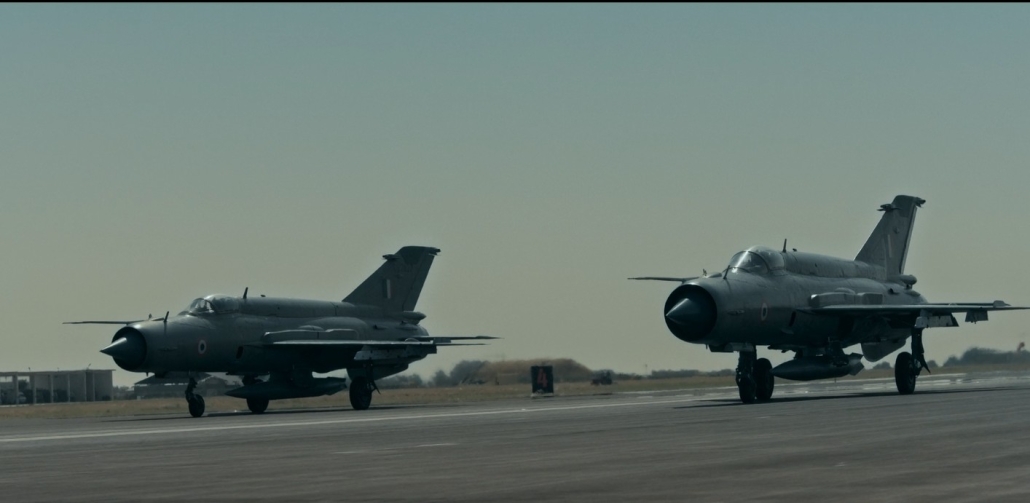
The ground shots of the Mig 21s take off
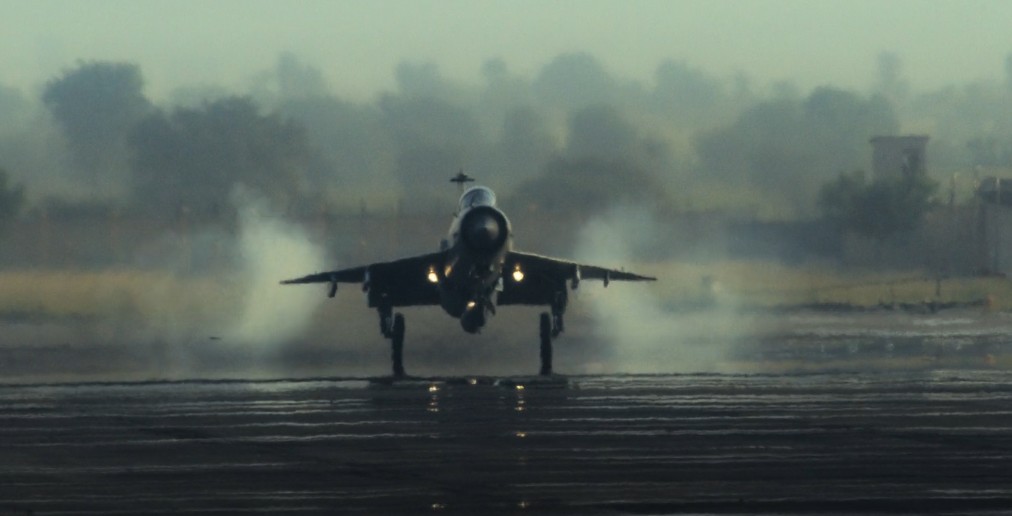
and landing , as above, are real . Shot probably at Nal Air Force base, Gujarat (judging by the background terrain). Nal, Chandigarh , Gwalior are credited in the beginning of each episode.
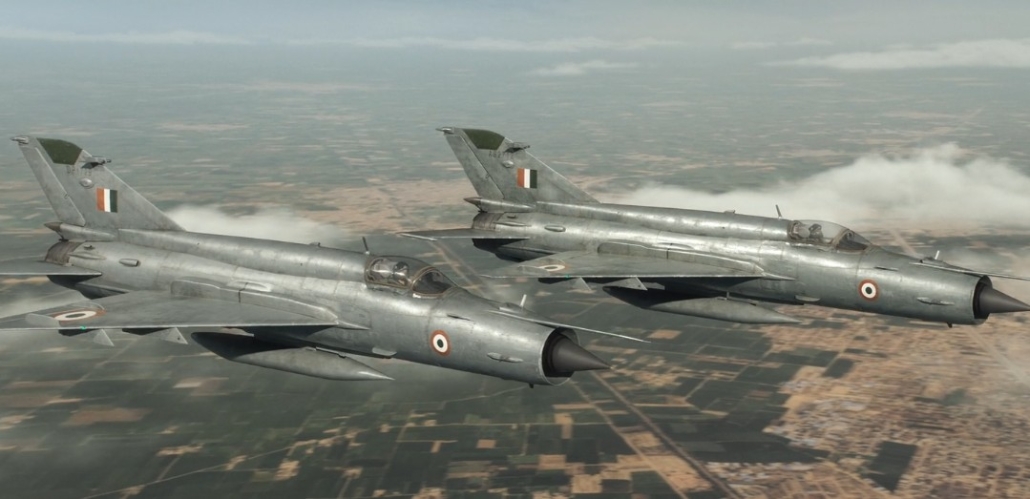
while the air to air of the MIg 21
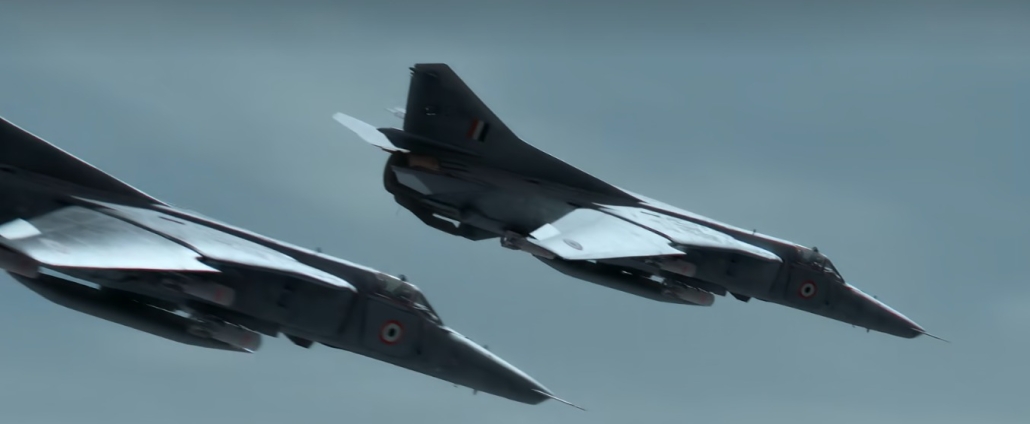
and the air to ground attack shots of the Mig 21 and Mig 27s are VFX
The VFX varies from excellent (especially the Mig 27) to the meh level, latter in the mass formation shots, with combat planes flipping in somewhat impossible flights.
.
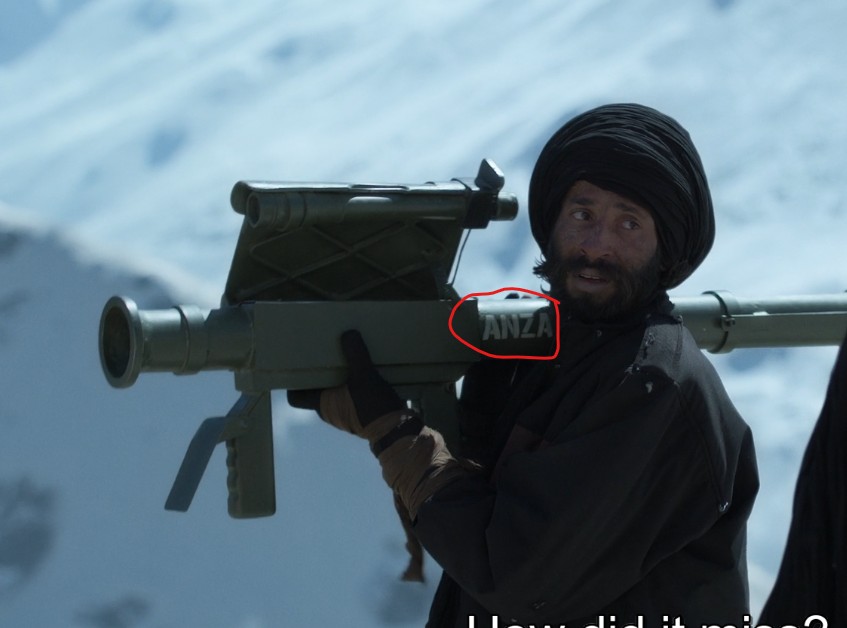
There are some minor goofs such as Stinger missiles being mentioned and the Anza, shown on the missile launcher (Anza being a Pakistani copy/ clone of the Russian SA7 Grail) and the Mig 21s moving as if they have modern thrust vectoring. It was an Anza that actually brought down Ahuja’s Mig 21 and not a Stinger.
The ground level action is also fairly okay as the emphasis is not on the Army but on the Air Force. As for the obligatory Pakistan bashing, it is not even required as Pakistan’s actions during the war, such as not acknowledging their own troops, to the extent of denying a funeral for its martyred regular soldiers, shows their mentality and fanaticism.
I would like to say more about the serial but then it would spoil your viewing pleasure. This is a restrained yet truthful TV series, with the obligatory dose of drama and masala which can be ignored if you focus on the overall story arc, which is faithful to the overall historical happenings. 6 hours well spent and a wonderful tribute to the Indian Air Force and its Operation Safed Sagar
Real History / Historical Background – 5 out of 5
Script – 4 out of 5
Story – 4 out of 5
Direction – 4 out of 5
Photography – 4 out of 5
VFX – 3 out of 5
Total – 4 out of 5
11 responses to “Operation Safed Sagar (2026) – Restrained historical drama”
-
Agree whole heartedly with you Mr Rammesh.. a very well made series and I would actually gloss over the vfx part since we are still concentrating on paying actors more than spending money on the film’s screenplays. As you said, the historical facts of the movie are really good and creative liberty has to be taken to fill in the gaps.. minute to minute history can’t be replicated. getting a 4/5 from you speaks volumes of the series. A must see for those who haven’t yet.
-
K.V. Ramesh
10:29 AM (0 minutes ago)
to doraiDear SIr
Thank you for your kind words. Its one of the few , the VERY few, Indian series or films with an Armed Forces background, that shows professionals at work and not “dialogue baazi”.
Now. If only we could do something similar for the Navy ;)
Regards
KVR
-
-
I am always prejudiced against the quality of any films and shows coming out of India. But thanks to you, KV, I am happy to know that there are occassional glimmers of hope. Thanks for your detailed review. I look forward to watching this.
-
Siddhesh
Thanks . It is one TV series I was looking forward to and praying that it wouldn’t be ruined by foaming at the mouth dialogues and screaming and shouting. Glad to see that it was not. As for the planes and details, thats just the military nerd talking :) – you can safely ignore that and focus on the overall story.
KVR
-
-
Hi Rammesh,
A simply superb write-up; I will starting watching the series this evening.
A side adjacent comment on Indian VFX/CGI studios. Jaw-dropping, exhilarating and beyond state-of-the-art work products! I watch all films till the very last frame, for one main reason – enjoy reading the almost-endless list of Indian names.
Sometimes, such as in the 2025 ‘How To Train Your Dragon’, Indian names dominate the end-credit rolls.
More detail, in case of interest:
(AI-generated)
“India is a global powerhouse for visual effects (VFX) and animation, hosting major international studios and massive domestic operations. Top studios include Prime Focus (known for Avatar), DNEG India (Oscar-winning work on Dune and Tenet), Shah Rukh Khan’s Red Chillies VFX (Ra.One, Brahmastra), MPC India (The Lion King), and PhantomFX (Pushpa).
Major Global and Domestic Players
• DNEG: Operates massive hubs in Mumbai, Chennai, Bengaluru, and Pune, contributing heavily to top-tier Hollywood feature films and streaming projects.• Prime Focus: A pioneering global giant headquartered in Mumbai offering end-to-end creative services, stereo 3D conversion, and visual effects.
• Red Chillies VFX: The premier Bollywood-centric studio delivering high-end CGI and visual wizardry for major Indian cinematic blockbusters.
• MPC & Technicolor India: Bengaluru and Mumbai locations support hyper-realistic creature design and environment rendering for major international studio tentpoles.
• Phantom Digital Effects (PhantomFX): Based in Chennai with global reach, renowned for seamless compositing and effects work on major regional and international action titles.
—
Regards,Robin
-
Liked your review – but do not agree to your remark ‘ women supporting at home’. The series showed the cantonment life very well. The houses were spot on, the way junior officers will land up at your house unannounced late in the night for drinks and dinner – and the lady of the house no matter the time – hustle up something. The dresses of the women was spot on – from sarees to salwar kameez to jeans.
One more aspect about the conversations being more English and less of Hindi,-
Hi Ravi
Agree to all your explanations but a small explanation from my side .
Based on my years of watching Indian war movies , they mostly show women only at “the home front” and hence my term ‘supporting at home’. Fighter and Operation Valentine showed women in combat roles but the less said about Fighter, the better:) .
KVR
-
-
Hi Rammesh,
I completed viewing ‘Operation Safed Sagar’ and also read the two Kargil chapters from Arjun Subramaniam’s ‘Full Spectrum: India’s Wars, 1972-2020’, to get at least a high-level understanding of the conflict.
Summary – a well-made show, probably the only one to be dedicated to the heroes of the Kargil air-war. A solid, sincere attempt to narrate the general history, with credible actors, deep research, and outstanding Visual FX.
Some off-hand – and probably debatable comments:
1
Overall, a fairly faithful adherence of the script to the actual events, in the larger sense.2
Some scenes maybe overdramatized and ‘inspired’ from the two ‘Top Gun’ films –
1. Pilot shown losing his cool one times too many because his friend was brutally KIA.
2. The bombing range practice runs.
3. (And these compromised by GPS jamming from high-altitude American spy satellites? Really!)
4. At the risk of losing a segment of the audience, maybe too much screen-time for the ladies, kids, etc.
5. Instead maybe, and even if not directly tied to OSS, some screen time could have been devoted to “Flight Lieutenant Gunjan Saxena, the pioneering Indian Air Force pilot who made history as the first woman to fly in a combat zone during the 1999 Kargil War. Operating a Cheetah helicopter under enemy fire, she evacuated over 900 injured soldiers and earned the moniker “The Kargil Girl””. (Currently viewing her biopic, acted by Janhvi Kapoor)3
Though we will never know the actual facts, I thought the Musharraf/Sharif/Daddy Sharif scenes were near-comedic –With that fox-that-swallowed-the-chicken tight smirk, Mush dismisses Nawaz-miyan with simply one-or-two sentence nehle-pe-delha style lines.
And if Nawaz is still unsure, Abba Sharif closes the deal with just a severe stare and/or a one-sentence warning to his son.
Musharraf good at delivering a proverb to a two-man Chinese delegation in Beijing, and taking it on the chin when they strike back with a one-liner on a frog in a well. Ha ha ha !
(and somehow, Nawaz-miyan does not raise this treachery till weeks later? One would think President Zemin would have been on the phone with him the same day)
4
What could have been highlighted instead, as a post-script at the end:
“.. in his book ‘In The Line of Fire’, Musharraf all but disowned the operation despite being its principal orchestrator. His reluctance to write about the major battles in the Kargil conflict and highlight conspicuous acts of individual gallantry reveals a clear unwillingness to claim ownership of the conflict as the leader who put his men in the line of fire.”What a wretched, lying, traitorous coward!
5
Most importantly, I am surprised (or maybe missed it entirely), this was not included in the series, even if it was not directly related to OSS. Quoting from the book:“As the war progressed, there was a greater need for the IAF to support operations in the Batalik Sector. To do this, it committed significant reconnaissance efforts to identify the major logistics hub for sustaining Pakistani posts in the area. One such hub was the Munthadalo logistics camp, which had grown from eight to ten fabricated tents to about fifty to sixty igloo tents by mid-June. Following a dummy run in a trainer with Litening pods to exactly locate the camp the previous day, on June 17 (1999) six Mirages of 7 Squadron dropped thrity-six-250 kg bombs on this camp – one of the most impactful air attacks of the campaign. The sprawling hub was razed to the ground. This effectively choked Pakistani supplies to the Batalik and Kaksar sectors, thereby sealing the fate of all their posts there.
This strike was followed closely by the MIG-27 strikes at Kukarthang, which turned out to be a fuel-supply dump that was seen smoking for days.
General Malik (Army Chief) acknowledges the impact of air power in the Batalik sector and reckons that IAF pilots would not have been able to carry out their attacks *without crossing the LoC*. A senior Mirage-2000 pilot admits that it did happen several times, particularly during air defense escort missions’.
(Glad to know that such self-imposed shackles were cast off during ‘Operation Sindoor.’ An LoC or International Border (IB) is inviolate only as long as the line is not crossed. Once it is, it is an act of war and needs an equal-or-greater response. If anything, Kargil proved for the first (?) time that two nuclear nations could engage in limited, conventional warfare,
6
Lastly, perhaps less time could have been spent showing the fainting, morose pilot, and maybe a couple of frames on Operation Talwar – the Indian Navy’s aggressive deployment in the northern Arabian sea to – if ordered so – impose a blockade of Karachi, and with it, the logistical supply chain going to the mountains.7
As a post-script, Pervez Musharraf had the last laugh – ousted Nawaz Sharif precisely over the public clamor of their Kargil ‘misadventure’, and in a few short years, had another American President eating out of his hands – virtually unlimited arms and treasure to Pakistan, to ‘fight the Taliban’, post 9/11. That ruse worked at least for a few years.(now waiting to get schooled by you on all logical/historical assertions above) 😊
—
Warm regards,Robin
-
Hi Robin
1. On point n0.5 – Gunjan Saxena . She was SAR – Search and Rescue , in itself a form of combat operations but it is not part of the overall effort to bomb the hell out of the Pakistani posts. So it was unnecessary . Good luck with your viewing of Kargil Girl; my comments in my book were very moderate. Today I would be more pithy, after seeing Jahnvi’s mono expressions in movies where she was the lead actress.
2. The Musharraf/ Abbaji/ Sharif scenes were surely written with an idea to show how perfidious the whole bunch was and so I will leave it at that.
3. Again on Operation Talwar. No screen time possible as it was all about the Air Force efforts which had a direct impact on the overall Army ops.
4. I want to quote a friend (with whom I have since fallen out) about Pakistan’s fleet footed behaviour towards the US “The Americans are so far up the Pakistani ass that any shit the Pakistanis give them is taken as the whole truth only because it serves the American purpose of treating India with its usual historical disdain, as India never bowed to it and was peripherally in the Soviet orbit”, the latter said with his disgust about the Soviet Union. I think that was probably the best ever comment on the US-India-Pakistan relationship tangle. These days, finally. the US has managed to treat India with disdain (but thats a whole different discussion and lets leave it at that).
KVR
-
-
Finished watching OSS last night. Was restricted to watching only 1 episode per night because of wife’s duty hours. While I’m no expert on military hardware or VFX, their explanation on various jugaad like dropping bombs from 30K feet to be out of Stinger range, or placing laser guided old bombs on Mirages we were able to understand.
The story was told well, with all the right emotions and pacing. And as you’ve rightly said, it didn’t have the Bollywoodian hyperbole.
Didn’t read your review until now. Was afraid there could be spoilers. And there was. It was only after Ahuja is killed that we remembered it was in the news in 1999, while you mention it here. No sweat.
All in all, an enjoyable show.-
Hi Sanjay
Ahuja being killed was national news at that time and the whole nation was in an uproar because he had been tortured and killed. SO too all the Army personnel who were killed in the initial days, especially Lt. Saurav Kalia whose father is still fighting for justice to treat Pakistan as a war criminal. Sadly , nothing on that till date . I will leave it at that and not go into an anti-Pakistan diatribe ; as one commentator said , Pakistan exists only because India exists – an external enemy to blame for all its internal failings. Somewhat like “foreign hands” being blamed in India for all our domestic failings; the foreign hand goes back to Congress days :)
KVR
-


Leave a Reply